

"I would rather be a cyborg than a goddess." [tags: quotes, Donna Haraway, cyborg]
I would choose to be a cyborg rather than a goddess.[tags: quotes, identity]
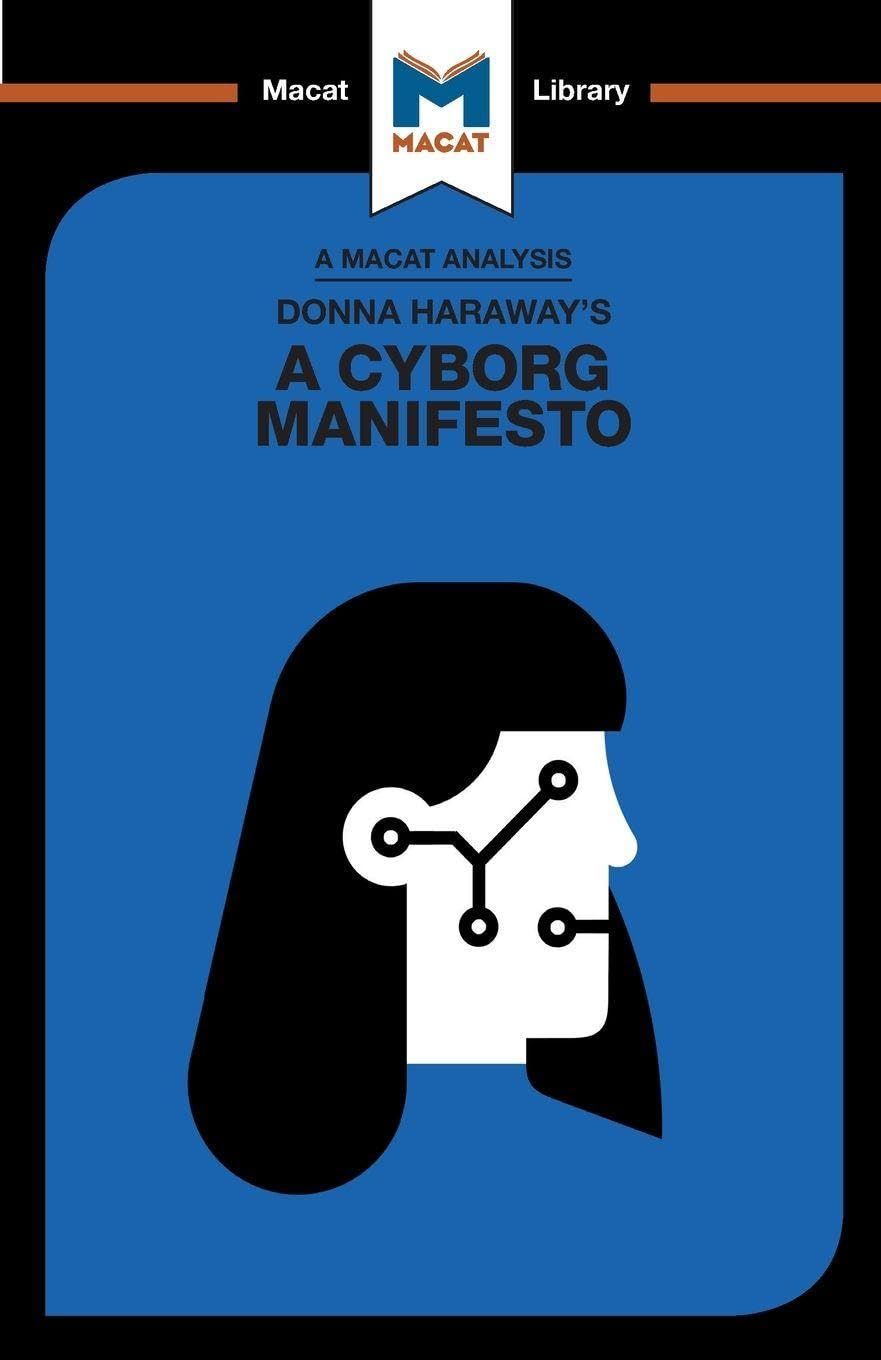
This is a famous line by Donna Haraway, a biologist and philosopher, and the closing sentence of her book A Cyborg Manifesto, an essay about hybrid society and cyborgs. Haraway rejects the feminist notion of returning to purity, where all women should revert to an original, natural state—like a pure, flawless goddess. Instead, she embraces a society of hybrids, blending social aspects, technology, and medicine—elements that are not antiquated but can be freely defined.[tags: Donna Haraway, feminism, hybrid society, cyborg, social theory]
Haraway’s writing was not about future robots as commonly understood; her purpose was to discuss women in society using the concept of the cyborg. What’s interesting is her discussion of a world increasingly reliant on technology and its growing influence. Whether we wear glasses, use heart rate and step-tracking watches, keep phones with us constantly, or use AI, these technologies make us unknowingly cyborgs. The traditional divide between machine and biology has already broken down.[tags: technology, cyborg, society, AI, human-machine integration]
On 23 February 2026, The Guardian published an article titled, “I’m worried my boyfriend’s use of AI is affecting his ability to think for himself.” It described how a 44-year-old man was addicted to using AI. His partner said he began showing signs of ADHD, choosing to ask AI even simple questions like train schedules instead of checking himself. The problem was that AI’s information was often inaccurate, and relying on it for everything made her feel he could no longer think independently.[tags: AI addiction, cognitive impact, technology influence, The Guardian]
This AI-related article isn’t meant to condemn AI or highlight its harms but serves as a close-to-home example of the evolving relationship between humans and advanced technology that can be worrisome. Society with glasses or phones may not be as daunting as the arrival of AI. If the line between humans and machines is blurred, it means AI has become part of our brains. Ultimately, will we be dominated by machines?[tags: AI, human-machine boundary, technology impact]
Extended Mind Theory: All tools are extensions of the brain.[tags: philosophy, cognitive science, extended mind]
Philosophers Andy Clark and David Chalmers proposed the Extended Mind theory, explaining that tools benefit humans by extending the mind beyond the biological brain to include the instruments we use. For example, mobile phones store phone numbers we once memorized, effectively becoming part of our memory. Even notebooks serve as extended minds by storing information we cannot recall perfectly. Their example contrasts Inga, who remembers a museum’s location, with Otto, who has dementia but uses a map or notebook to find his way safely.[tags: extended mind, cognition, technology, memory, philosophy]
Clark argues that technology as an Extended Mind benefits humans. However, critics say that while tools aid thinking, they do not become part of the brain. Using the internet to find information doesn’t mean the internet thinks for us; we do. Similarly, writing notes requires our cognitive processing. If we accepted all tools as extended minds, we’d all be superhumans by now.[tags: extended mind debate, cognition, technology]
The Extended Mind theory is compelling because it explains how human life is augmented with functions like additional organs. It highlights benefits that improve life quality but also raises concerns about cognitive offloading—relying so heavily on tools that our brains atrophy. This decline ranges from calculators to today’s AI, which makes us increasingly suspicious.[tags: cognitive offloading, brain health, AI, technology impact]
Embrace and accept our cyborg nature.[tags: cyborg, identity, acceptance]
It’s understandable that some long to return to roots and untainted nature. Many articles criticizing AI may signal a refusal to accept the era and a yearning for the past. Activities like hiking can be seen as escapes to an earlier time (in Haraway’s sense), seeking truth free from information-overloaded, technology-saturated worlds. This cycle mirrors Haraway’s rejection of yearning for motherhood, femininity, and goddess-like purity. Perhaps the only solution is to embrace what Haraway described in A Cyborg Manifesto.[tags: nostalgia, technology criticism, Haraway, cyborg]
It’s thought-provoking that Haraway may have aimed to view femininity as female, while technology was defined as masculine. Because technology originated from military development (computers and the internet began as military tools), it symbolizes oppression and control, reflecting patriarchal capitalist systems where women are laborers under domination.[tags: gender, technology, patriarchy, oppression, feminist theory]
Clearly, we cannot avoid these realities. Haraway suggests tools need not serve their creators but can be used to destroy or surpass them—to achieve some form of liberation.[tags: empowerment, technology, liberation]
Imagine a world where AI users hold power. Believing AI is inherently bad is tantamount to surrendering to it.[tags: power, AI, resistance]
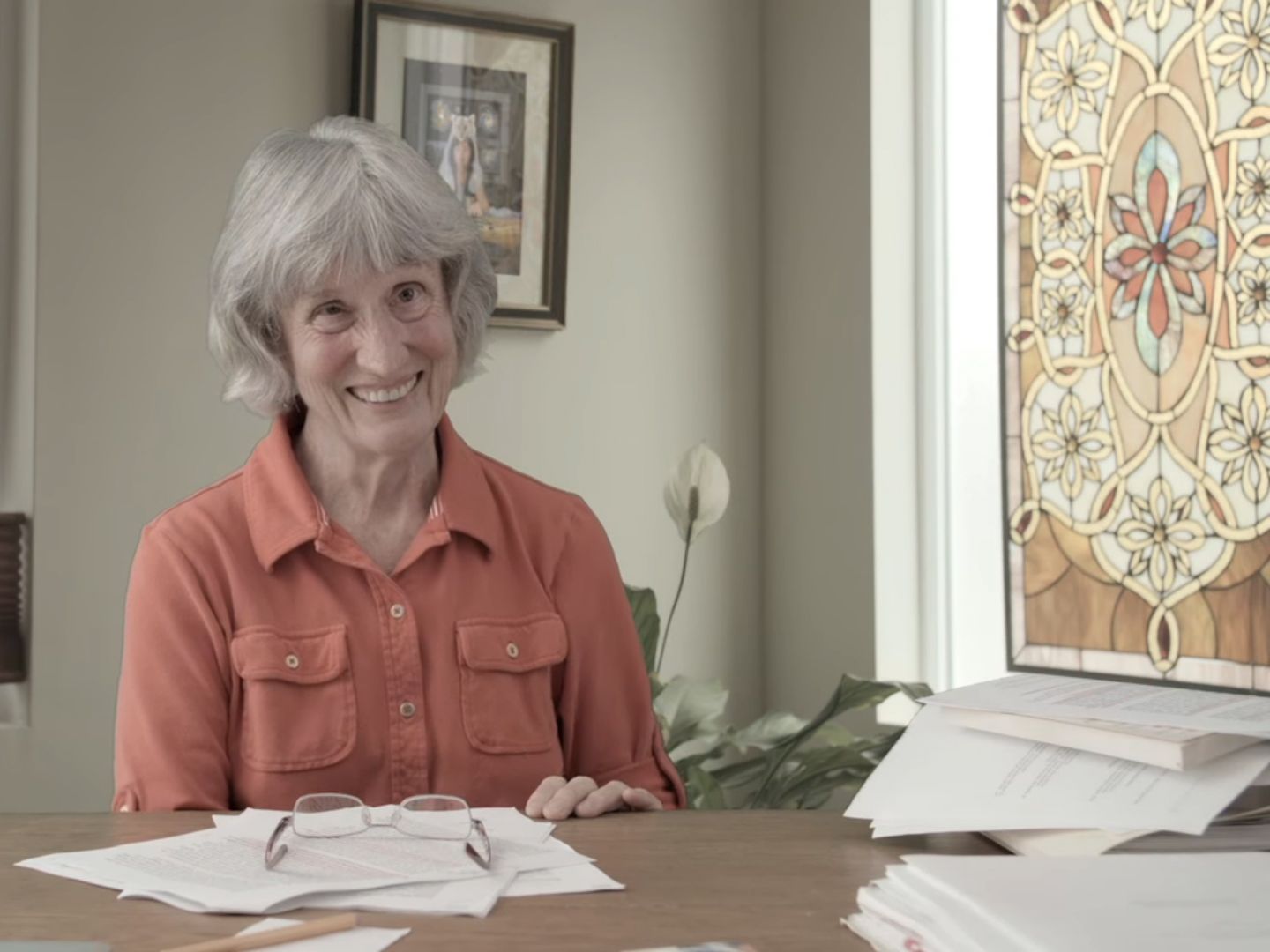 Donna Haraway. Photo: Fabbula Magazine.[tags: Donna Haraway, portrait]
According to Haraway, how can we embrace technology (here, AI) without falling into cognitive offload or brain atrophy from not thinking independently?[tags: AI, cognitive offload, technology use]
The 44-year-old AI-addicted husband described by The Guardian exemplifies a human indifferent to and unchallenging of technology’s influence. Haraway’s key point is agency: being active actors rather than passive receivers. We should use strengths to subvert rather than be dominated (e.g., by information fed to us as if we were children). In living alongside AI, we must seek better ways than merely checking train schedules—like challenging AI data to create greater benefits, such as critiquing information, enhancing our value, or managing schedules to maximize our potential.[tags: agency, AI interaction, empowerment, critical thinking]
Although A Cyborg Manifesto discusses feminist ideas in a technological world, the author feels it can also be interpreted that all humans are labor under technology intensely aligned with capitalism. It’s not surprising that Marxist feminist Donna Haraway urges liberation through what controls us. In this age, we must liberate ourselves and wield surrounding technology to strengthen ourselves and accept the unstoppable current toward the future.[tags: feminism, Marxism, capitalism, technology, liberation]
References[tags: references]:[tags: references]