

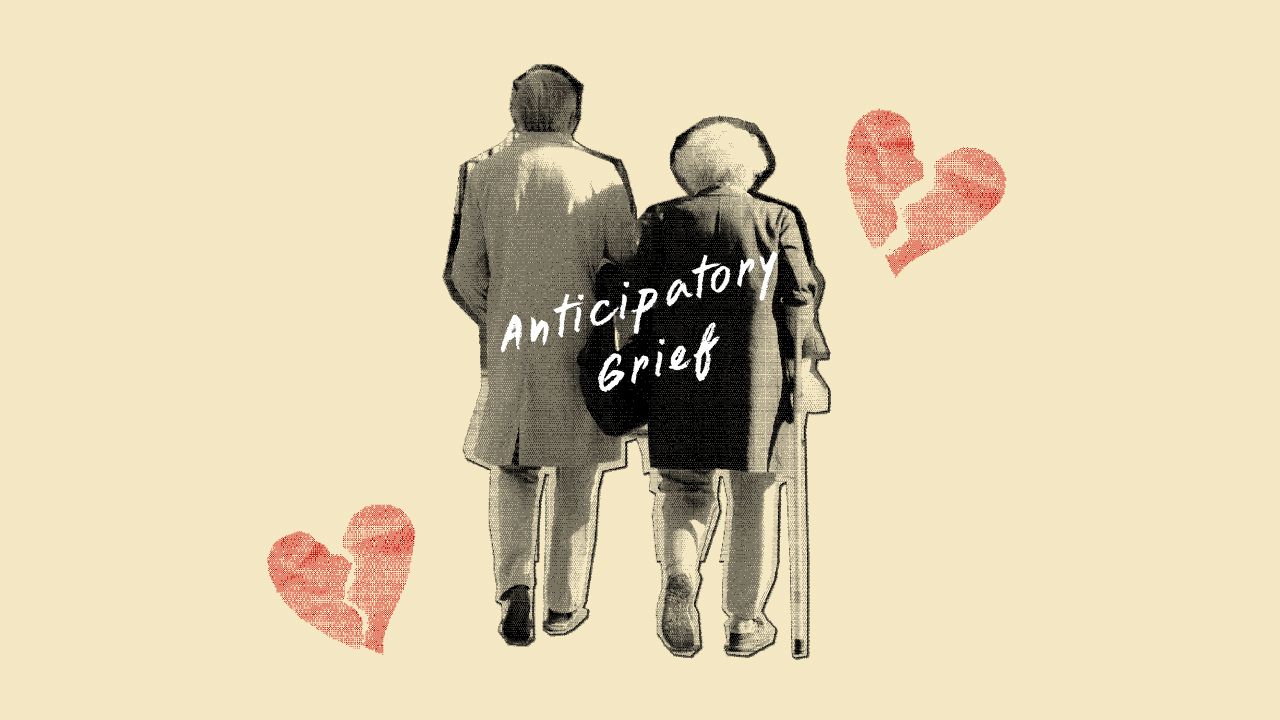
Often, grief does not begin after an actual loss but starts to develop in advance. In moments when we still see our important person sitting before us, still hear their voice, and feel their presence, part of the heart begins to recognize life’s uncertainty and slowly pictures the sorrow of a day without them present.
It’s like when we start to notice deeper wrinkles on the face or our parents’ walking pace gradually slows. Sometimes, this makes us feel an unfamiliar sadness and mourn for something that has yet to happen.
This condition is what psychologists call Anticipatory Grief, which occurs when humans begin to perceive the possibility of loss, causing the mind to respond before the actual event arrives.
Erich Lindemann, a pioneering psychologist and psychiatrist in grief studies, explained in 1944 that humans have a mechanism called 'Grief Work,' where the mind tries to adjust and emotionally prepare for an inevitable future separation—essentially, a form of 'preemptive mourning.'
In families where parents begin aging or falling ill, children often hold an 'immortal image' of their parents from childhood. As time passes and their parents’ decline becomes evident, children frequently face feelings that their parents are gradually 'losing their former selves.' For example, a father who once drove them around now needs support to walk, or a mother who used to cook delicious meals now forgets seasonings. These small losses fuel the intensity of Anticipatory Grief.
Beyond grief caused by witnessing change, research from TecScience adds that caregivers bear an emotional burden. Those caring for aging parents or the ill often accumulate stress from physical demands, while their hearts and emotions continuously carry unseen sorrow.
When the heart carries both caregiving responsibilities and grief, this period often creates inner turmoil and guilt. Many try to suppress these feelings with patience, but ignoring internal pain can lead to greater breakdown. To overcome this emotional storm, one must revisit their inner heart to truly understand the source of these feelings.
When grief arrives before reality, the first step is to embrace those feelings and allow oneself to grieve without guilt. Grief is proof of profound love—without love, there is no grief. Then, use the sorrow as motivation to create meaningful present moments rather than letting it pass meaninglessly.
One important technique to avoid sinking into an uncertain future is 'time tuning'—bringing the mind back from imagining the final day of life into the present. One must realize that imagined time and real time are separate.
When your mind starts to wander to the day they leave, try reminding yourself, “In this moment, my parents are still here,” because it means there is still a chance to create smiles.
Time tuning helps prevent wasting precious moments on premature mourning. Their presence now is the most tangible gift. Turn sorrow into a 'compass' guiding you to hug them more often or express love for things left unsaid.
Another essential aspect is building emotional resilience—learning to calmly live with uncertainty, which acts as a shield for the heart. We must gradually accept the changing limitations of our parents, for example, if they can do less for themselves. Instead of seeing this as sad, train yourself to view it as the last opportunity to repay what they once gave us.
This practice also includes mindful planning for various matters, such as medical care or fulfilling their final wishes. Doing these things helps reduce panic and vague anxiety by turning them into clear, actionable tasks.
When anticipatory grief is managed systematically, it allows us to face change with a resilient mind and lessens lingering regrets that are a major cause of suffering after actual loss.
Ultimately, overcoming Anticipatory Grief as parents age reveals that the pain experienced is part of a beautiful cycle. Understanding psychological mechanisms and learning time tuning brings us back to the present, where amid physical frailty lies the beauty of new memories we can always create.
The true meaning of life is not in its end but in every act of kindness we show while our hearts still beat together.
And that is the best healing one person can give another while still alive.
References