

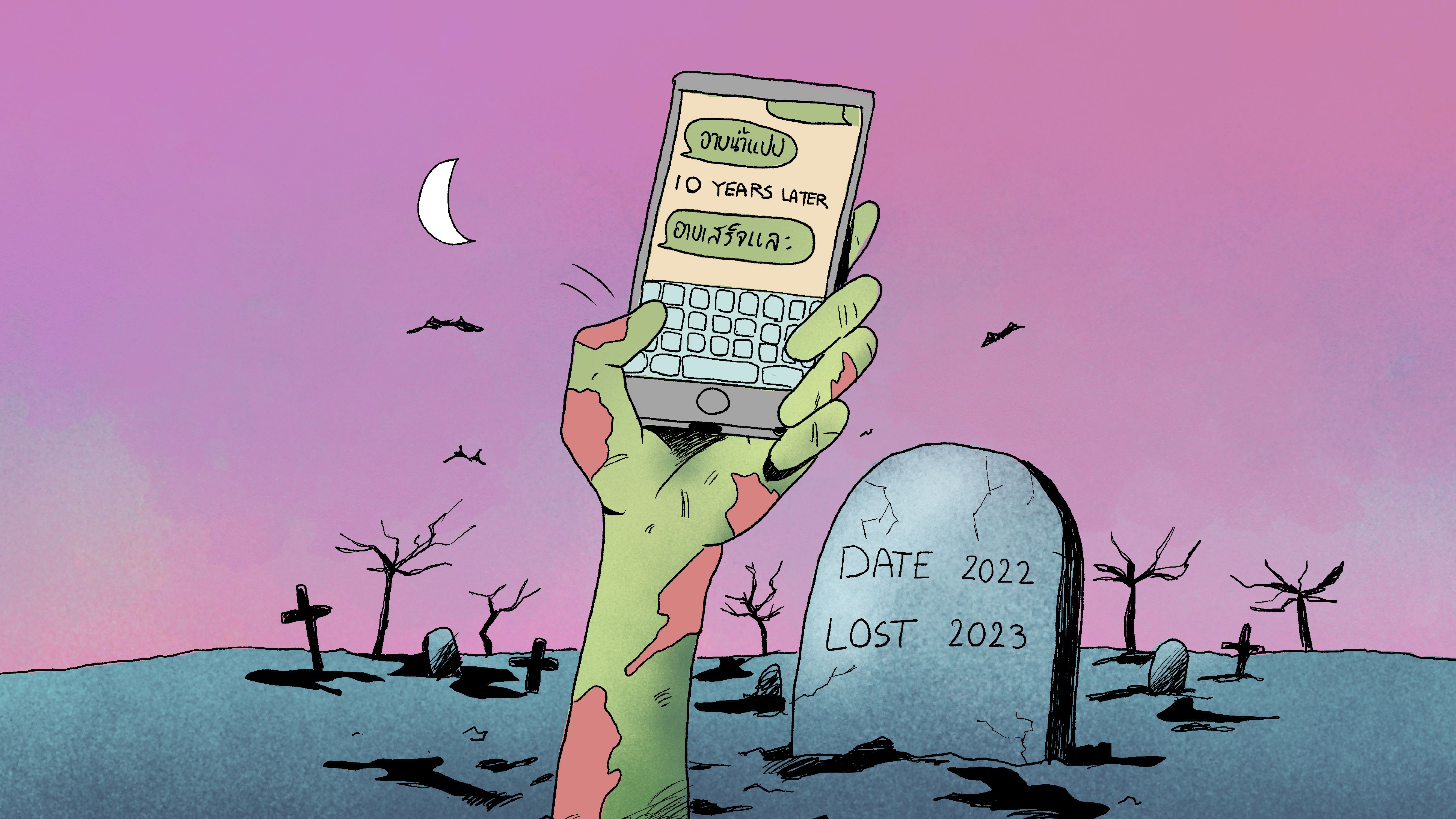
Yet the message that appeared just minutes ago was a simple one, like 'How are you?' or 'Are you well?' or just a notification of a like on an Instagram story, as if that person had never really gone anywhere and nothing had happened.
Recently, many are familiar with the term Ghosting—when one party suddenly goes silent without explanation or farewell, cutting off all contact and disappearing like a 'ghost.' However, there is a more troubling behavior called 'Zombieing.'
Thairath Plus invites readers to understand 'Zombieing,' the behavior where someone who vanished suddenly like in ghosting unexpectedly comes back to life, reaching out, sending messages, or reappearing in our lives without any explanation or apology.
Just a few new words from a familiar ex can stir up many troubling questions. Psychologically, when someone disappears without a goodbye, our brains try to find reasons to explain feelings with explanations that never really exist. When those questions remain unanswered, the feelings linger deeply in our hearts.
Then one day, that person 'might' return with answers to the lingering questions. For some, the first feeling might not be anger but relief that they are back, restoring a sense of self-worth. We might convince ourselves that their disappearance was unintentional or that they still care, reigniting old feelings.
In reality, a few words or sentences typed in seconds require little effort, while we have borne many feelings alone—disappointment, self-questioning, sadness, and attempts to regain confidence.
Thus, their return acting as if nothing happened may not be romantic or touching as we think. Instead, it reflects their disregard for our feelings, lack of appreciation for our existence, and neglect of the effort we made to overcome painful times.
However, their initial disappearance likely meant we were not the choice they wanted to keep. They might have found someone more interesting or had other priorities, disregarding our feelings and lacking courage to explain directly.
Relationship research explains that one reason such people return is 'loneliness and isolation.' When feeling this way, most seek past relationships, especially during emotional festivals surrounded by various relationships. Many return to familiar people and places because they are 'easier to access,' becoming the choice these individuals cling to.
This aligns with behavioral research by René M. Dailey and colleagues, who explain that the main motivation for someone's return may not be increased love but 'familiarity,' which makes them feel safe. Returning to someone familiar avoids the need to adapt or reinvent themselves.
Many also mistakenly believe that time apart will heal and erase old problems, while in reality, no understanding or resolution occurs. Worse, these people often return after trying new relationships, finding external options less appealing than the original person.
Meanwhile, their habit of leaving without clear goodbyes from the start emboldens them to return without explanation, hoping old feelings will come back.
In some cases, their return may stem from genuine guilt realizing their actions hurt the other person. However, if motivated by guilt, the first step should be sincere explanation and apology, not pretending nothing happened.
Psychologically, relationships that fluctuate between good and bad, breaking up and reconciling repeatedly, are called 'Relationship Churning.'
Some see this as excitement or inseparable love, but research shows these cycles are toxic relationships marked by emotional instability, suspicion, and often verbal, behavioral, and controlling abuse.
A sign of Zombieing is that the person only appears when they 'need something,' whether to vent, seek help, or have a temporary relationship. If we don't meet their needs, they become unhappy, blame us, or accuse us of causing all problems.
Therefore, if this happens, the first step is to 'stay calm' and focus on our own feelings. If we choose to reply or reach out, we should ask ourselves what we truly want—an explanation, an apology, to win, or a hope to return to a relationship that caused us to question and blame ourselves repeatedly.
Of course, we shouldn't judge someone hastily based on a few words. If we still have unresolved feelings and truly want to give a chance, open and honest conversation is necessary. But if they remain unclear or refuse to answer questions, that is clarity—their silence may mean they choose to hurt us again.
Ultimately, we don't have to maintain relationships with those who never valued us. The first person we should give a chance to is ourselves, opening up to new people who won't hurt us. We always have value and the right to choose what is good and worthy for us.