

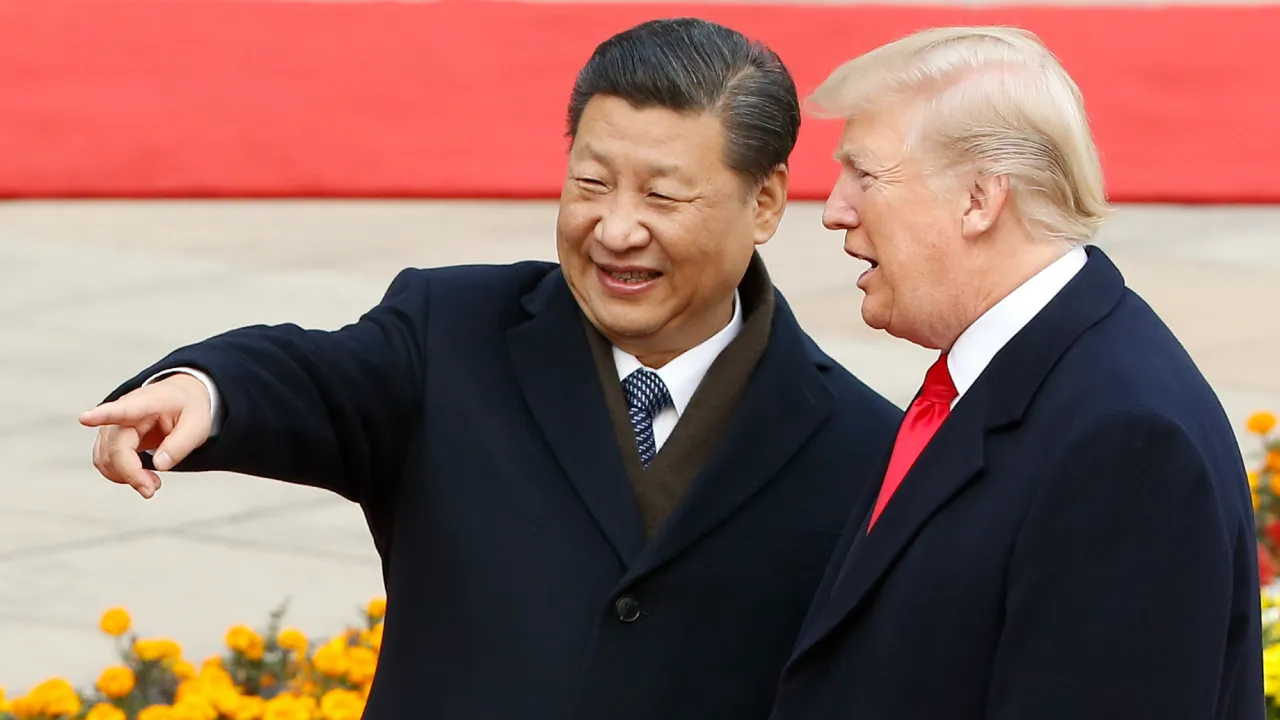
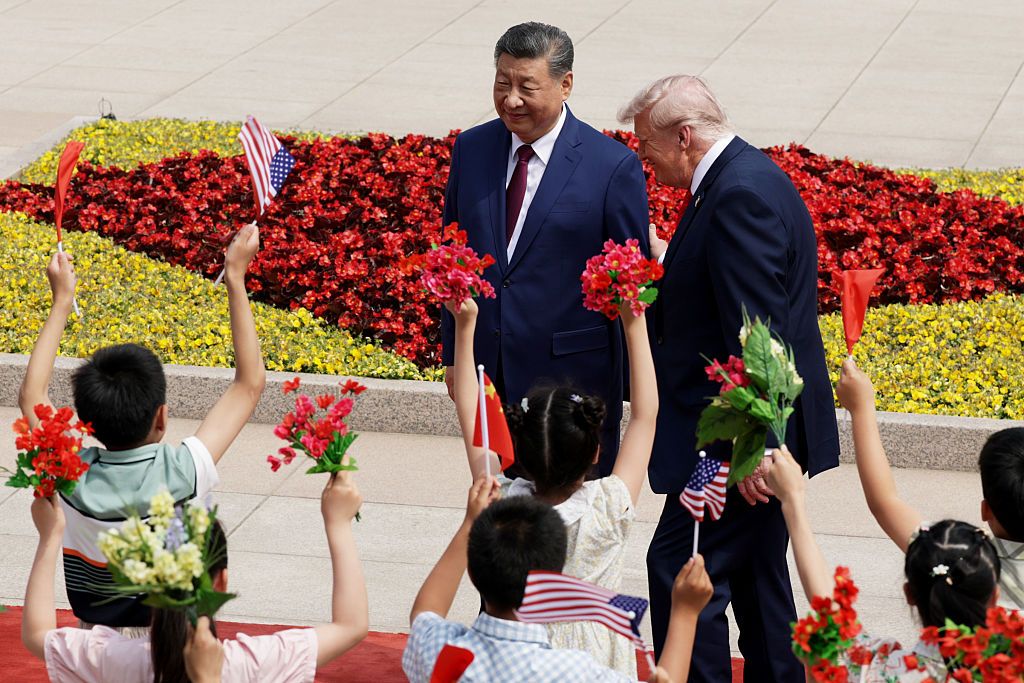
Amid the solemn ceremonies before Beijing's Great Hall of the People, the group that caught the U.S. president’s attention most was a lively cluster of young students waving the national flags of both countries and holding bright flower bouquets, enthusiastically welcoming the U.S. leader's visit to China after nearly a decade.
The moment when Donald Trump smiled broadly and applauded alongside Xi Jinping while watching these children was not only a warm, endearing image but, in the realm of international diplomacy—especially with a major power like China—no detail occurs by chance.
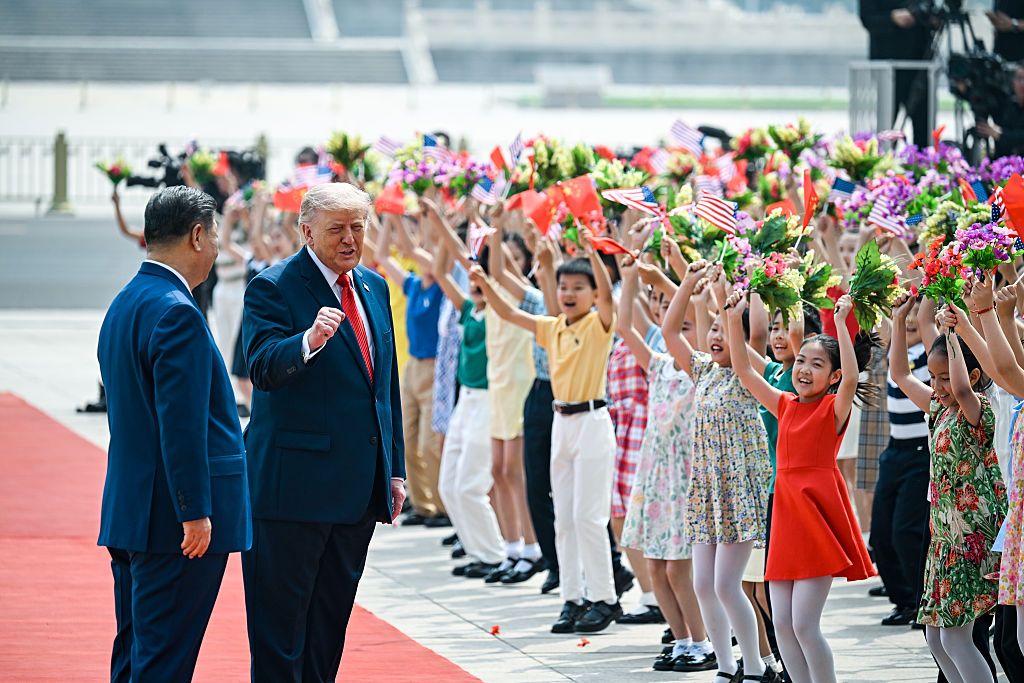
Trump opened the bilateral talks by expressing particular admiration for the welcome ceremony, saying, “I’m especially impressed by those children.” The two world leaders paused to greet and wave to the children before shaking hands with the U.S. delegation—a small yet telling piece that subtly reveals global politics.
In China’s diplomatic world, governed by strict hierarchy and protocols, 'diplomatic protocol' is a language more powerful than words themselves.
Rush Doshi, an Asia studies expert from the Council on Foreign Relations and former National Security Council staffer under President Joe Biden, explained that China often uses diplomatic ceremonies as signals of their 'approval' or 'displeasure' toward others.
Observers worldwide closely watch how Trump is received, who greets him, and what music is played, making these details widely scrutinized by analysts.
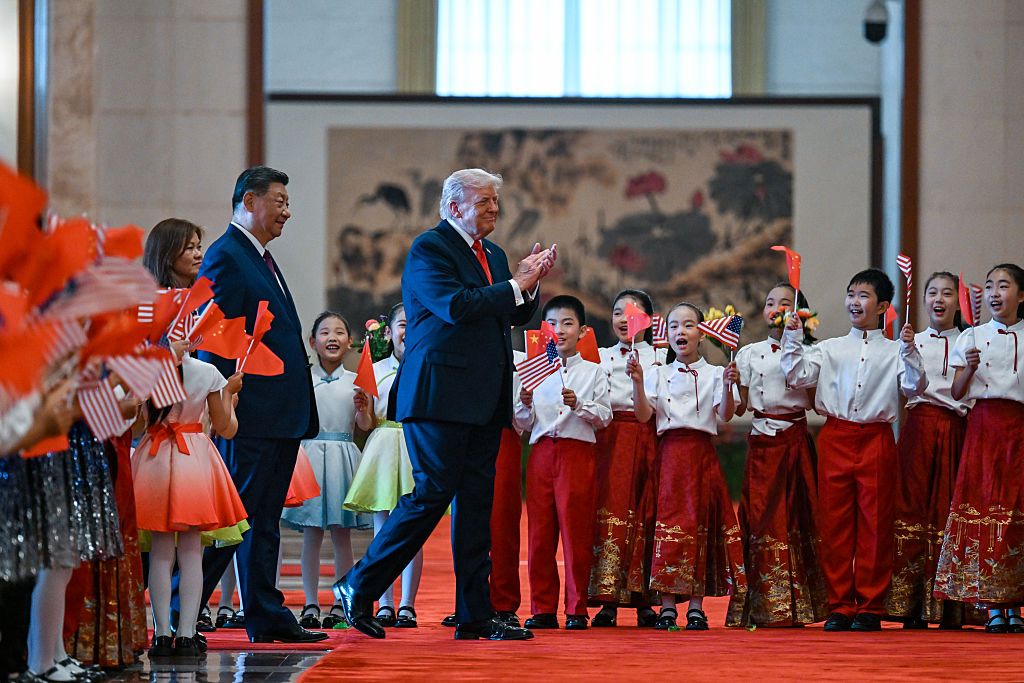
But why specifically a welcome involving children? The answer is that China did its homework thoroughly and knows what its 'client' prefers.
Danny Russel, a diplomat specializing in Asia, noted it is well known among governments that Trump typically responds positively to praise and grand, spectacular displays.
Organizing a respectful ceremony that makes him feel important serves a psychological purpose: to put Trump in a good mood, reduce the risk of public confrontations or embarrassing exchanges, and increase his openness to China’s demands when they enter negotiations.
Back in February, Trump himself mentioned his impression from his first visit to China in 2017, when China staged a full State Visit Plus welcome, saying, “When I went to China, President Xi treated me very well. He put on a show I’d never seen before—so many soldiers, all exactly the same height.”
Although this time China’s welcome might not have been as grand as in 2017, the warm and colorful reception still confirms the U.S. retains a special status in China’s foreign policy.
This meeting marks the seventh face-to-face encounter between the two leaders and the first time Trump has set foot in China in nearly nine years. Their last meeting was at the APEC summit in South Korea in October, which led to a new trade agreement.
Over the past nine years, relations between these two powers have shifted from an era of Engagement to full-fledged Competition, marked by lows during the COVID-19 pandemic and intense trade wars.
Today’s welcome ceremony reflects the changed global political landscape. China is now more confident in its position and more skeptical of Trump.
Yet, they continue to employ the art of gentle diplomacy—through children’s smiles, flowers, and the dignity of the military—to soften behaviors and pave the way for tense bilateral talks lasting over two hours inside the Great Hall of the People.
International politics is therefore not just about economic figures or nuclear weapons; sometimes it is propelled by small details such as knowing what the opposing leader likes and staging a perfect welcome to facilitate negotiations and safeguard national interests.
ReferencesNYPost,Wall Street Journal,PBS,The Hill
#ThairathPlus #Thairath #News #InternationalNews #Trump #XiJinping #USA #UnitedStates #China