

Although Chinese football fans may be disappointed that their national team did not qualify for the 2026 World Cup finals—missing the tournament since 2002—in reality, China might be the true victor of this global sporting event.
Looking beyond the field and around the stadiums co-hosted by the United States, Canada, and Mexico, one finds that Made in China products are deeply embedded in infrastructure, consumer goods, and have actively stimulated the local economy.
The traditional image of sponsors pouring massive advertising budgets is shifting in the 2026 World Cup, with Chinese companies positioning themselves as indispensable partners to the hosts.
A clear example is the China Railway Construction Engineering Group, which contributed to renovating Mexico’s Estadio Azteca, the venue for the opening ceremony, making it more modern and spacious.
The three host cities in Mexico have deployed 115 light rail trains from China's CRRC Corporation Limited, and in Mexico City alone, over 800 new energy buses transporting more than 95% of fans are all Chinese-made.
Additionally, China supplies advanced technology: Hisense provided high-resolution VAR display equipment for referees, while Lenovo managed server systems and AI models supporting FIFA operations across 16 venues.
This aligns with the World Intellectual Property Organization (WIPO) ranking China among the top 10 global innovation hubs for the first time last year.
Beyond the stadiums, China's export sector is reaping substantial profits. Chinese customs data shows the country already accounts for 40% of global sports equipment exports, and rising sports product demand has pushed exports to 67.5 billion yuan (approximately 340 billion baht) in the first half of the year.
Zheng Ziyi, a sportswear exporter in Jiangxi Province, told South China Morning Post that shirt sales increased 60% in recent months, especially jerseys of Lionel Messi, Cristiano Ronaldo, Kylian Mbappé, and Erling Haaland. Orders for Argentina's national team jerseys surged immediately after their semifinal win over England.
Yiwu city in Zhejiang Province, a global commodity hub, is bustling as well; more than 70% of World Cup 2022 football souvenirs and decorations originated from Yiwu.
Wen Chongjian, an exporter speaking to Xinhua, said the business has evolved from simply printing national flags on blank shirts to securing patents for over 40 jersey designs, raising prices by up to 20%. The tournament’s expansion from 32 to 48 teams has also resulted in continuous orders.
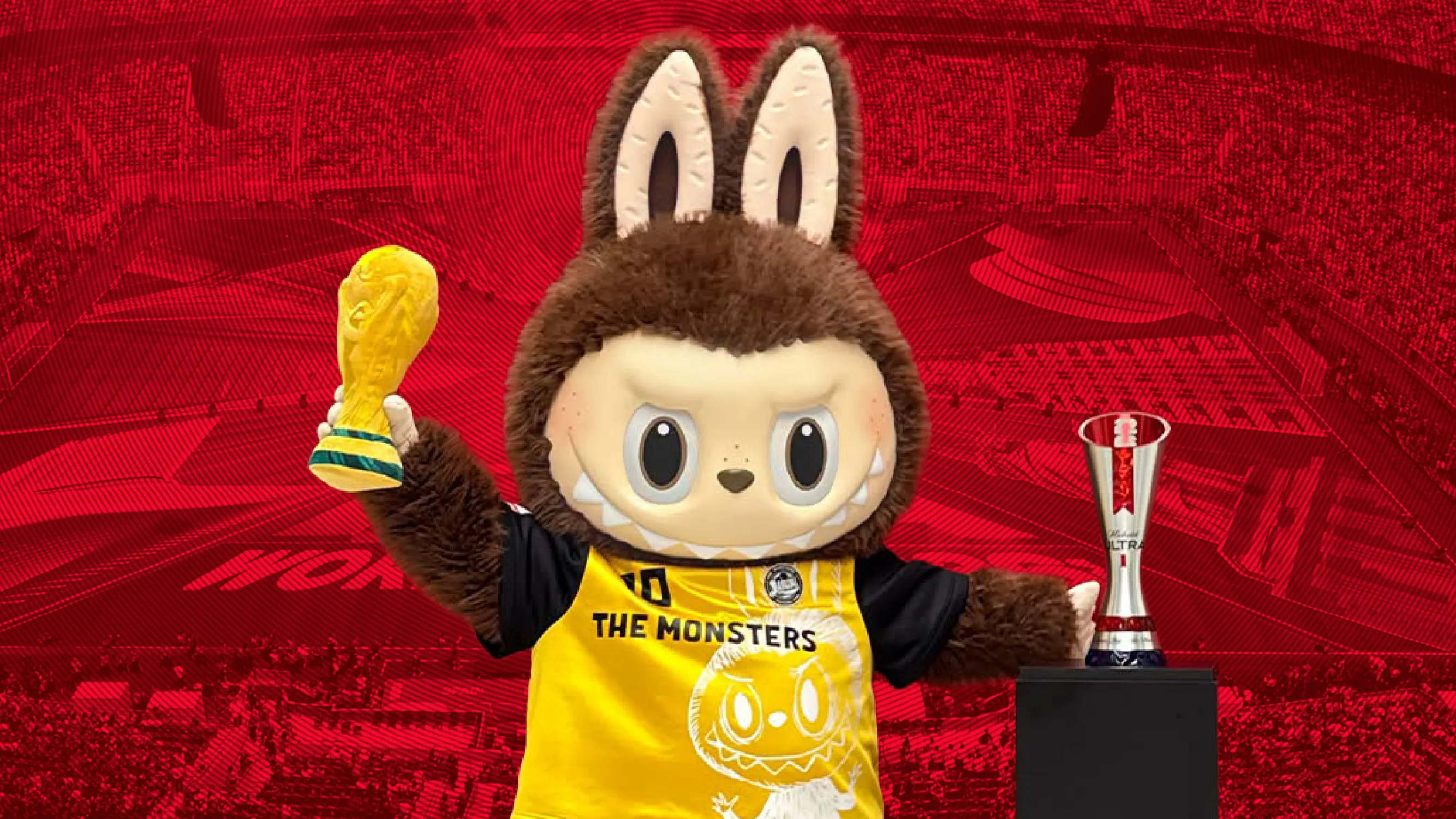
"Sports culture" continues to boost domestic consumption in China. For instance, Labubu, a popular art toy from Pop Mart dressed in football attire, appeared in the opening ceremony, marking the first Chinese intellectual property featured in an event of this scale.
Chinese beverage brands are also prominent: Luckin Coffee and Cotti Coffee secured sponsorship rights with major national teams like Spain and Argentina, while Wang Laoji, a famed Chinese herbal tea, launched a campaign with Norway’s star striker Erling Haaland that went viral worldwide.
Chinese football-viewing lifestyles have changed; although matches occur early morning or late at night, searches for dim sum restaurants in Guangdong surged 8.5 times compared to last year. Hotels in Foshan increased sales by 30% through football-themed menus, and over 255 cinemas nationwide attracted audiences with more than 28,000 live screenings, offering superior audiovisual experiences compared to home viewing.
China’s pervasive involvement in the World Cup aligns with the government’s 15th Five-Year Plan (2026-2030), targeting boosted domestic consumption, especially in sports industries valued at 7 trillion yuan (about 35 trillion baht) by 2030.
Professor Zhang Desheng of Wuhan Sports University told Xinhua, "The World Cup is no longer just a tournament on the field. It connects sports, consumption, and industry, attracting new audiences through food, fashion, and social experiences, creating new opportunities for economic growth."
Although Spain ultimately lifted the World Cup trophy, when measured by economic figures and financial flows, there is no denying that a powerhouse like China has claimed the business championship in this match.
ReferencesSouth China Morning Post,Xinhua,Xinhua
#ThairathPlus #Thairath #WorldCup2026 #MadeInChina #ChineseEconomy #SportsBusiness #Labubu #News #InternationalNews #China #ChinaNews