

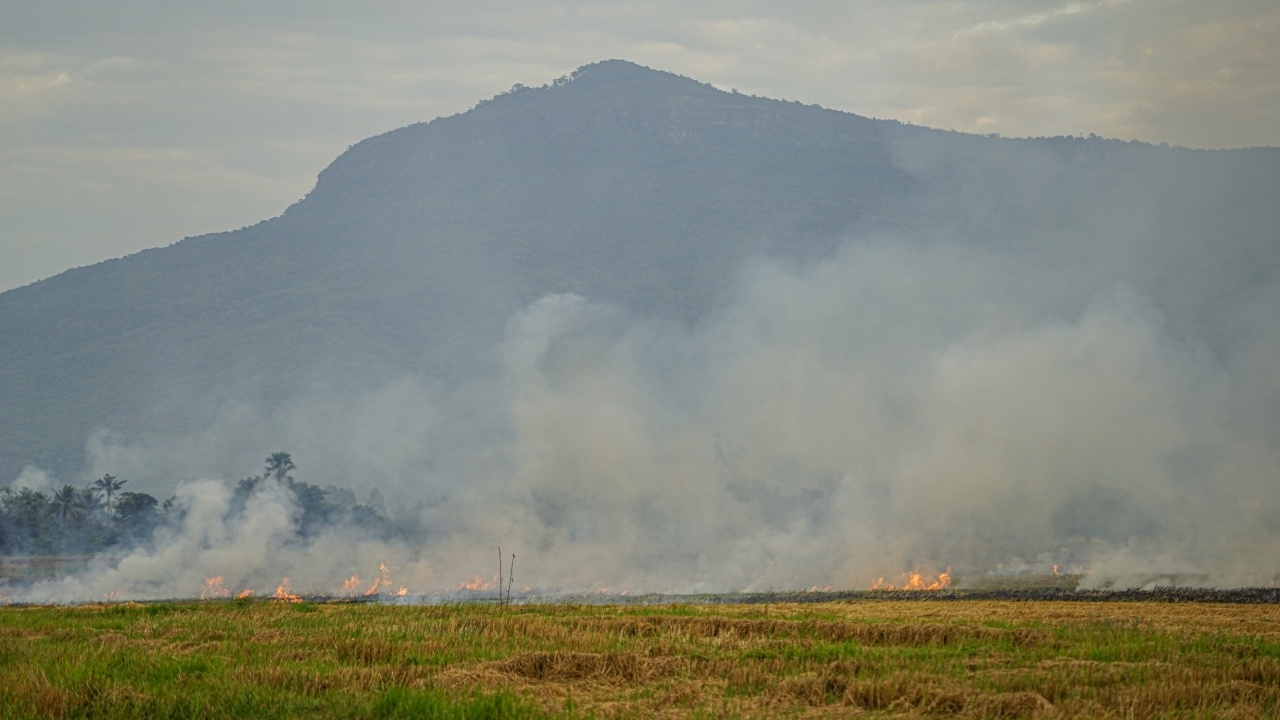
The government, integrating efforts with related agencies, has introduced four measures to address agricultural burning, aiming to reduce burning by no less than 15% in key economic crops, with the goal of sustainably managing air pollution.
On 8 January 2026, Ms. Airin Panrit, Deputy Spokesperson for the Office of the Prime Minister, revealed that during 2025–2026, Thailand continues to experience numerous heat spots, especially in agricultural areas. The Cabinet, on 22 July 2025, approved the second edition of the national agenda action plan "Solving Particulate Matter Pollution" for 2025–2027 and beyond, as well as the National Environment Board's resolution on 15 October 2025 approving measures to address forest fires, haze, and particulate matter in 2026.
The government, through the Ministry of Agriculture and Cooperatives and related agencies, has developed measures to prevent and solve agricultural burning issues for 2025/2026. The goal is to reduce burning by at least 15% nationwide in key economic crops—namely rice paddies, feed corn, and sugarcane—with significant reductions. They will closely monitor heat spots, burned areas, and the volume of agricultural residues utilized as alternatives to burning. The four key measures are:
1. Monitoring, raising awareness, and preventing burning in agricultural areas by using VIIRS satellite data to track heat spots and burn areas in real time, alongside awareness campaigns in affected areas. If burning is detected, the area will be disqualified from government support programs and assistance, with clear penalties ranging from warnings and delays in land document issuance to loss of land ownership rights.
2. Managing burning and utilizing agricultural residues through a registration system that sets criteria, methods, conditions covering timeframes, area limits, supervision, procedures, and responsible parties to inform farmers. If burning is necessary, the Ministry of Agriculture and Cooperatives requires farmers to register and seek permission via the “Burn Check” system on the website and app to control environmental and community impacts. Additionally, agricultural residues are promoted for biomass energy and industrial use to reduce destructive burning in fields.
3. Implementing measures to prohibit imports of agricultural products from neighboring countries that involve burning, particularly feed corn, which must undergo traceability checks to ensure burn-free status. This aims to prevent cross-border transfer of PM2.5 pollution problems.
4. Promoting agricultural practices to address burning issues in farming areas. For the 2026 fiscal year, a budget exceeding 250 million baht has been allocated for 21 projects promoting no-burn agriculture, covering practices such as plowing under crop stubble, organic fertilizer production, waste material processing, cultivation of high-value crops, and sustainable agriculture development in highland areas.
“The Ministry of Agriculture and Cooperatives is driving government operations to prevent and reduce all open burning, including agricultural residue in farming areas. It will communicate the 2025/26 agricultural burning prevention and solution measures to raise public awareness and coordinate with related local agencies to support implementation aimed at reducing nationwide air pollution. This will help change behaviors and sustainably address environmental issues in the long term,” Ms. Airin stated.