

The Ministry of Agriculture and Cooperatives has launched the "Natural Rubber Innovation for Thai Irrigation" alongside utilizing the country’s resources efficiently and sustainably
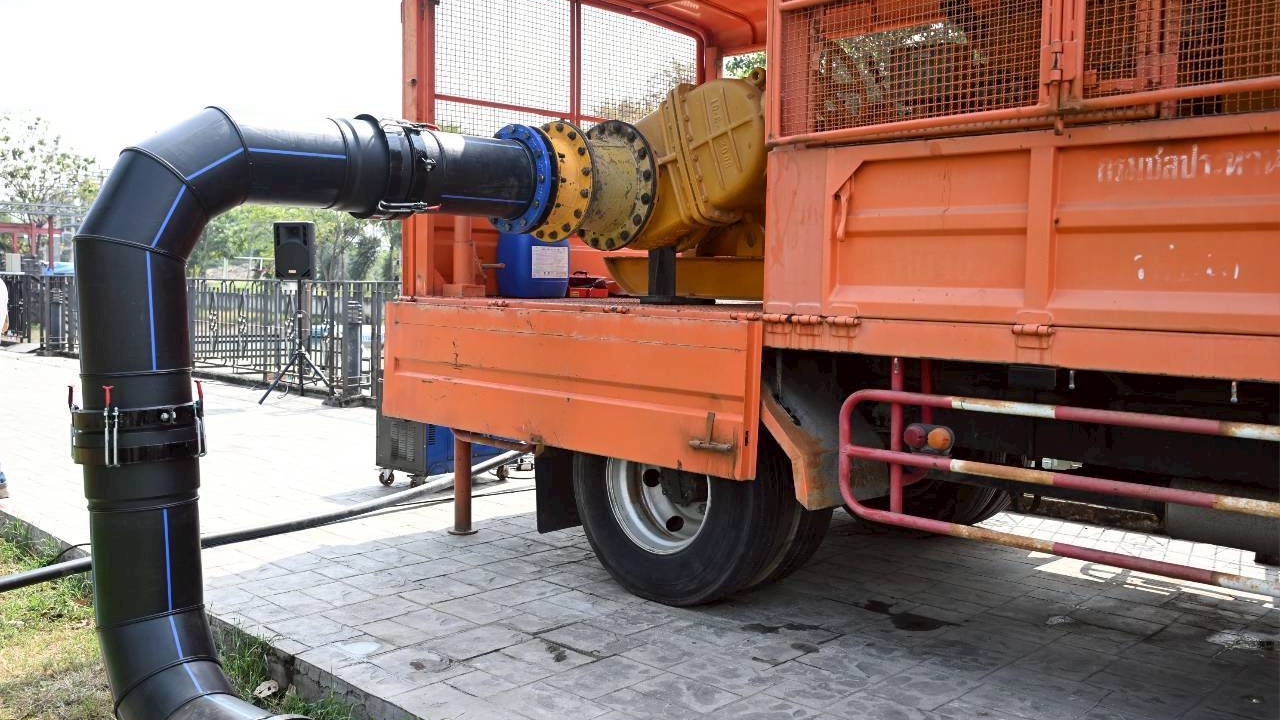
On 26 Jan 2026 GMT+7, Mr. Winarot Sapsongsuk, Permanent Secretary of the Ministry of Agriculture and Cooperatives, chaired the press conference introducing the "Natural Rubber Innovation for Thai Irrigation," a collaboration between the Royal Irrigation Department and the Rubber Authority of Thailand to develop and expand natural rubber use in irrigation. The event showcased innovations such as the RID-UNITED natural rubber buoy for catching water hyacinth and HDPE pipes blended with natural rubber for water conveyance and drainage, which are practical innovations implemented in irrigation areas. Attendees included Mr. Suriyaphol Nuchanong, Director-General of the Royal Irrigation Department; Dr. Puek Lertwangpong, Acting Governor of the Rubber Authority of Thailand; Mr. Krit Uttamawetin, Deputy Permanent Secretary of the Ministry of Agriculture and Cooperatives; along with executives, officials, and staff from related agencies at the Machinery Bureau, Royal Irrigation Department, Pak Kret District, Nonthaburi Province.
Mr. Winarot stated that the Ministry of Agriculture and Cooperatives is committed to supporting government policies emphasizing the promotion of natural rubber use in public agencies to increase domestic demand, stabilize rubber prices, and improve the quality of life for rubber farmers and the public. This is achieved through utilizing various natural rubber products under the academic cooperation agreement for research, testing, and quality analysis between the Royal Irrigation Department and the Rubber Authority of Thailand, aligned with the ministry's core policy to sustainably promote natural rubber use in the public sector and enhance its added value nationally.
The natural rubber innovation for Thai irrigation marks an important step in integrating government agencies to make full and sustainable use of the country's resources. It not only enhances the efficiency of irrigation and water management nationwide but also adds value to Thai natural rubber, promotes stable incomes for rubber farmers, and drives strong growth in Thai agriculture alongside long-term economic and environmental development.
Furthermore, plans are underway to expand the use of natural rubber, such as increasing the application of RID-UNITED natural rubber buoys and HDPE pipes blended with natural rubber beyond irrigation areas into Agricultural Land Reform zones, as well as continuing research in other areas. This is expected to increase domestic natural rubber use and serve as a mechanism to boost rubber prices.
Mr. Suriyaphol Nuchanong, Director-General of the Royal Irrigation Department, added that the department has applied natural rubber innovations in irrigation to solve problems and advance fieldwork. Natural rubber, being flexible, durable, long-lasting, and domestically producible, has been developed into water management equipment and structures such as RID-UNITED natural rubber buoys for catching water hyacinth and HDPE pipes blended with natural rubber for water conveyance and drainage. These innovations improve efficiency, reduce reliance on imported materials, lower costs, are environmentally friendly, and are already in use throughout irrigation areas nationwide.
The natural rubber innovation project for Thai irrigation plans to use over 900 tons of natural rubber to produce approximately 43,000 buoys and 15,000 meters of natural rubber pipes. This results from cooperation between the Royal Irrigation Department and the Rubber Authority of Thailand to integrate knowledge, innovation, and material support to concretely promote natural rubber use in irrigation, aligned with the Ministry of Agriculture and Cooperatives' policy to encourage and support natural rubber use in the public sector.
Dr. Puek Lertwangpong, Acting Governor of the Rubber Authority of Thailand, added that the authority believes integrating all sectors to utilize processed natural rubber products or develop innovations leading to commercial outcomes can reduce import costs. This not only adds value to natural rubber but also provides rubber farmers with stable incomes and improved quality of life, enabling them to sustainably continue their rubber farming profession.