

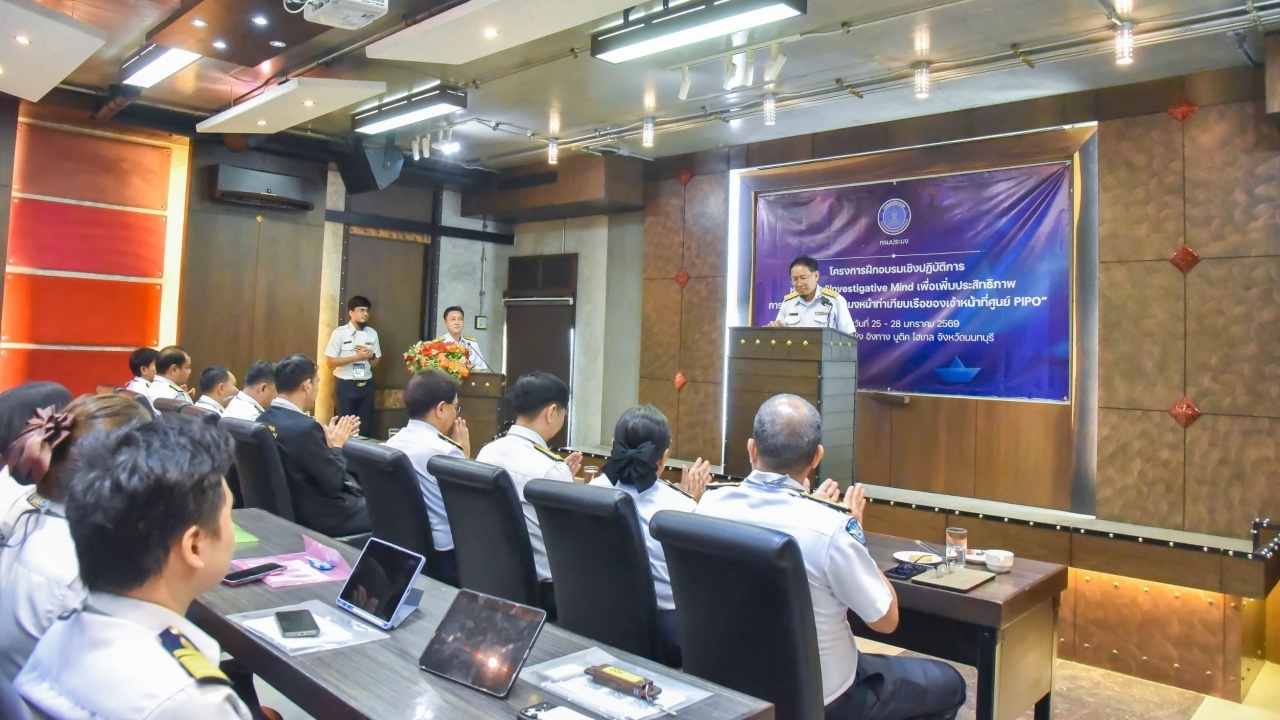
"Department of Fisheries" , Upskills PIPO officers by organizing Investigative Mind training to enhance fishing vessel inspections and sustainably prevent IUU Fishing. ,
Mr. Prathet Sorarak, Deputy Director-General of the Department of Fisheries, presided over the opening of the Investigative Mind workshop to improve the efficiency of fishing vessel inspections by PIPO officers at port. The training took place from 25–28 January 2026 to develop personnel capabilities with comprehensive knowledge and techniques. It also aimed to enhance operational efficiency and establish standards for controlling and inspecting Thai fishing vessels, with 60 participants attending. ,
Mr. Prathet Sorarak said after opening the ceremony that Deputy Prime Minister and Minister of Agriculture and Cooperatives, Lt. Gen. Thammanat Prompao, has a policy to build balanced management of fishery resources to ensure fair access, alongside effective conservation and law enforcement. ,
Under this policy framework, the Department of Fisheries organized the Investigative Mind workshop to improve the efficiency of fishing vessel inspections by PIPO officers at ports. The goal is to develop and enhance PIPO officers' capabilities as inspectors of Thai fishing vessels entering and exiting ports in compliance with legal requirements. This fosters investigative thinking, carefulness, and the ability to link in-depth data to accurately inspect vessels related to IUU fishing, ultimately benefiting fishermen and Thailand’s related businesses overall. ,
This Investigative Mind workshop covered topics including an overview of preventing Illegal, Unreported, and Unregulated (IUU) fishing; legal knowledge and authorities under the Fisheries Act of 2015 and its amendments relevant to PIPO operations; and proper procedures for reporting legal case outcomes. ,
The training also emphasized understanding different fishing gear types and fishing methods, planning, risk analysis, and inspecting vessels at ports according to PIPO operational guidelines. It included principles of working with and interpreting data from GPS and Vessel Monitoring Systems (VMS), as well as integrating VMS data with other digital information to support effective fishing inspections. ,
Additionally, techniques were shared on examining fishing logbooks to verify fishing data accuracy, inspecting physical evidence, conducting interviews to obtain truthful information, and analyzing suspicious vessel behaviors and legal elements to support formal complaints and prosecution processes. ,
The Department of Fisheries is confident that this training will enhance the knowledge and skills of operational officers, elevate national standards for fishing vessel control and inspection, strengthen law enforcement, and support sustainable management of fishery resources moving forward.