

Department of Fisheries prepares to announce closure Central Gulf of Thailand in 2026 to restore economically important aquatic resources and maintain marine ecosystem balance.
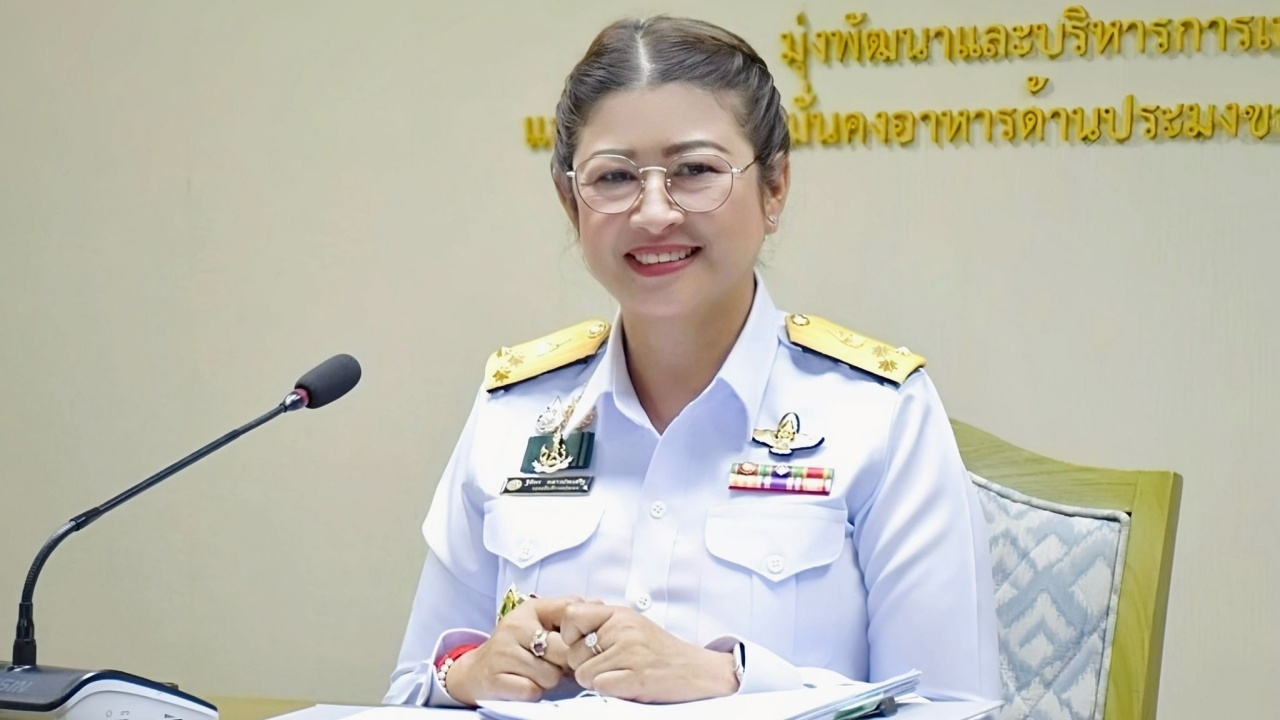
On 4 Feb 2026 GMT+7, Mrs. Thitiporn Laoprasert, Director-General of the Department of Fisheries, revealed that the Central Gulf of Thailand is a key area where the Department has long implemented management measures to protect aquatic animals during their egg-laying and juvenile stages, including seasonal closures. This area serves as habitat and breeding ground for various economically valuable aquatic species. The main goal is to conserve and sustainably manage aquatic resources, while continuously conducting research and collecting scientific data to assess the appropriateness of measures, including boundaries, timing, and permissible fishing gear, ensuring alignment with current resource conditions and fishing practices.
In 2025, the Department of Fisheries revised regulations regarding the length of gill net mesh and fishing methods during the first phase of the measure, as well as regulations on the use of encircling nets, scoop nets, or squid lift nets powered by generators, to clarify fishing details. Consequently, four additional Department of Fisheries announcements were issued, including:
1. Department of Fisheries announcement on defining area and period for aquatic animals during egg-laying and juvenile stages in parts of Prachuap Khiri Khan, Chumphon, and Surat Thani provinces, B.E. 2568 (2025), dated 22 Jan 2025.
2. Department of Fisheries announcement on defining area and period for aquatic animals during egg-laying and juvenile stages in parts of Prachuap Khiri Khan province, B.E. 2568 (2025), dated 22 Jan 2025.
3. Department of Fisheries announcement (No. 2) on defining area and period for aquatic animals during egg-laying and juvenile stages in parts of Prachuap Khiri Khan, Chumphon, and Surat Thani provinces, B.E. 2568 (2025), dated 10 Feb 2025.
4. Department of Fisheries announcement (No. 2) on defining area and period for aquatic animals during egg-laying and juvenile stages in parts of Prachuap Khiri Khan province, B.E. 2568 (2025), dated 10 Feb 2025.
The new announcements maintain the same areas and timeframes as before, comprising three zones across two periods, as follows:
Scientific assessments show that in Zone 1 during the measure period, most short mackerel caught exceed the length at first maturity, with an average gonadosomatic index above 80%, indicating readiness for spawning. This aligns with monitoring of the distribution of short mackerel and other juvenile economic species, which increased during the closure and smaller short mackerel groups were found after the measure ended.
Furthermore, catch per unit effort (CPUE) data from permitted fishing gear before and after the measure show increased catches. For example, the encircling net with electric generators caught 1,843 kg per day before the measure, rising to 3,339 kg per day. In Zone 2, surveys after the measure found short mackerel sized 10–16 cm with relatively high CPUE, with encircling nets with electric generators, sonar nets, and anchovy encircling nets catching 3,700, 2,233, and 3,750 kg per day respectively. In Zone 3, short mackerel sized 15–17 cm and relatively high CPUE were found after the measure.
Therefore, these findings confirm that the measures regarding spatial boundaries, timing, and permitted fishing gear are appropriate and aligned with the breeding season of aquatic animals. They effectively protect breeding stocks, allowing spawning and the generation of new aquatic populations to sustain the marine ecosystem.