

Thammanat traveled south to announce a three-month closure of the Gulf of Thailand in three provinces, driving aquatic resource management to build sustainable food security in the region.
On 13 February 2026, Captain Thammanat Prompao, Deputy Prime Minister and Minister of Agriculture and Cooperatives, presided over the ceremony announcing the 2026 aquatic resource management measures for spawning and nursery areas in the Gulf of Thailand. He also launched a fleet of inspection vessels to operate in the area to protect and conserve fisheries resources along the Gulf coast, which serve as critical spawning and nursery grounds for economically important aquatic species. The event was held at Chumphon Fishing Pier, Pak Nam Chumphon Subdistrict, Mueang Chumphon District, Chumphon Province, with the participation of Governor Thianchai Chookittiviboon, Director-General Thitiporn Laowaprasert of the Department of Fisheries, heads of agriculture-related agencies, local government officials, fishermen, and local residents.
Director-General Thitiporn Laowaprasert of the Department of Fisheries stated that the 2026 aquatic resource management measures targeting spawning and nursery areas in the Gulf of Thailand remain an ongoing annual initiative. The measures cover the Gulf of Thailand area and are divided into two periods for the central Gulf: from 15 February to 15 May 2026, covering from the tip of Khao Monglai, Prachuap Khiri Khan Province, to Don Sak District, Surat Thani Province; and from 16 May to 14 June 2026, covering the adjacent area from the tip of Khao Monglai to Hua Hin District, Prachuap Khiri Khan Province, as detailed in the attached map of the central Gulf closure announcement.

The Gulf of Thailand closure is a key scientifically based measure. The Department of Fisheries continuously monitors and evaluates it to adapt to changing resource conditions and fishing practices. In 2025, four additional announcements were issued to improve the measure, reducing the capture of broodstock to allow aquatic animals to reproduce naturally and maintain ecological balance. Studies have shown a significant increase in catch per unit effort (CPUE) following the closure period.
Statistics indicate that the daily catch in the central Gulf increased from 198 kilograms in 2024 to 276 kilograms in 2025. Additionally, there has been an increase in juvenile short mackerel after the closure, reflecting tangible resource recovery according to their life cycles. This measure is thus a crucial mechanism to preserve marine ecosystem balance, restore aquatic resources, and enhance fishermen's income security, alongside promoting long-term national food security.
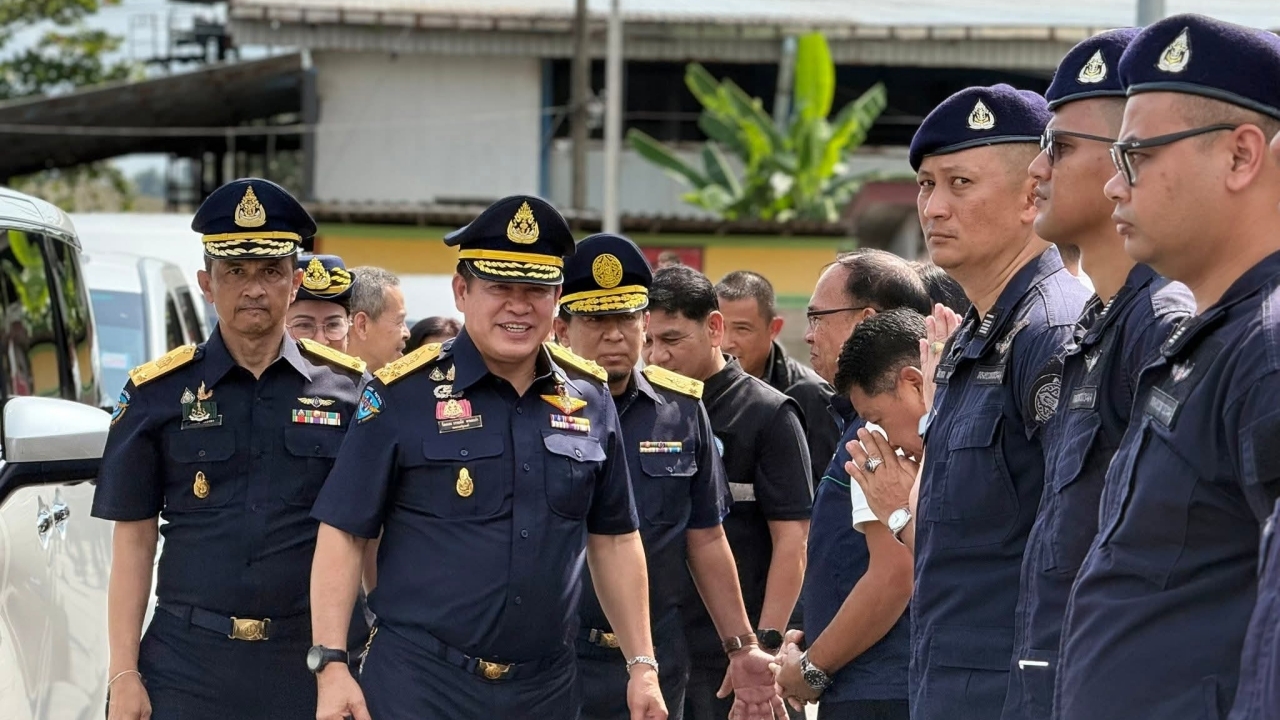
The event included an official announcement of the measures and a ritual honoring Admiral Prince Abhakara Kiartivongse, the Prince of Chumphon, for auspiciousness and to encourage the morale of officials involved. Captain Thammanat honored the occasion by releasing 14 fisheries patrol vessels to monitor and oversee fishing activities in the area and by releasing 502,300 aquatic animals to restore the Gulf’s resources, including 500,000 black tiger shrimp and 2,300 black mullet fish. He also presented subsidy plaques to strengthen fisheries production groups for 2026 to community leaders from 13 local fishing communities across Chumphon, Surat Thani, and Prachuap Khiri Khan provinces.

Attendees also visited exhibitions presenting fisheries knowledge related to the measures, such as academic evaluations of the 2025 Gulf closure, displays of short mackerel egg stages—an economically important species—and controls on commercial fishing vessel operations by the vessel entry-exit control center. Monitoring and surveillance through the Vessel Monitoring System (VMS) and the Fisheries Next application were also showcased. Exhibits from the Fish Marketing Organization and the Prirunrat Agricultural Service Center of Chumphon Province were available, including the “Sea Takes a Break, Women Value Worth, Processing Creates Price, Restoring Gulf Balance” exhibition, highlighting fishery product development to generate income for Chumphon women’s groups during the closure period. Additionally, booths selling processed fish products bearing the Green Flag fisheries logo, signifying freshness, cleanliness, standards compliance, safety, and environmental care, were featured at the event.
