

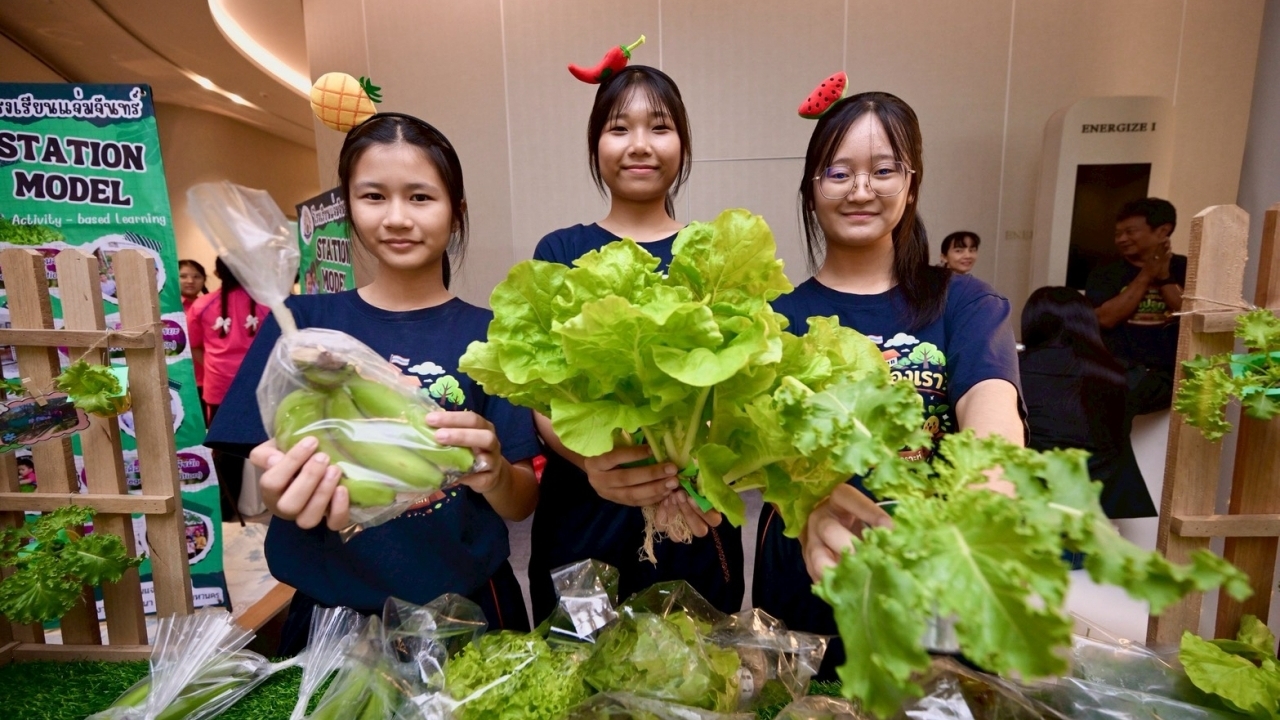
Urban agriculture is advancing city policy from "vegetable plots" to "urban food systems." The Thai Health Promotion Foundation (สสส.) is joining forces with the Bangkok Metropolitan Administration (BMA) and the Urban Design and Development Center (UDDC-CEUS) to draw lessons and promote "edible green spaces" as local health infrastructure. This initiative connects neighborhoods, schools, and communities to support food security and enhance Bangkok's resilience.
On 20 Feb 2026 GMT+7, the Urban Design and Development Center (UDDC-CEUS) of the Faculty of Architecture, Chulalongkorn University, together with the Thai Health Promotion Foundation (สสส.) and the Bangkok Metropolitan Administration, held a public presentation titled “Urban Agriculture: Edible, Nearby, Urban Food Systems—Strategies to Expand Healthy Spaces Using Urban Agriculture Concepts.” The event showcased results and policy proposals to drive healthy urban spaces through urban agriculture concepts in Bangkok.

Mr. Pornprom Wikitseth, Advisor to the Governor of Bangkok and Chief Sustainability Officer (CSO) of the city, delivered a keynote on “Urban Agriculture Driving Neighborhoods and Networks: Bangkok’s Role in Linking Urban Development and Urban Food Systems.” He stated that BMA views urban agriculture as a new type of green infrastructure that connects neighborhoods and partner networks to strengthen food security, quality of life, and long-term urban resilience. By integrating land, environmental, health, and public participation policies harmoniously, urban agriculture will evolve beyond isolated activities to become an integral part of the urban food system. BMA is actively working to implement urban agriculture and urban food systems at all levels—from neighborhoods and communities to collaboration with multiple sector partners—to achieve tangible results.
Ms. Niramol Rasri, Director of the Health Promotion Lifestyle Bureau at the Thai Health Promotion Foundation (สสส.), said that สสส. emphasizes creating "health-enabling environments," especially in large cities facing space constraints, unequal access to quality food, and sedentary lifestyles. Health emerges in places where we live, work, and spend daily life. Thus, urban agriculture is not merely vegetable growing but a system-building effort for food and health in cities. Urban agriculture plays a key role in three main dimensions: 1) enhancing food security at household and community levels, 2) promoting physical activity, and 3) increasing urban green spaces—all fundamental factors in reducing non-communicable disease (NCD) risks long-term.

“Advancing healthy food systems requires both building knowledge and adjusting environments simultaneously. Urban agriculture is a structural mechanism making healthy food choices accessible, nearby, and sustainable. This forum conveys policy proposals for city agencies and partners to develop concretely,” Ms. Niramol added.
Assoc. Prof. Dr. Niramol Serisakul, Director of the Urban Design and Development Center (UDDC-CEUS), said that over more than three years of study and pilot projects—1) 15-Minute Vegetable Gardens in public and semi-public spaces, 2) Plantable Bangkok collaborative planting in private spaces, and 3) Our School is Plantable initiative in educational institutions—four key factors emerged to drive effective urban agriculture: policy, land, actors, and resources. A crucial lesson is that sustainable urban agriculture requires enabling policies for urban land use, building multi-level actor networks, and equitable access to resources. When these four factors align, the urban food system becomes embedded in the city’s structural fabric.
The director also noted that this public presentation is not just a project summary but a policy milestone for BMA to elevate "edible green spaces" as part of urban planning, land management, and accessible healthy food systems close to residents. This will lead to a city with food security, good health, and resilience to long-term changes.
