

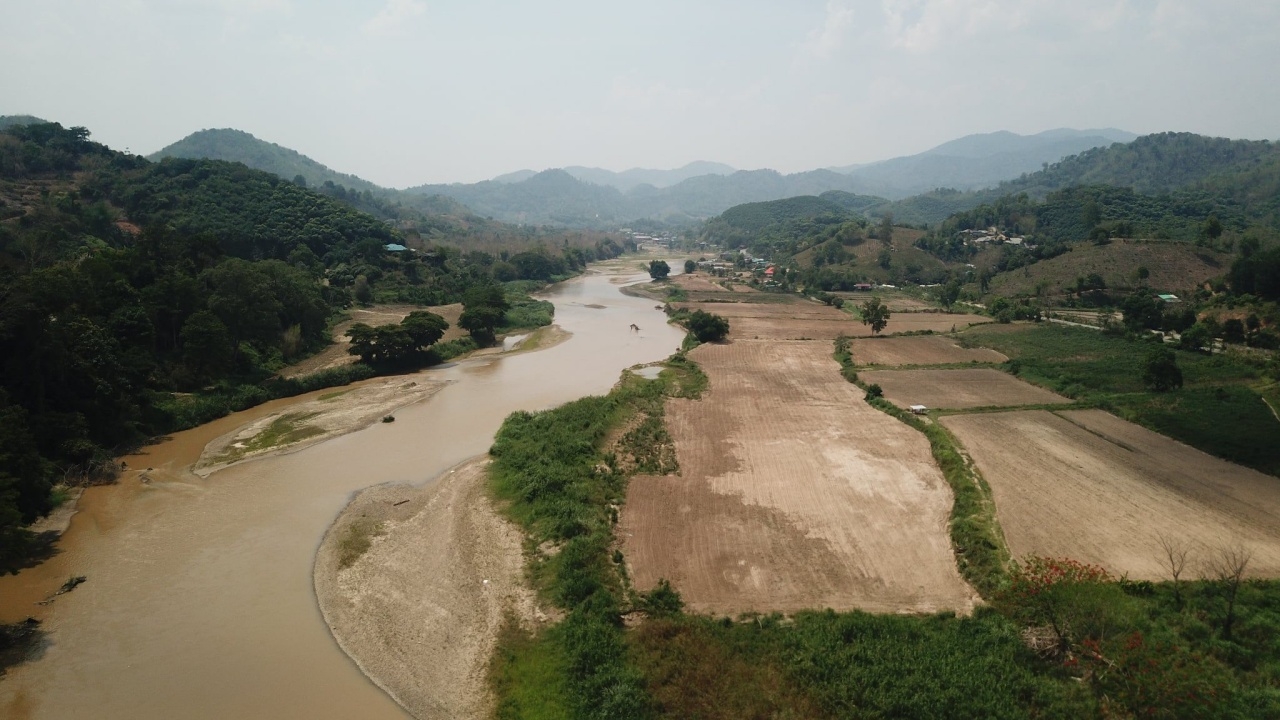
"Chiang Rai" Raises surveillance on four main rivers after detecting "Arsenic levels" in sample groups; provincial governor orders urgent retesting and sets up coordination center, emphasizing not to panic or impact tourism
At 14:30 on 25 Feb 2026 GMT+7, at the Thammalanka Meeting Room, 3rd floor, Chiang Rai Provincial Hall, Mr. Chucheep Pongchai, Governor of Chiang Rai, chaired the 2/2026 meeting of the committee monitoring and inspecting the quality of the Kok, Sai, Ruak, and Mekong Rivers. Present were Mr. Prasert Jitpleecheep, Deputy Governor, representatives from Mae Fah Luang University, Chiang Rai Provincial Resources and Environment Office, Chiang Rai Public Health Office, Chiang Rai Fisheries Office, and other relevant agencies.
The meeting reported preliminary research results after flooding. Samples from 10 subjects in target areas showed arsenic levels up to approximately 1.947 mg/kg, with some cases possibly exceeding international standards. The main at-risk groups include farmers and those exposed to water for more than 10 years, as well as vulnerable groups such as children and the elderly exhibiting abnormal skin conditions and numbness.

The research team noted uncertainties due to the small sample size and significant confounding factors, including pesticide spraying within 24 hours before sampling, which may affect accuracy. Meanwhile, overall raw water tests by government agencies at some points remain within standard limits.
Governor Chucheep Pongchai directed the meeting to implement proactive strategies to clarify the situation and prevent wider impact as follows:
1. Confirmation (High Priority): Mae Fah Luang University researchers, together with the Pollution Control Department, must urgently retake samples from the environment (water/sediment) and biological specimens (urine/hair), strictly following SOP standards, and report preliminary results within two weeks.
2. Establish a coordination center: The Provincial Office is tasked to lead the creation of a central data hub to link laboratory and administrative agencies’ work, reducing duplication.
3. Upgrade laboratories: Support Mae Fah Luang University and the Medical Science Center to become main reference labs locally for faster heavy metal analysis without sending samples to central labs.
4. Clinical surveillance system: Network hospitals will collect samples from at-risk groups and nearby students to assess short- and long-term health impacts.
A major concern at the meeting was the impact on tourism and the province’s image. The governor ordered the Provincial Public Relations Office to produce two types of communications: scientific information for experts and simple infographics/animations for the public and tourists, focusing on correct behavior guidance.
"We must speak truth based on science. Do not draw conclusions prematurely before confirmation from reference labs to avoid unnecessary public alarm and harm to Chiang Rai’s tourism industry," the governor said.
For the long-term plan, the province will develop a risk map to identify whether arsenic originates from agriculture, mining, or natural sources, with continuous monitoring for at least three years to study accumulation in the food chain.
The committee will reconvene within two weeks to review retesting results and approve budgets to advance the coordination center’s operations.