

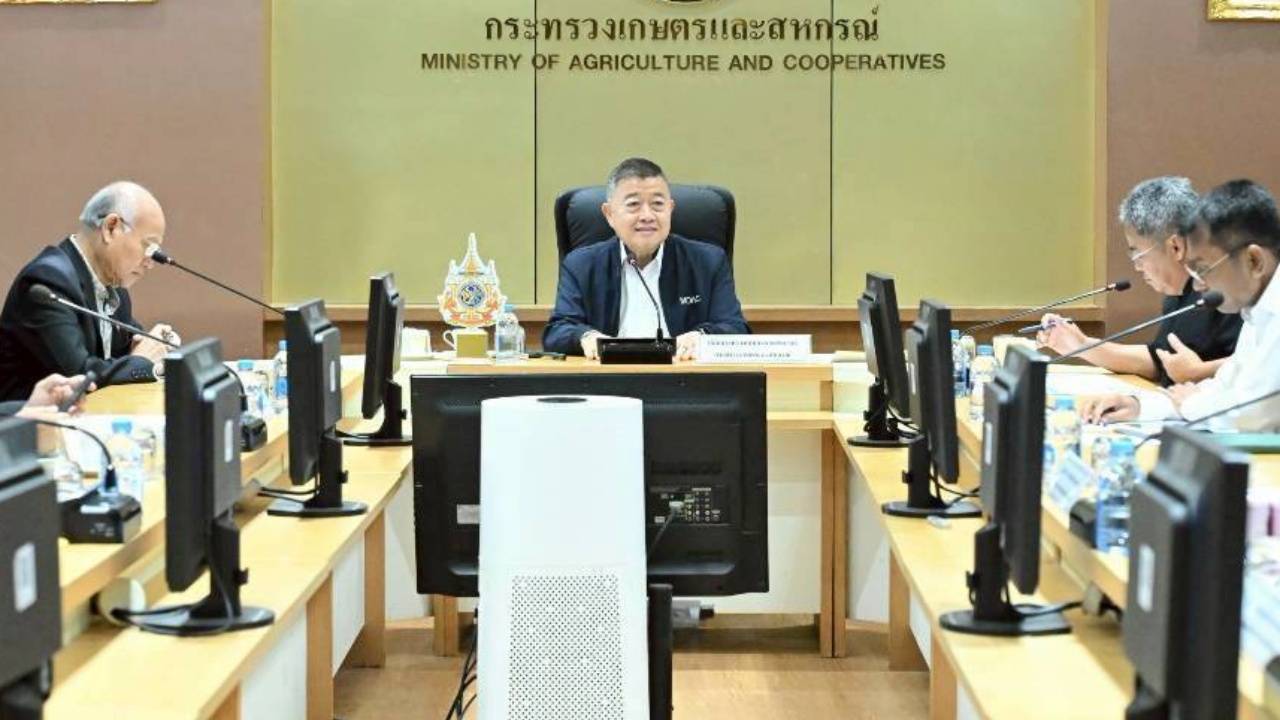
The Permanent Secretary of the Ministry of Agriculture and Cooperatives unveiled a reform plan for the system of "School Milk" highlighting quality measurement criteria to control median prices while stressing that the allocation of rights in seven areas must be transparent and fair.
On 14 May 2026, Mr. Winaroj Sapsongsuk, Permanent Secretary of the Ministry of Agriculture and Cooperatives, chaired the 8th/2026 meeting of the Food and Milk Committee for Children and Youth. Deputy Permanent Secretary Mr. Aphai Sutthisang and relevant agencies joined the meeting at the ministry's conference room 135 to expedite the allocation of rights and distribution areas for school milk, aiming to deliver to youth by 18 May.
The meeting reviewed progress across seven nationwide areas, most of which are under appeal consideration and detailed vetting of operators’ qualifications. It assigned the Subcommittee on Central Management of the School Milk Supplement Project to handle appeals uniformly to ensure speed and fairness, strictly adhering to Cabinet resolutions.
However, it maintained flexibility for administrative management to alleviate difficulties faced by operators and small dairy cooperatives committed to their profession, ensuring efficient circulation of raw milk into the program.
Regarding additional allocation of sales rights, the meeting prioritized dairy cooperatives, state enterprises, and educational institutions within the area before considering other operators. This aims to guarantee product freshness and timely delivery to youth. Operators granted rights must have no record of serious disciplinary violations.
The Permanent Secretary emphasized rigorous and transparent inspection of raw milk volumes to prevent data distortion for business gain. He also ordered clear documentation of details and reasons for using administrative powers to support future audits, as well as preparation to coordinate UHT milk delivery to ensure all children receive school milk at the start of the academic year.
Additionally, the Ministry is laying foundations for long-term reform of the school milk system to sustain farmers amid challenges from imported powdered milk. The concept involves adjusting the median raw milk price based on quality—Quality-based Pricing—to encourage producers to improve milk standards, enhancing competitiveness and improving Thai children’s nutrition simultaneously.
Moving forward, discussions will be held to review lessons learned and improve the rights allocation process for faster implementation next year, including revising the raw milk purchase agreement (MOU) to align with the project timeframe, reducing redundancy, and systematically addressing price structure issues.