

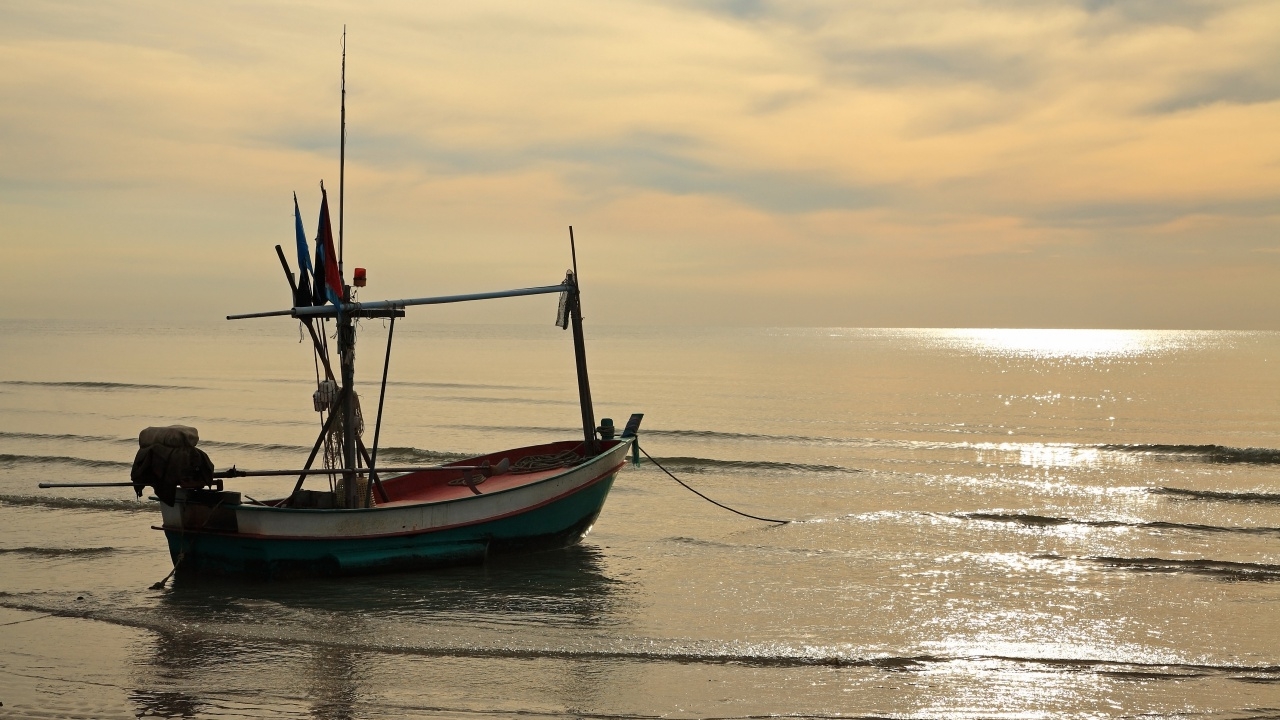
Starting 15 Jun 2026, the Department of Fisheries has announced the "Closure of the Inner Gulf of Thailand in an 'L' shape" across 8 provinces to protect aquatic animals, giving them the opportunity to reproduce and spawn, and to grow, ensuring a balance between resource use and conservation.
The Department of Fisheries has implemented resource management measures during the spawning and juvenile stages of aquatic animals in the Inner Gulf of Thailand (the 'L'-shaped gulf) for 2026 in two periods. Phase 1 runs from 15 June to 15 August 2026, covering parts of the western Inner Gulf including some areas of Prachuap Khiri Khan, Phetchaburi, Samut Songkhram, and Samut Sakhon provinces. Phase 2 runs from 1 August to 30 September 2026, covering the northern Inner Gulf including parts of Samut Sakhon, Bangkok, Samut Prakan, Chachoengsao, and Chonburi provinces. The Department calls on fishermen to strictly comply with these measures to jointly conserve and manage the Inner Gulf's resources sustainably and naturally.

Ms. Thitiporn Laowprasert, Director-General of the Department of Fisheries, revealed that managing resources during the spawning and juvenile periods in the Inner Gulf of Thailand ('L'-shaped gulf) is a key annual task to protect aquatic animals, ensuring they have a chance to reproduce and grow, maintaining balance with resource use.
This aligns with scientific assessments referencing data from 2025, showing the Inner Gulf hosted juvenile aquatic animals during both phases of the measures. Moreover, fishing survey vessel 2 recorded increased catch rates during and after the closure periods compared to before the measures were applied.
In Phase 1, catch rates increased to 2,036.17 kilograms per day from 1,500.00 kilograms per day before the measures (a 1.35-fold increase). In Phase 2, catch rates rose to 1,451.85 kilograms per day from 950.00 kilograms per day prior (a 1.52-fold increase). The catches mainly included economically important surface fish such as short mackerel, green sardine, and striped sardine.
Regarding short mackerel, a key economic species in the Gulf, after the closure of the central Inner Gulf near Prachuap Khiri Khan, the short mackerel caught measured about 13 centimeters in length, indicating their movement into the closed area. These fish grow into mature short mackerel measuring 13 to 22 centimeters.
Additionally, examining short mackerel catch statistics in the Inner Gulf for the previous year shows an increase. Comparing production between 2024 and 2025, catches by encircling nets rose from 1,401 tons in 2024 to 1,761 tons in 2025, an increase of 360 tons or 25.6%.
All these data demonstrate that the closure of the Inner Gulf of Thailand ('L'-shaped gulf) is effective and appropriate in terms of area and timing, yielding tangible positive results. Therefore, in 2026, the Department of Fisheries will continue implementing the measures in two phases with the following key operational guidelines.
Phase 1: From 15 June to 15 August 2026. This covers fishing areas in the western Inner Gulf, including parts of Prachuap Khiri Khan, Phetchaburi, Samut Songkhram, and Samut Sakhon provinces, starting from Hua Hin district in Prachuap Khiri Khan and ending at Mueang district in Samut Sakhon, covering approximately 2,350 square kilometers.
Phase 2: From 1 August to 30 September 2026. This includes fishing areas in the northern Inner Gulf, parts of Samut Sakhon, Bangkok, Samut Prakan, Chachoengsao, and Chonburi provinces, beginning from Mueang district in Samut Sakhon and ending at Si Racha district in Chonburi, covering about 1,650 square kilometers.

Permitted fishing gear, methods, and conditions are as follows.
1. Trawls with metal plates (Otter trawls) attached to single-engine boats under 20 gross tons may fish only at night and outside coastal waters.
2. Gillnets attached to engine boats under 10 gross tons, with mesh size 5 centimeters or more, net length not exceeding 2,000 meters per boat, are allowed, but surrounding or encircling fishing methods are prohibited.
3. Gillnets for crabs, shrimp, and squid.
4. Surrounding nets, scoop nets, or squid lift nets used with generators (electric generators) are permitted outside coastal waters.
5. Crab traps with mesh size at least 2.5 inches, limited to 300 traps per boat, are allowed within coastal waters.
6. Crab traps with mesh size at least 2.5 inches on the trap belly are permitted outside coastal waters.
7. All types of squid traps.
8. All types of fish corrals used by traditional fishermen in coastal waters.
9. Shell dredging gear, subject to compliance with the Ministry of Agriculture and Cooperatives' regulations restricting use and fishing areas for this gear.
10. Shrimp trawl nets, following Ministry of Agriculture and Cooperatives' regulations on net types, vessel sizes, methods, areas, and fishing durations.
11. Lift nets, fish traps, swing nets, cast nets, hooks, fish traps, and harpoons.
12. Other gear not used on engine-powered boats during fishing.
13. Fishing boats under 10 gross tons equipped with fishing gear other than encircling nets, anchovy nets, twin trawls, beam trawls, surrounding nets, scoop nets, or lift nets used with generators or electric boats, and gear prohibited under Section 71(1) of the Fisheries Act B.E. 2558 (2015).
Use of gear listed in items 2, 3, 4, 5, 6, and 7 must comply with Ministry of Agriculture and Cooperatives' regulations under Section 71(1) and must not use gear banned under Sections 67, 69, or 71(1) of the Fisheries Act B.E. 2558 and its amendments.
Highly efficient fishing gear remains strictly prohibited in the area and period of the closure due to observed catches of small economic aquatic animals after the measure. Violators face fines ranging from 5,000 to 1,000,000 baht, depending on vessel size, or five times the value of the caught aquatic animals, whichever is higher, plus administrative penalties.
The Director-General of the Department of Fisheries concluded by urging fishermen and all related parties to strictly comply with the measures to jointly manage and conserve aquatic resources. The Department will continuously monitor results to align with the "BLUE TRANSFORMATION: Transforming Thai Fisheries Toward Sustainability" policy of Deputy Minister of Agriculture and Cooperatives, Mr. Watcharapol Khaokham, focusing on Biodiversity & Balance to harmonize fisheries economy with natural resource conservation.
The Department also opens opportunities for communities to participate in restoring aquatic habitats, in line with the Fisheries Connect for Sustainability approach, emphasizing integrated fisheries resource management. This is a key step in restoring aquatic resources to abundant and sustainable growth in the future.