

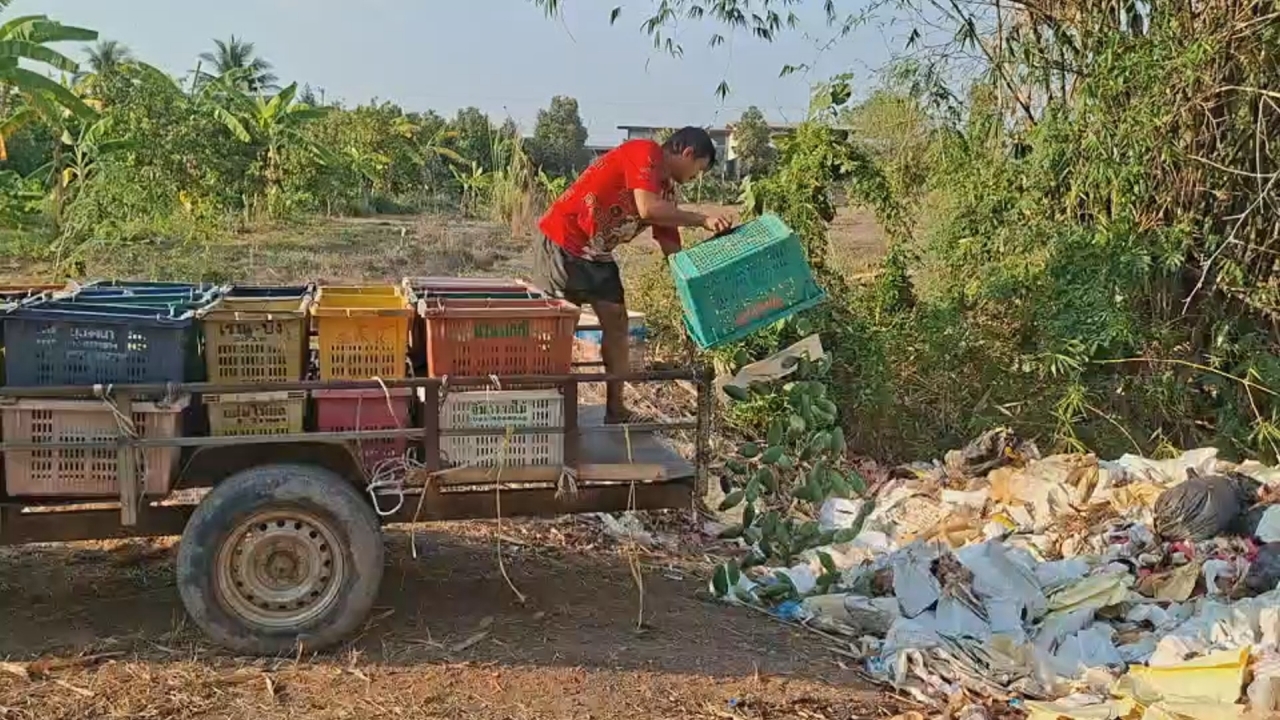
Phichit mango farmers are in tears, forced to load their mangoes onto trucks and dump them in garbage pits after prices for the “Falan” and “Kiew Savoey” varieties at orchards plunged to just 2 baht per kilogram. Fuel shortages and costly oil have made transport operators reluctant to buy, while imported “Kaew” mangoes from neighboring countries have entered the market and undercut prices.
On 24 Mar 2024 GMT+7, mango farmers in Wang Thap Sai subdistrict, Sak Lek district, Phichit province — a major mango-exporting area of both the province and country — are facing a severe price collapse crisis. Particularly affected are the raw-eating varieties like Falan and Kiew Savoey, whose orchard prices have crashed to just 2-3 baht per kilogram. Meanwhile, mixed-grade Golden Nam Dok Mai mangoes have dropped to only 10 baht per kilogram. This situation has made it impossible for farmers to cover costs, and buyers are scarce. As a result, farmers have had to reluctantly load large quantities of spoiled fruit onto tractors to dump in landfill pits. The main cause is the energy crisis, with fuel scarce and expensive, deterring middlemen and transport vehicles from buying produce as it is not worth the risk or cost, especially fearing running out of fuel en route.
The crisis is worsened by the influx of “Kaew” mangoes from neighboring countries flooding the large wholesale markets around Bangkok at cheaper prices, causing Thai mangoes to lose market share.

Representatives of farmers and mango packhouses have appealed to the government to urgently address energy security issues and seriously regulate foreign fruit imports before the local billion-baht community economy collapses.
Mrs. Somjai Thapthim, a mango farmer from Wang Thap Sai, expressed her distress, saying current mango prices have fallen to just 2-3 baht per kilogram, even for high-quality produce. The main cause is the fuel crisis, with expensive and hard-to-find oil. Transport vehicles can only refuel 300-500 baht at a time, insufficient for long trips. This prevents middlemen and Malaysian buyers from purchasing produce normally, leading to oversupply and spoilage at packhouses. She urged the government to promptly resolve the fuel problem to restore normal product distribution before farmers suffer heavier losses.
Mr. Kanokphop Warin, owner of a mango packhouse in Phichit and nearby border areas, said prices for Nam Dok Mai and Man mangoes have continued to plummet, now only 10 baht per kilogram, as buyers face high risks from transport costs and uncertain fuel availability. Beyond energy factors, he pointed to the serious problem of “Kaew” mangoes from neighboring countries flooding Thailand’s large wholesale markets at cheaper prices, severely damaging Thai mango prices. Although the government claims there are no imports, he called for inspections and support for farmers and buyers facing this crisis.