

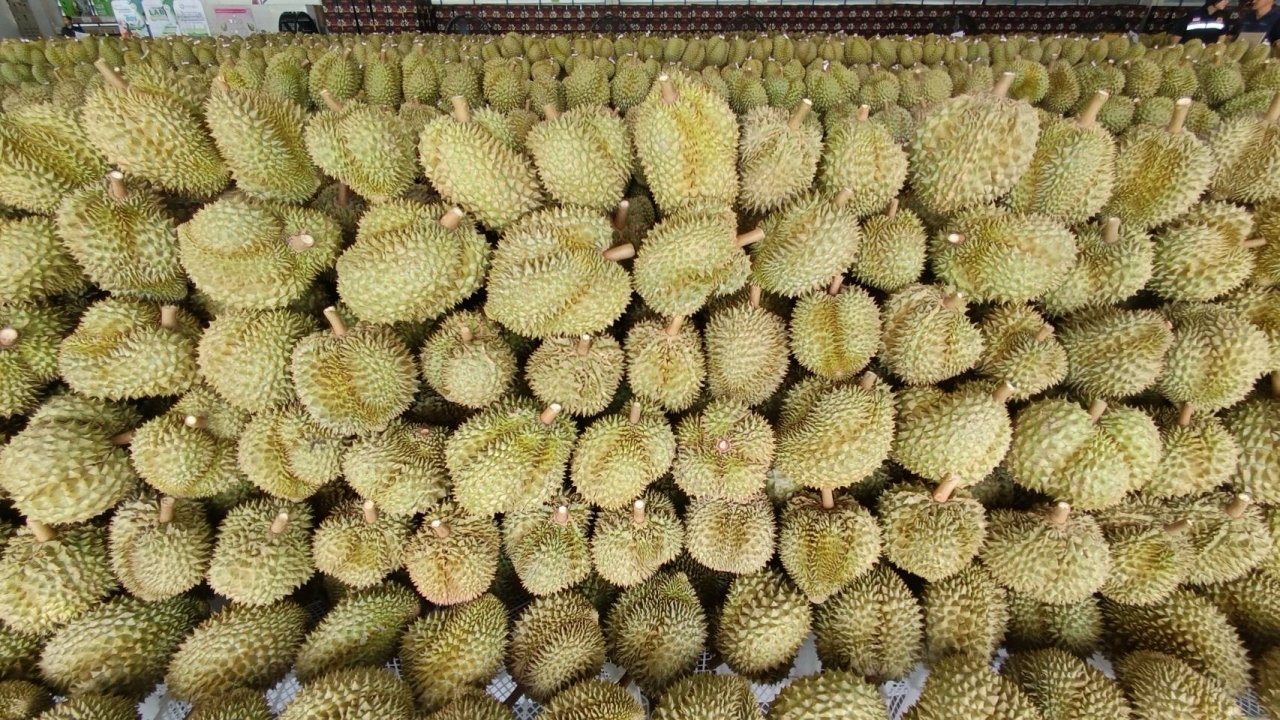
Relevant agencies are preparing to handle the second big batch of durians, with production exceeding 300,000 tons. They are conducting random inspections at packaging centers to prevent undersized durians from mixing in. At the same time, cooperative networks have opened collection points for fallen durians that are still of good quality to be processed, providing additional support to farmers.
On 6 May 2026, reporters reported that agencies under the Ministry of Agriculture and Cooperatives in Chanthaburi province are preparing to handle the second batch of durian production, which will enter the market in May. They emphasize strict quality control alongside monitoring the effects of unpredictable weather during the monsoon season.
Since the evening of 5 May 2026, Mr. Chanadol Satthanaphat, Director of the Agricultural Research and Development Office Region 6 (ARD 6), together with the Provincial Agriculture Officer and the Provincial Cooperative Officer, led a special task force along with police and local authorities to intercept the movement of low-quality or immature durians entering the market along major routes. This follows damage from the second wave of storms, which caused many durians near harvest to be knocked down and damaged in several areas, totaling over 100 tons.

Mr. Chanadol Satthanaphat, Director of ARD 6, explained that durians knocked down by storms, known as 'windfall durians,' entering the market would damage the reputation and trust in the product. The interception is not just about inspections but also involves tracking the fruit to its final destination to ensure these durians are completely removed from the market cycle. Initial checks found dozens of trucks gradually transporting durians from affected areas in Khao Khitchakut and Tha Mai districts. Officials recorded the histories and verified destination documents, classifying the fruit into two groups: 85% are durians beginning to ripen, which are allowed to be moved to processing factories or cold storage to make ice cream; and 15% are immature durians, which are removed from the commercial system, used for community compost, and labeled to strictly prohibit sale.
Meanwhile, the special task force is conducting random inspections at packaging centers and retail stalls throughout the province to prevent fallen durians from mixing with quality durians prepared for export. To address farmers' difficulties, cooperative networks have set up collection points to purchase fallen durians that remain good quality for processing, providing income support while preserving the image of Chanthaburi durians.

Regarding the second batch of durians entering the market in May, Ms. Pacharee Naenna, Chanthaburi's Agriculture and Cooperative Officer; Ms. Jaruwan Thongbai, Provincial Agriculture Officer; Mr. Kittikasem Nimsart, Director of the Standards Control Division at the National Bureau of Agricultural Commodity and Food Standards (ACFS); and Mr. Chanadol Satthanaphat, Director of ARD 6, are preparing to manage the upcoming harvest, which is forecasted to reach 318,191 tons. This accounts for 49.26% of the total seasonal output and represents the peak production period this year amid risks from summer storms that could damage durian orchards and affect the quality available on the market.
In terms of current market prices, the average price for grade AB durians is: Monthong at 125–135 baht per kilogram, Kradum at 55–65 baht per kilogram, Chanee at 70–90 baht per kilogram, and Puangmanee at 60–80 baht per kilogram. Compared with last year's prices, the overall trend shows a decline despite some periods of stable, satisfactory prices. The main reasons include increased production volume and intensified competition in export markets, particularly from rival countries, resulting in overall lower prices compared to the previous year.

As for undersized or 'super small' durians, which had large production in the first batch and were distributed domestically to encourage local consumption and expand destination markets—especially since exports to Cambodia are currently halted—the second batch will also require distribution to domestic consumers. E-commerce and online sales of undersized durians by influencers or well-known traders remain a viable solution amid recent controversies over durians priced at 100 baht each. Live-selling premium or export-grade durians allows prices to be profitable and worthwhile. However, moving forward, questions remain about what will happen if the government does not assist with the undersized fruit, despite past efforts promoting farmers to sell online directly from their orchards.