

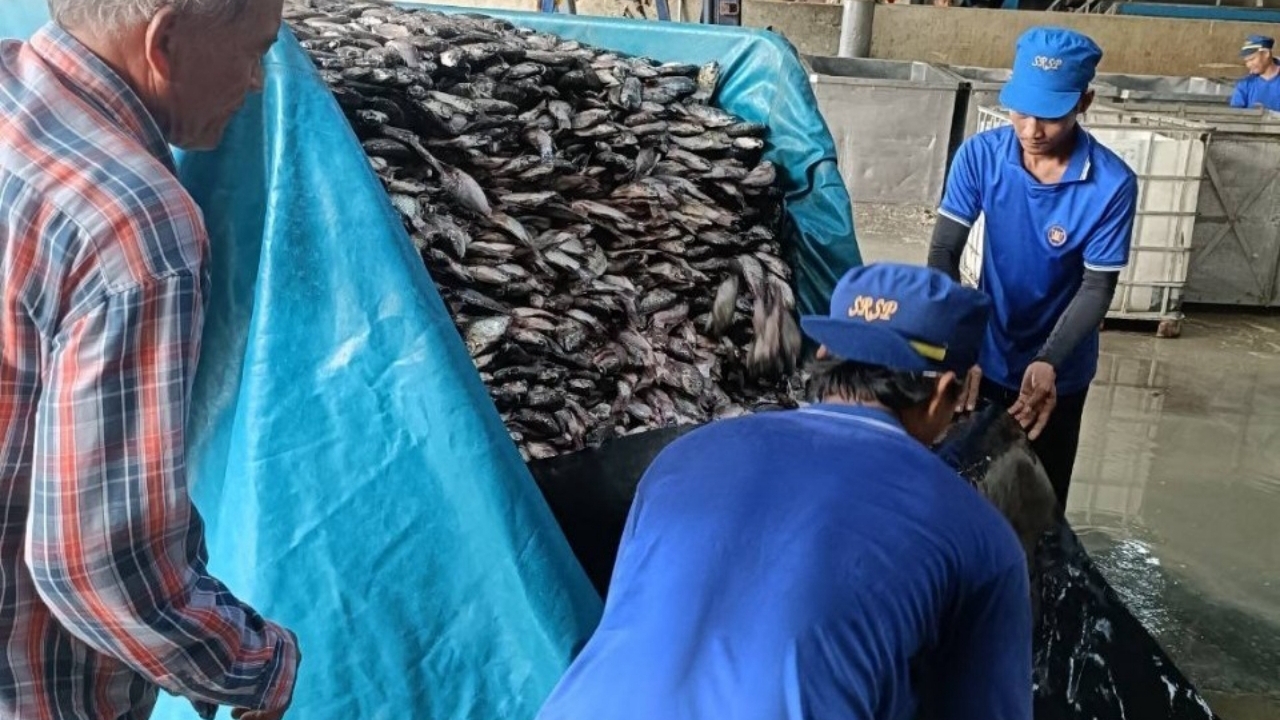
Farmers and fishermen from five provinces are flocking daily to sell black-chinned tilapia to a fishmeal factory in Samut Sakhon, which accepts unlimited quantities to support the approach. "Capture-Use-Reduce Spread".
The Samut Sakhon fishmeal factory continues to purchase black-chinned tilapia. Recently, it has bought over 33,000 kilograms after the Department of Fisheries eased procedures, allowing farmers and fishermen to sell fish more conveniently by simply showing their ID cards at purchase points without needing certification from local authorities.
Mr. Preecha Sirisaengarampee, owner of Sirisaengarampee Co., Ltd., a fishmeal factory with international standards in Mueang District, Samut Sakhon, revealed that since the factory began cooperating with the provincial fisheries office to buy black-chinned tilapia at 10 baht per kilogram and eased conditions, farmers and fishermen from various areas including Samut Sakhon, Samut Prakan, Samut Songkhram, Bangkok, and Phetchaburi have continuously brought fish to sell daily.

"Farmers have responded quite well because they can sell their catch directly without going through middlemen, increasing their income. At the same time, this helps reduce the amount of black-chinned tilapia in water bodies. Each day, no less than 30,000 kilograms are brought to the factory," Mr. Preecha said.
The factory continues to accept black-chinned tilapia from all provinces to support management of the species in various areas and increase utilization channels by processing the fish into fishmeal for use in the animal feed industry.
The factory is responsible for reporting purchase results daily to the provincial governor and fisheries office, reducing burdens on farmers. It also requests farmers and transporters to handle transportation carefully to prevent fish from escaping during transit, which could lead to spreading in new areas.

This cooperation between the fishmeal factory and the Department of Fisheries is an important mechanism to accelerate the removal of black-chinned tilapia from ecosystems while creating economic incentives for communities and fishermen to participate continuously in managing the problem through the "capture-use-reduce spread" approach, which is gaining increasing interest in many parts of the country.