

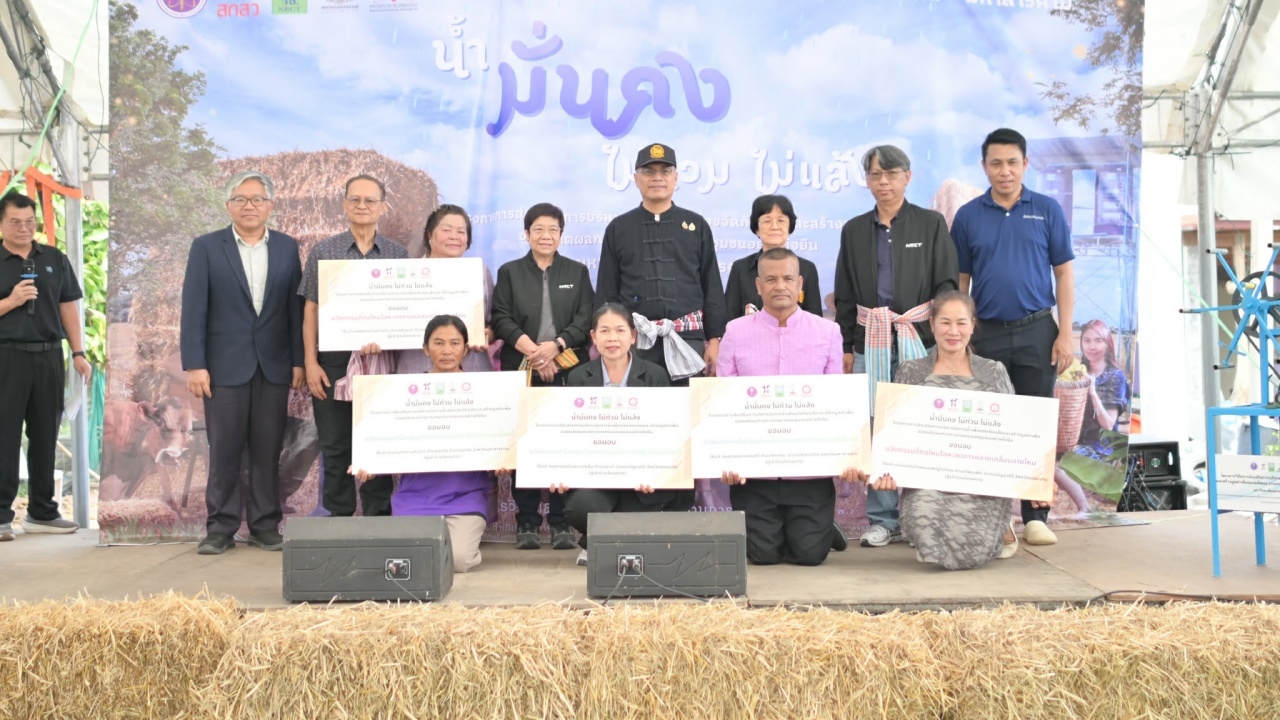
A panel of experts from the National Research Office conducted a field visit to inspect and evaluate the sustainable water management model "Stable Water: No Flood, No Drought" in Maha Sarakham Province, aiming to create a strong agricultural prototype through research and innovation.
A reporter stated that the National Research Office led a team of experts to follow up, inspect, and evaluate the "Stable Water: No Flood, No Drought" initiative in Maha Sarakham Province for the year 2025. This mission is part of the country’s research and innovation efforts in economic livestock to establish a strong agricultural prototype through research and innovation. The project promotes sustainable water management to eliminate drought and add value to community agricultural products. The event was held opposite Kut Rang District Office, Maha Sarakham Province, with Lieutenant Colonel Sane Mai, Deputy Governor of Maha Sarakham, as chair welcoming the team. Associate Professor Thanongsak Mooltree, head of the research unit at Maha Sarakham University, presented a summary of systematic water management efforts in the area, emphasizing collaborative project implementation.
They then presented solar-powered water pumps to farmer groups in Maha Sarakham Province to support their livelihoods. This included three mobile solar pump sets for convenient water management in agricultural areas; three silk reeling machines; three metal silk looms designed to reduce errors in silk patterns; silk thread twisting machines; and machines for grinding leaf debris and Jerusalem artichoke peels to produce compost mixed with planting soil.

Next, the team visited the prototype Jerusalem artichoke plantation in Ban Hua Chang, Kut Rang Subdistrict, Kut Rang District, Maha Sarakham Province. This project integrates water management from upstream to downstream: digging ponds to store water as the upstream source, promoting solar-powered water pumps for midstream use, and encouraging safe agricultural production with technology to increase yields. Downstream activities include processing and marketing, building on local wisdom such as the mulberry planting and silk farming group that incorporates technology to enhance weaving and processing linked to market channels. This visit highlighted the successful integration among research units, educational institutions, and the local community in driving the grassroots economy.
Professor Emeritus Dr. Peerasak Srinivet said that after following up on this project, he praised the farmers and users for having clear research objectives and producing products in forms that can be delivered to users. He noted the project effectively solves farmers' problems comprehensively from upstream, midstream, to downstream.