

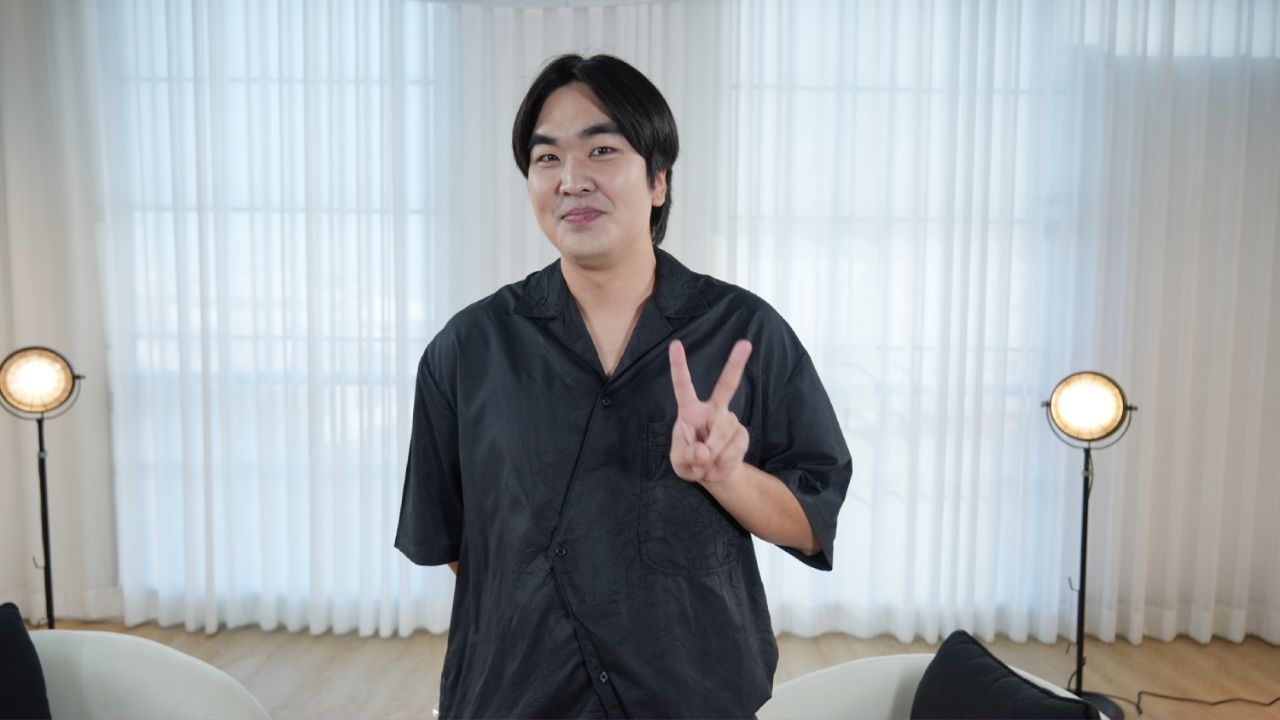
The Prime Cast program reveals another side of Qute Oppa from a Korean boy who grew up in Thailand and was once an introvert, to a turning point after heartbreak that made him expressive. He started YouTube from scratch, achieving viral videos with millions of views. But fame brought pressure, business problems, and accumulated negative thoughts that nearly overwhelmed him—he even slapped himself for 6 to 7 hours. He shares lessons from family, meditation with Ice Bath, and a more relaxed love life.

What was Qute like as a child before becoming the energetic Qute we know now?
Qute: If I talk about the beginning, I studied at a Thai school in Bangkok during elementary school, then moved to Pattaya. I was quite stubborn in elementary school, liked to tease friends, and my parents sometimes met with teachers.
Did your parents put pressure on you?
Qute: Not at all. My parents aren't typical Thai-minded people—it's hard to explain—but they're very open-minded. They didn't expect me to be anything in particular. Even though my parents come from a Christian family—my father is a priest, so normally there would be high expectations—they actually gave me a lot of freedom. Whether I did well or not, they still praised me.
When did you start changing from an introvert to an extrovert?
Qute: Around 11th grade, it was because of love. At that time, there was a foreign girl in my class who had just moved here. She was beautiful, the kind everyone in class would run to see. I secretly liked her and tried hard to talk to or flirt with her, but I had no skills—no one taught me how. I didn't know what flirting was or what being cute meant. I had watched Japanese cartoons where if you like someone, you just send a letter or shout out your feelings, so I tried that. It didn't work, but she said we could be friends. We helped each other, shopped, watched movies together. I felt like I was married to her, more than just friends. Once she invited me to go out at night to a club in Pattaya. I said sure, it's close, but I was scared, so I brought a friend. When we got there, she greeted her friends and left. I saw the big, intense scene—the lights and sounds—and felt like a spotlight was shining on me. I saw her with others, and I imagined things. At that moment, I got up and started dancing like everyone else, just like crazy. I wasn’t drinking, only water. Then I went on stage where the DJ was dancing—just dancing wildly like a madman.
So you changed a lot after that day?
Qute: Yes, because someone took out their phone and recorded me, maybe 4 or 5 phones. I saw people laughing below the stage, and it felt good—it temporarily eased the pain I felt. After that, I changed: at school, I acted funnier, joined school events more, went on stage more, and became an overly expressive version of myself.
Did this eventually become part of your identity?
Qute: As I kept doing it, it slowly became part of me. There was pressure—I wanted to be popular, like older students or net idols with 10,000–20,000 followers on Instagram, while I only had about 100.
When was the first day you started filming yourself for YouTube?
Qute: I wanted to try YouTube, so I searched for how to start. I found KANNINICH’s channel bear hug and another channel, The Nerd Creator, teaching about YouTube. I watched a clip that said to do something not already in the market. I thought about what that meant—market nearby? No, marketing means offering something new to attract customers. I thought about what was missing on YouTube; at that time, the dance trend "สายย่อ" was popular, but there were few men dancing it, especially Koreans like me. So I danced and uploaded. My first clip got about 60 views, but I watched 59 and kept replaying it. My parents watched it, too.
Which clip became popular?
Qute: One during Songkran, I filmed a reaction to a Thai horror movie alone. I had never watched Thai horror before. I recorded myself for an hour, then cut the parts where I was scared. Someone posted it on a page, and it went viral because it was funny. My channel wasn’t very big, but that clip got millions of views and started gaining followers.
How is your family relationship?
Qute: It's good, quite close. My parents are supportive and smart. Looking back, family wasn't much of an obstacle. But my third sibling, the second sister, was born special—what Thais call a disabled child. When she was born, things changed a lot. My parents were very tired and probably paid less attention to the other two of us. But my second sister and I understood that they had heavy responsibilities to care for her, so there were some difficulties then.
How did you help take care of your sister?
Qute: Not very well—I still feel guilty. I was ashamed as a child when my sister came to school to pick me up. My mom drove, and my sister saw kids playing football and wanted to join, but she couldn’t walk well. The next day, friends asked what was wrong with her; I didn’t know how to answer. I felt like I hurt myself emotionally because maybe the friends were just curious, but I overthought it. At home, I was okay, but outside, I didn’t want to hold her hand. When we went to Big C or Lotus, mom held her hand alone. I held it for a while, but when people stared, I let go and walked ahead.
How is it now?
Qute: Now I feel guilty about that and have changed. I see my sister as more normal than most people. Many have all their limbs but worse personalities. Even though she’s special, she never holds grudges, never gets angry or hates someone for long—maybe hours, while others hate people for years. So who is really normal? I see my sister as happier than most. She's special, and it depends on our perspective. I think my sister is happier than me because she understands nature. If I hadn’t understood this, I wouldn’t understand her.

What religion do you follow?
Qute: I study Buddhism, but I must say I grew up in a Christian family—my father is a priest—and I prayed to God every morning and evening. However, there was a time when I faced suffering that I couldn’t resolve—company issues, team problems, friends, contractors, being cheated, and relationship troubles. I wasn’t smart enough then and didn’t know the causes. The problems felt unsolvable, and I was constantly troubled.
How long did that storm last?
Qute: About a year.
How was your mental state during that time?
Qute: It was bad. When someone accumulates bad energy, they start acting strangely. It’s like the body is in SOS mode—not exactly panic or alertness. I had no knowledge then, but I remember slapping myself all night for 6 to 7 hours. I slapped myself to stop negative thoughts. My body moved on its own. When negative thoughts about hated people or anger came, my hand slapped my face without me telling it to. I cried while doing it. After 4-5 hours, my thoughts became blank and negative thoughts faded. Then I went outside, wiped my tears like someone else was wiping them for me, and started to come out of that suffering a little, without any Buddhism or refuge. I was relying on something unknown, but it helped me escape suffering temporarily. However, I didn’t understand what was good or bad, studied randomly, which made life worse. The more broken I was, the more negative problems came, creating a loop I couldn’t escape.
Was it a cycle?
Qute: It became a habit. I would wake up and think about the same things, during showering, unable to stop my thoughts. At that time, I actually didn’t have real problems—my house, money, family, and loved ones were fine. But I made everything look bad because I clung to negativity. I kept feeding negative thoughts all the time. So the cycle continued. The problem was my own thoughts. I’d think negatively about others, even if they weren’t bad, and make things worse by overthinking. When I used my phone, seeing my own face or others’ comments, I would keep adding to the negativity. Holding onto hate made me a person who wasn’t cheerful or kind or a positive influence. I became someone unpleasant.
Did people around you notice and comment?
Qute: No one told me directly, but people pitied me. One friend named P'Right from SPD saw me suffering for a long time and invited me to talk at his house. He shared Buddhist teachings, starting with the Five Precepts—no killing, no stealing, no sexual misconduct, no lying, no alcohol. I said I tried, though I drank sometimes. He told me to reflect and sit quietly focusing on breath. When I did, vivid scenes appeared—from a toddler to age 25, showing all my karma and which precepts I broke. I cried heavily. That was a turning point—I thought, “What kind of life am I living?” I didn’t understand Dharma then, but I thought the Buddha might be the answer. However, the experience was temporary and fleeting, and I fell apart again.
During this time, you kept working and creating content?
Qute: Yes, I kept trying. There were times I stopped for a month or two because I lost motivation.
When your energy was bad and you went out, did you sometimes act tense when people expected you to be funny and entertaining?
Qute: Actually, it wasn’t just tense. I got angry and scolded sometimes—not at fans but at people who were unhappy with my lifestyle. I lost my temper at airports and other places. I want to apologize because people came with positive energy, but I had a wall of negativity. I rejected anyone’s energy then. I deserved the criticism.
When your mind was broken, was your body affected?
Qute: Yes, my body suffered. I was thin, lost appetite, though my face looked okay—better than now because I took care of myself then. I wanted to look good socially, even wanted girls to like me. My skin was okay at that time.
Have you ever faced serious health problems?
Qute: No, nothing severe like being bedridden, just minor illnesses.
How do you take care of yourself?
Qute: I don’t really. My work-life balance is meditation. I believe that no matter how well you take care of your body, if your inner self doesn’t change, it’s only superficial. Eventually, the body ages and deteriorates. Cells get older. I see that people’s lifespans vary due to various factors. This is a bit of Dharma.
You also take care of the outside, right?
Qute: I try not to be extreme. For example, I avoid nighttime meetings or calls because I want my mind to be calm at night to prepare for the next day. Whether I sleep early or late, I meditate before sleeping; if I don’t meditate, I can’t sleep.

Is it because you overthink?
Qute: It’s become a habit from doing it daily. At first, I felt meditating while lying down was the most comfortable—just lying still and trying not to think, just being present.
So it’s like trying to sleep?
Qute: It’s similar. Meditation while lying down is like sleeping.
What kind of exercise do you enjoy most?
Qute: I like it but actually don’t enjoy exercising. For a while, I loved ice baths every morning for several months. It made my life much better—my belly shrank, my face became slimmer. It burns a huge amount of energy when in cold water. It also improved my immune system and mood for the day.
How long did you keep that up?
Qute: About three months, using 100 kilograms of ice daily. I stayed in for 11 minutes each time, with my arms submerged fully. I dunked my head for 2 minutes, which might be risky, but as I continued, it felt like meditation. At first, cold water triggers fight mode—your body fights hard. Then you get comfortable but just observe the pain and cold as a passing experience. You don’t have to endure; just acknowledge it, and it fades. On days I didn’t want to do it because it was too cold, I felt an effect that made me afraid to enter, and old negative thoughts returned.
How many minutes could you last at first?
Qute: One or two minutes. Once you find your calm point, you can stay as long as you want. Sitting in cold water for half an hour or an hour doesn’t make it better; there’s a limit because the body produces hormones only to a certain level.
What were you thinking about while walking across provinces?
Qute: It was a promise to myself: when I walk, don’t think negatively, just walk happily to the destination. During the walk, I had many problems—family issues, dissatisfaction with situations, heat, disrespect from others. But I would sit down anywhere and meditate for 10–20 minutes, then continue walking. I focused on walking, telling myself not to think about anything else. Repeating this daily, towards the end, I barely needed to meditate sitting down—it was like being in meditation while walking.
Does your girlfriend understand your deep interest in this?
Qute: She’s starting to understand. I don’t talk about Dharma much with her; I mostly focus on myself. Every relationship has problems and fights. There was a time I said she should be more spiritual, but that wastes time. I look at myself because problems always come from me, not her. I don’t want to admit it, but I must accept that this world works by cause and effect. If she feels hurt, there’s a reason; if I feel hurt, there’s a reason. Everything has cause and effect; it’s never random. So I try to be happy, not insist things must be a certain way. At one point, I stopped joking around much because I was too deep into this.
How is your love life?
Qute: I’ve become more relaxed and have fewer expectations.
How long have you been together?
Qute: Over two years. She fits my type—I like kindhearted women who have good morals. When sharing isn’t equal, or faith and respect for precepts don’t match, it’s hard to continue. But if you share the same basic morals, you can last long. Mainly, kindness and a good heart matter. These days, we take things slowly. I think people in their 20s and 30s are still young, and even 40s are still young. So it’s a gradual process. If we think too much about how things should be, it creates negative energy.
Why did you delete all your old clips?
Qute: I was embarrassed. Many deleted clips showed me eating messily or making sexy noises—like having a relationship with food—which didn’t look good. Though some people liked those clips and found them funny, my channel is now family-friendly. Many people comment that they watch my clips weekly with their parents and children. When I go out with my family or groups, people tell me they watch together. I feel that if they rewatched those old clips without trusting me, they’d be disappointed and wouldn’t watch with family. It’s not just about eating; there were also clips of me dating girls, which was just my personal desire, not real content.
How did your fans who liked that content react, and what did you do?
Qute: They requested it, but when I focused on what I really wanted to do, people started accepting it quickly—in a month or two, they liked the new content and wanted more. Since then, my life problems have greatly decreased.

Are you afraid of not being accepted by people around you?
Qute: I have some fears. Sometimes people still think of me as I was in the past and judge me now.
How do you see yourself in 10 years, and what are your life goals?
Qute: I want a comfortable house in the countryside with many animals, including a dog. My goal is to keep learning, stay fresh and bright every day, and not change. I want to live like this until I die.
What message would you like to share with those going through the darkest times, about how to overcome it?
Qute: Everyone has these moments, including me. There are two types of problems: those we can solve and those we can't yet. Actually, there may be no real problems now; the issues are in our minds. The second is that all problems arise from emotions—dislike, worry, negative extremes that lead to these thoughts and troubles. But emotions can't stay with us 24/7 forever; they must fade. They fade when we stop thinking about them and stop feeding information to them. Then they calm down and disappear on their own.
People say time heals, or if it doesn’t, we try to accept or forgive what happened. This isn’t just meditation but something we can do now. What our parents and teachers taught us—forgiveness, kindness, and diligence—is very important. If you are diligent, you won’t feed your energy into negative thoughts. Keep busy, and it will fade. Don’t put 70% of your energy into negativity when you only have 100%. It doesn’t change anything; it only changes your habit.
. Click to readEntertainment News. More