

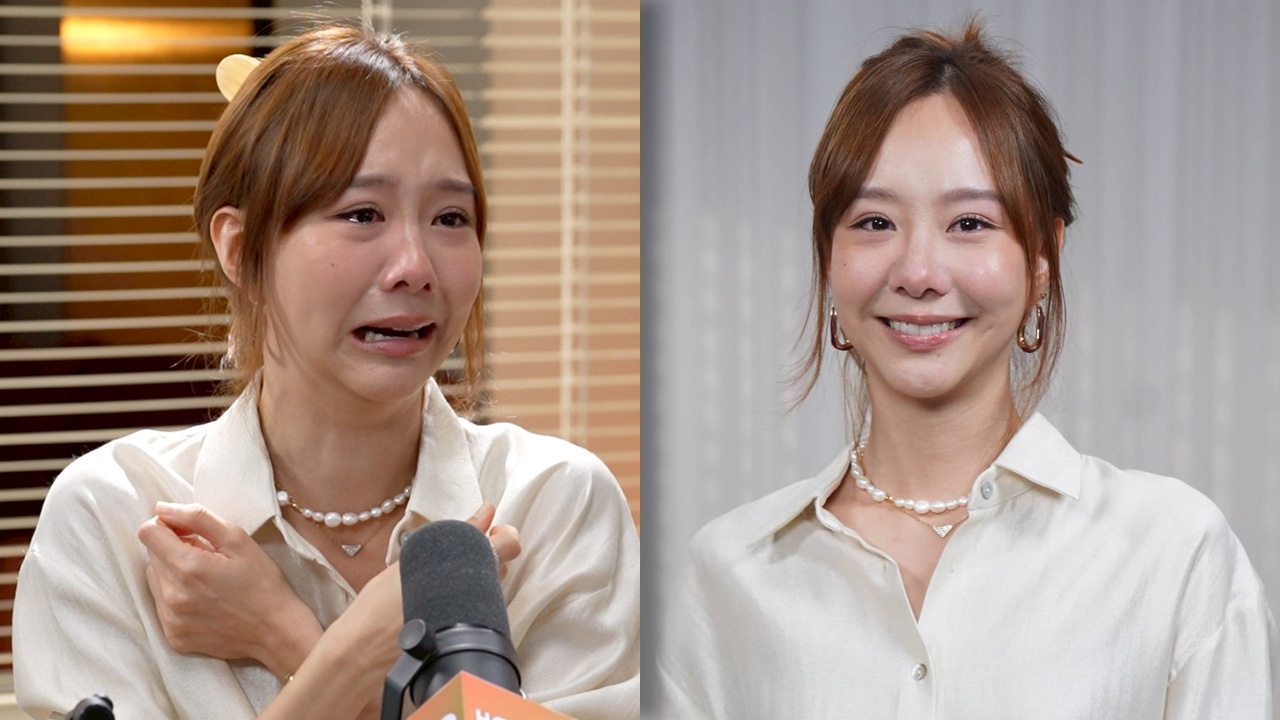
Toey Jarinporn She opened up about being a perfectionist, which makes decisions difficult, and how fear of social criticism turned into a constant self-disciplining teacher. Alongside sudden losses, this fear caused her to hesitate in hugging her parents as before, building a wall inside her heart. Eventually, she learned to embrace her loved ones again during the show How Are You Feeling?, a conversation inviting us to pause and ask ourselves who we are being strong for and whether we are neglecting our own hearts.
How are you feeling?
"I'm happy now. Life lately has been happy, but I'm trying to stay mindful amid how quickly the world is changing. It feels like the world is changing very fast these days. I'm still balanced and doing well, but I have to be much more mindful than before because the world is changing quickly."

Aside from the world's changes, we heard you are going through a big life change recently?
"No (laughs). Not that big. I'm happy these days, but I often feel hesitant or confused when I hear the term 'Big Change.' It's not about quitting the industry or getting married or anything like that."
"To me, Big Change comes from within—my mindset and perspectives on life are shifting. Old beliefs I once held have broadened; some things have unlocked, and I see more clearly now."
"It might relate to work. I've been working since I was a teenager. Now it feels like I've achieved some goals I set for my family. Maybe I'm lucky to have succeeded at this point. Now that chapter is over, I wonder what's next."
When you were a child, were your parents playful or serious?
"Not playful. I grew up serious and often played alone (laughs). There's a five-year gap between me and my younger sibling. Like many kids, I wanted love from my parents, but that doesn't mean they didn't give it—they had their own struggles working hard to support us."
When you hesitate or doubt, thinking your work should be perfect, you've been in that place, right?
"Yes, sometimes. I think it comes with being a perfectionist who wants everything to be good."
Decisions are never final, and no one gets it right the first time. Life is a lab; if we don't enjoy it, we'll stop, right?
"Many times I've stopped because I didn't enjoy it or because I was scared. Lately, I'm trying to enjoy it more (laughs)."

Is it hard to just say 'play' or 'it's okay to make mistakes'?
"Yes, I rarely dare to 'play' with decisions or treat them lightly because there's something serious involved. Honestly, society plays a part too. Being part of society, I've lived and 'played'—for example, in love, I was very myself. But when I did something or made decisions, social criticism followed, which made me even more afraid and less willing to 'play.'"
Many times, we don't really listen to our feelings?
"Sometimes my inner voice tells me something, but I argue with it. For example, instinctively wanting to date someone, but inside I say, 'No, try someone else,' or worry about what others will think or if it's too difficult. It can be confusing and stressful."
When choosing a partner, many people go through unpleasant experiences before finding the right one. Those who get it right first time are lucky?
"Yes, for me, I've had several relationships. If it had been right from the start, I'd be lucky. But it takes time."
What guides you now when deciding to do something?
"Before, I would say family—anything to secure and care for them, earning money, work. Now I follow what my inner feelings truly tell me. The difficulty is that I have a clear inner voice but also thoughts that quiet it down."

What matters do you find hardest to decide on?
"Currently, it's about accepting work—whether to take a project or not—and also about love. These are the two biggest decisions now. I feel our generation is shifting, so I'm unsure if accepting or declining a job is the right choice."
How do you decide now? You focus on your own happiness and whether you can fully commit to the work or role, right?
"Yes, I try to find meaning in what I do. My mind understands what to do, but having lived this way for 35 years, I'm training new muscles to move in a direction I enjoy, which makes me feel lighter, less self-critical, and less like my own harsh teacher. It's like being a newborn baby learning to walk in a new life."
Besides failures, you've experienced losses. Your brother's illness was 10 years ago, but after that, you lost your grandmother?
"That is something I avoided for a long time. Ten years ago, my younger brother was sick with cancer but has since fully recovered. Around the same time—within about a week—I lost my brother, grandmother, a dog I'd cared for five years, and even a family driver. All happened in one week."
"But I learned a lot during that period. It was around the birth of my twins Alin and Alan. I witnessed birth, aging, sickness, and death intensely at age 25. That day, I felt nothing else in life mattered except the lives of those I love. So I stopped everything and focused intensely on my family and the present."
"At that time, I focused and continued learning. At 25, I didn't know the term mental health or self-care. I accepted that birth, aging, sickness, and death are inevitable and let life run its course."
"Recently, illnesses in my family and friends have occurred repeatedly. Suddenly, this affected me, making me distant and cold toward my parents and sibling. I hesitate to hug them now. I'm scared someone might not be here to hug anymore. I think I hadn't healed then, and it showed up now, ten years later."
"Before, it was easy to hug them. But now, fear keeps me from hugging. I'm afraid something might happen to them, so I think I wasn't ready to face loss before, and it only emerged recently."

Many people experience similar things—those who used to hug their parents often now hesitate to get close or hug them?
"The hugs feel insufficient. Normally, I'd say 'go to work' and hug easily, play with them easily, but now there's some distance, maybe fear. Even with dogs, after losing my dog, they seem tense and stiff."
"When my grandmother was in the hospital, my dog was also unwell, staying there too. I brought him home and went to see my sick driver. I was running around a lot. When I returned home, I saw the dog lying still on the floor (crying). I was shocked and picked him up, trying to take him to the vet while holding him."
"I drove like in a drama, calling his name. At the nearby hospital, I handed him over but was afraid to go inside. At that moment, he was lifeless—his body limp. I didn't even know if he was alive when I arrived. The nurse then told me he had passed away, but I had no idea when."
How do you show your loved ones your embrace, being ready for whatever happens, no longer clinging but letting the process unfold naturally?
"I learned this from Ja (Yotsinee). She once shared with me."
Ja Yotsinee: "Ja's dog also passed away in her arms. We use that as a lesson. The dog taught us until the end that this is the best way to say goodbye. We cared for him well, and it's good he went first. If we go first and he stays, he would be lost. So, let him go peacefully. I don't know if I can say this to Toey, but I want to tell her to hug her parents." (crying)
"I know this deeply. It's not that I don't hug them now (crying). I realize how I used to hug them. I think 'clinging,' as Dr. Tong says, means having some distance because of fear. But truly, we want to hug them tightly but haven't overcome some inner barrier or readiness to face loss."
"I think that's it. It's gradually developed—from playing with them all the time to now hesitating. I don't know why. Even the dogs are different; I used to play boldly but now keep some distance. My parents seem confused because I never talk about it, but I truly feel this. I believe many people experience this—once hugging fully, now unable to embrace deeply."
"My parents might wonder why I don't play with them like before, but it doesn't mean I don't love them. It's fear of something unknown. This only appeared in the past year or two, but I feel like I realized it late, not right after the loss."
Would you say it's okay to seek medical help if a pet dies, since it's a big deal for many people?
"I want to tell everyone that my case happened 10 years ago. I tried to be strong, accepting that everyone eventually leaves. I tried to be okay, but after 10 years, I want to admit I'm now a learner slowly breaking myself open, starting to feel again. This emerges when we soften and allow the world to teach us, being honest with our feelings."
If sitting with you as that teacher, what would you want to say or hug or tell yourself?
"Live more joyfully (crying). Play more. It's okay to make mistakes. Spend time with those you want to be with—your parents. If they're still here today, go play with them, spend lots of time. Don't be a cold teacher; it's not helpful."
"I just want to say that many kids grow up like me—playing alone, being both teacher and student to themselves all the time. Sometimes we get used to the heaviness, like carrying a 15-kilogram rock for 35 years. One day, we realize we're carrying this heavy rock."
"We see it as normal, carrying it always. When someone offers to help carry it, we might refuse, thinking, 'No, I must bear this responsibility alone.' But today, I've started to put the rock down and let others help."
"There may be moments of emptiness when putting the rock down because it's unfamiliar. But believe me, we're training new muscles to live healthier and more meaningful lives. We must get through this emptiness. I want to encourage everyone."
Click to readEntertainment NewsMore

