

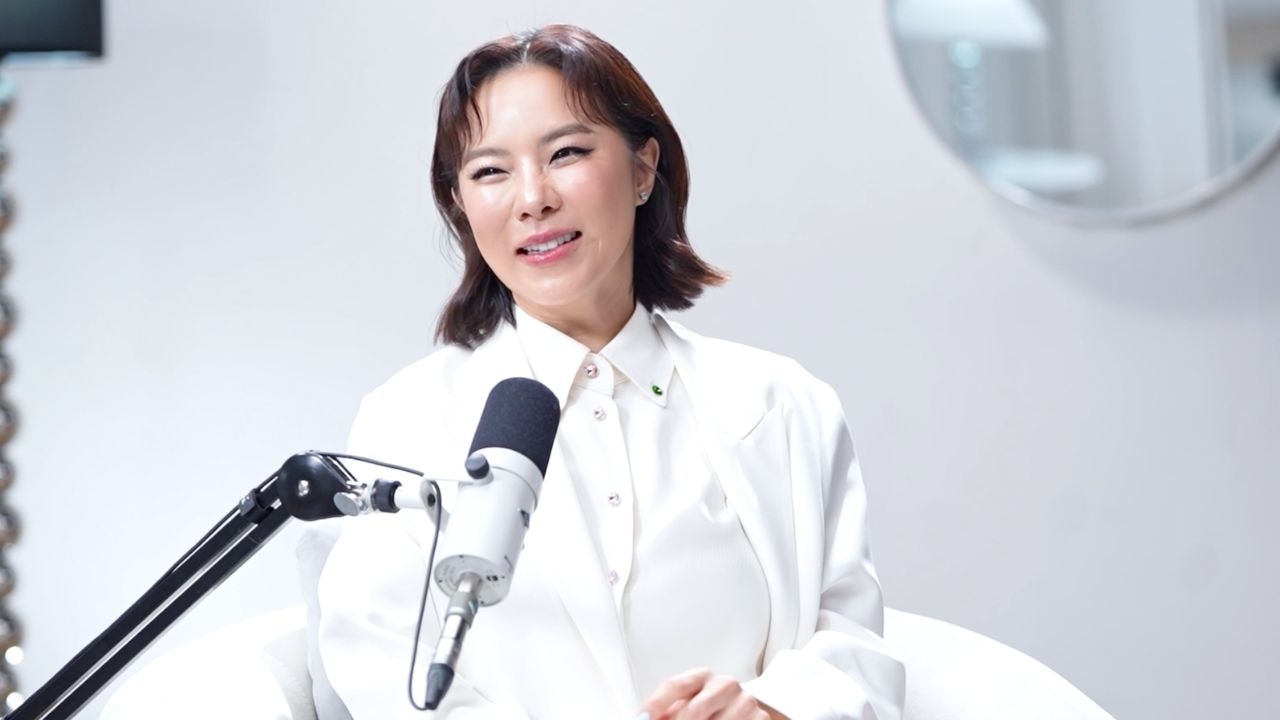
Kim’s Mirror is a program inviting you to reflect on perspectives, adjust your self-care focus precisely, and deeply explore all dimensions of beauty with Kimberly Ann Voltemas. Hosting for the first time, she delves into beauty topics every modern woman should know for sustainable youthful beauty under the concept of Beauty Longevity, because true beauty is more than just a reflection and is not about following trends but being your best version. The first guest is the famously eternally youthful and striking Kris Horwang. Kris Horwang. Though in her 40s, still flawless! She reveals the formula for enduring beauty, having argued with AI about bedtime, and shares her secret to youthful, strong skin before facing the camera.

How do you care for your skin to look this young?
Kris Horwang: Skin is one thing, but let me start with Asian DNA, which I think helps too. We might have an advantage, aging a bit slower than Westerners. But if you neglect skincare and let nature take its course amid pollution, it won’t survive.
From the TV series “BTS Sky Train: Love Story”... has it been 20 years?
Kris Horwang: About 16 years.
You still look fresh and youthful?
Kris Horwang: Honestly, I try. Skincare is probably a combination: exercise, diet, using products suitable for my skin. I've had times when my skin was sensitive and reacted badly. Nowadays, women—and men too—take care of themselves equally. Everyone strives to find the right products for their skin. Once you find them, they stay on your shelf forever. Physically, we take care by eating well, exercising, sleeping, drinking water—everyone knows that. Finding the right products is another matter.
In today’s world, there’s technology helping younger generations maintain their skin, whether laser treatments or doctors. But even if you do those, without products to support maintenance, it won’t last. Doctors have told me that even with laser, Ulthera, or Thermage, if you don’t maintain it, results fade, so it’s a waste of money. You can’t rely solely on doctors without personal care.
What was the starting point that made you realize you needed to take care of yourself?
Kris Horwang: When I was studying in America at art school, we didn’t focus on looking pretty. Back then, there was no Instagram, no TikTok, no social media except Facebook, and no photo-editing apps. I thought if my face was smooth like this, it would be great. Nowadays, apps that smooth faces inspire me, but back then, no one did that. After returning to Thailand and Instagram launching, I wanted to look better and started caring for myself.
When did you begin taking self-care seriously? After 5-6 years into acting, I started researching, finding products, looking at my flaws. At times, focusing on dark spots; other times, on skin restoration or wrinkles. It began with the profession because it’s part of the job. Before that, I was careless—dry skin, irritation, just treating symptoms. But one thing I was lucky with was my life routine: my hyperactive nature kept me active all the time.
How do you maintain your figure?
Kris Horwang: Exercise and being active help both body and skin. Mindset is important too. It helps prevent stress, sagging skin; smiling and laughing a lot. Don’t take things too seriously. When I was young, even without much care, living in cold snowy America, my skin was dry and flaky despite creams, but I exercised constantly. At art school, I practiced ballet six hours daily—like exercising 5-6 hours every day. Back in Thailand, sometimes lazy, but now that I’m in my 40s, I realize I must return to exercising and self-care regularly.
What exercises do you do now?
Kris Horwang: Nothing hardcore. I keep my heart rate in zones 4 and 5 for minutes per week. I run on the treadmill, do Pilates, yoga for stretching. Also, I’m trying sound bath and breathwork before sleep via YouTube. I want to meditate like others, but my hyperactivity makes sitting still hard, so I start with sound bath and breathwork. It clears the daily chaos and feels great.
What time do you sleep?
Kris Horwang: With technology now, everyone has devices measuring stress, steps, heart rate. Mine recommends 7-8 hours of sleep for my age, calculates from wake-up time, and advises when to sleep. Sometimes I argue with it because I want to stay out with friends and shift bedtime. It asks what I’ll do to compensate. I say I’ll run 45 minutes instead of 30 tomorrow. It agrees to delay bedtime but we negotiate. Many don’t realize you can negotiate with these devices. Don’t be a cyborg. Their advice is based on calculations and is good, but don’t forget your own happiness. Don’t let anyone force you too much. I don’t remove mine just to win scores.
So it means you’re getting stronger?

Kris Horwang: Yes, but I know myself best. If I’m gasping while running, what if I have a heart attack on the treadmill? Will it help me? I ask if I can lower my heart rate target from 168 to 162, and it agrees. It says, "I understand you very much." We have to talk to it—it’s like arguing. We have to be strong. But when the device gives recovery scores, if I wake feeling refreshed and energetic, wanting to eat well, exercise, and see my skin plump and radiant, it shows sleep really helps.
Would you exercise without technology?
Kris Horwang: At first, when it was strict, I felt my mom never forced me like this. Everyone let me be free. If it forced me too much, I’d wear it just three months. I thought I’d learn from it in those months and if it became a burden, I’d remove it and continue what I learned. I don’t want AI to control me always, but I use it to learn what’s best for me. If after three months it’s less demanding and helps reduce my AGEs (advanced glycation end products) making me younger, I might keep it. If it’s too complicated, it’ll be discarded.
Have you ever had skin problems?
Kris Horwang: Yes, about 7-8 years ago when working very hard, doing two to three jobs daily plus filming dramas. On Thai drama sets, they don’t like air conditioning because it affects sound, but we wear heavy Korean-style costumes in Thailand’s heat and sweat a lot. During intense scenes, they say cut, no shiny face allowed, but the set is hot and no AC. At that time, my skin became very sensitive, with many small clogged pimples, not inflamed acne. That was a lesson to make skin strong before fighting all this because it’s my job. I can’t choose the weather or expect the crew to move abroad for filming.
Now that you’re in your 40s, is sensitivity less of an issue?
Kris Horwang: After that stressful period, I was worried because my face was sensitive, but I couldn’t cancel work just because of skin issues. I couldn’t ask 100 people on set to cancel ads—that would harm clients. So I had to work confidently even when unsure, because clients expect that wow factor. That taught me to strengthen my skin first.
Do you have wrinkles?
Kris Horwang: Yes, I have wrinkles, but I’ve treated them with various methods, products I’ve tried and kept if effective. I visit clinics like anyone else but do minimal natural treatments. It’s not that I don’t want to look good, but if people see me without makeup, like in "Meili" with zero makeup, they accept me. Nowadays, I sometimes go out without makeup. Sometimes I wonder if I should wear lipstick or a little makeup, but sometimes I’m just lazy.
You survive without makeup?
Kris Horwang: Makeup is better—it boosts confidence, like all women. But some days I’m lazy, like when going to the supermarket. I’m just a lazy person.
You haven’t consumed sugar for over 10 years?
Kris Horwang: That’s a lucky coincidence. Food has always been important since childhood.
Could you share your perspective on longevity?

Kris Horwang: I’m not an expert but learning along with everyone. I ask myself why I want to live long. The answer must come first: I want to live long to stay healthy, be with family, my dog, my partner. When alive, do I want to be beautiful? I want to live long without illness. These answers guide my longevity approach. For me, wanting to live long healthily means trusting advice to exercise, sleep enough, drink water, do breathwork, and try meditation.
These devices remind us, but whether we act is up to us. We input data, can cheat the devices, but must be honest with ourselves about how much we want longevity. Doing so benefits us. Diet also supports fitness and beauty. Results aren’t immediate but measurable in 10 years. There’s no magic pill like in The Matrix. So all efforts—supplements, skincare, medical treatments, exercise—show results over time. I aim for longevity, so if I live 10 more years, that’s success.
When talking to others, I hear conversations like “Bring that friend to exercise; they look tired,” versus “Here’s someone healthy and fit.” That difference shows that consistent healthy habits shine through. Standing next to someone who drinks daily, sleeps poorly, versus someone exercising every morning, the contrast is undeniable.
Many terms exist, but one phrase resonates deeply: Beauty Longevity. Compliments about glowing skin or looking refreshed boost motivation—like encouragement during dieting when friends notice weight loss, fueling continued effort.
What is the best investment?
Kris Horwang: The best investment? You mean in oneself?
Kimberly: I think maintaining what we can do, like exercising and sleeping well, is a key investment for future longevity.
Kris Horwang: I agree with Kim. Everything comes back to investing in ourselves. Most importantly now is happiness, but happiness requires something: money, time, good food, love from family, partner, pets, children—everyone’s happiness differs. For me, happiness is time—the time I choose to do anything. I’ve worked hard, endured sleepless nights, shoots. At this age, happiness ranks highest when it comes with joy. Time plus something equals happiness. For example, today it might be self-love through exercise, tomorrow laughter with friends at a favorite restaurant, another day a trip to the sea. Everything includes time in the equation for happiness. Time is my most important investment.
Our profession is about giving our life to others; we can’t set strict start or end times. Being late makes us seem unfriendly. If I want to leave early, I’m seen as rude. If I resist costume or character demands, I’m difficult. We might feel uncomfortable but must do our best. So time becomes very important for me: waking up wanting to do something for myself, or doing nothing and watching series, pampering skin and hair, calling a masseuse, getting nails done—that’s my time and happiness.
What made you refocus on self-care?
Kris Horwang: My childhood was very chaotic. In this job, I must present myself ready. I don’t want people to see Kris Horwang with a messy face full of rashes. So I started seriously focusing on skincare. I’m not an expert; I begin by looking in the mirror to see what I need: wrinkles, dullness, lack of plumpness. I wake feeling fresh but my skin still dull. I focus on problem areas first. My skin gradually strengthened; rashes disappeared. I tried many products, and once I find the right ones, I keep them forever. I even pray they never stop making them.

If you could turn back time, what would you change?
Kris Horwang: Young people today are lucky with so many innovations and medical techniques for those who visit clinics. There are many ways to maintain health and radiant skin through exercise and diet. If I could go back, I’d start this routine at 22. What I do now is maintenance. I don’t want to look 22 with tight skin; I want natural beauty. So if anyone watching has the chance to care for themselves now, don’t wait—start today.
Any advice for women in their 30s?
Kris Horwang: I’d give advice to everyone, but this is my reflection. Those who can follow, great; if not, that’s okay. Beyond all the knowledge available—exercise, hydration, good food, good products—one crucial factor is mindset. If your mind is good, if you’re happy and not stressed, it affects everything: glowing skin, no headaches or stomachaches, no fatigue or sleep stress. Stress is very important. If we can improve our thinking and lower expectations from the outside world and others, life becomes much easier.
.
Click to watch
Entertainment NewsMore