

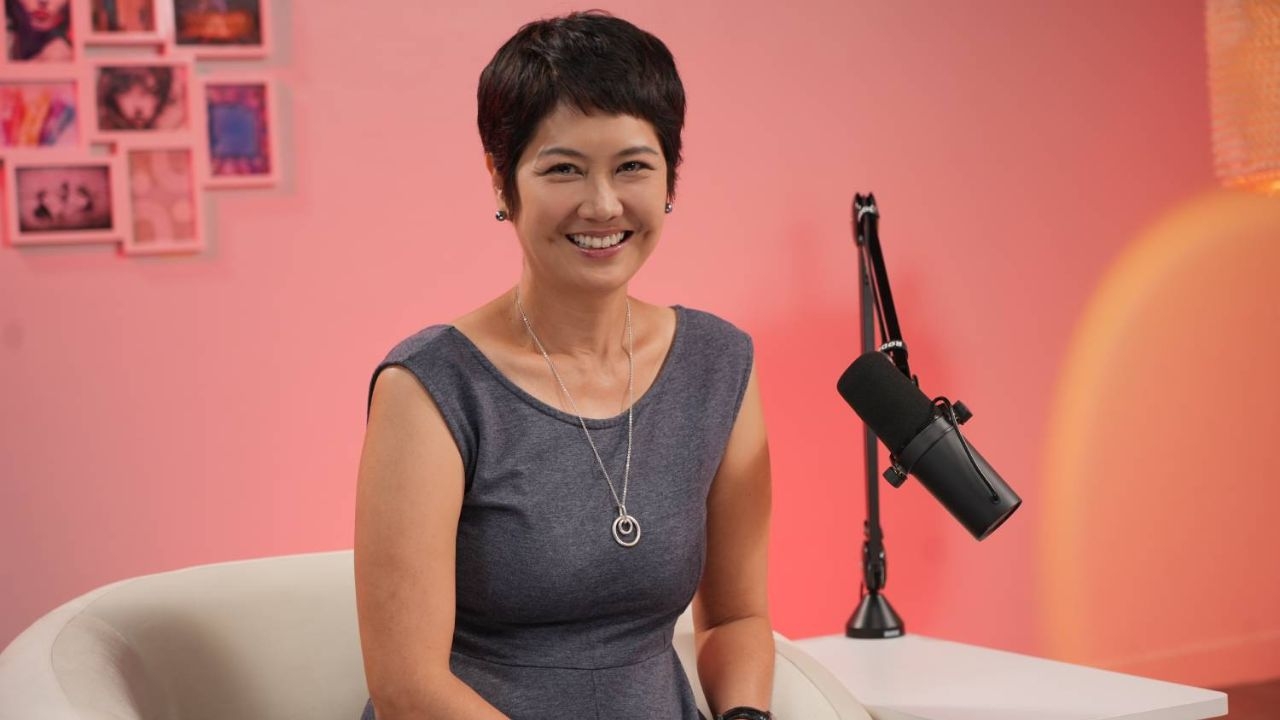
On The Way With CHOM this week invites us to explore the perspective of inner self-care from “Pop Areeya.” She shares a life-changing memory from age 12, revealing why she fears sugar deeply after seeing her grandfather suffer diabetes leading to leg amputation. From severe depression during COVID to rediscovering herself, yoga helped heal her—from stress management and breath control to balancing body and mind.

What was the turning point that led you to take care of your health?
Pop Areeya: Our interest in health started because when I was a child, my grandfather was nearly 2 meters tall and ate a lot. He was big but had diabetes and had to have a leg amputated. For six years after losing his leg, when I was 12, I had to help care for him, including assisting with his bedpan. It was clear the problem was sugar—too much sugar, eating too much rice and starch. That scared me. I also saw my uncle suffer kidney and heart disease caused by diabetes, which blocks vessels and damages kidneys. Have you seen someone with kidney failure—their skin turns yellow. When you see that firsthand, you want to avoid ultra-processed foods, those packaged with fake sugars and oils.
Did this make you want to find answers about health?
Pop Areeya: Yes.
How did you get into yoga?
Pop Areeya: Thanks to the pain and suffering in life. As a child, I wanted to do gymnastics but later was diagnosed with scoliosis—my spine curved like a bent tree, possibly from playing tennis with one strong arm. I worried gymnastics would be impossible. My back was bent and twisted slightly to the right; carrying heavy bags caused pain, sleeping awkwardly caused back and hip pain because my body was unbalanced. I tried traditional massage and acupuncture, but relief was temporary. The thing that helped most was yoga.
Who introduced you to yoga?
Pop Areeya: At first, I didn’t like yoga. I was about to play tennis, but the court wasn’t available, so I tried yoga because it was hot and I needed to pass time. Everyone was doing headstands, and I was in my 20s, worried about safety because of my crooked back and neck. At first, I met a yoga teacher who didn’t teach safety, so I disliked yoga for almost 10 years and didn’t take it seriously. Then I had a boyfriend connected to a famous hotel with yoga worldwide. He traveled to Japan, California to practice with top instructors. I also admit the teacher was handsome, which was inspiring (laughs). He was older; his wife also taught yoga. Yoga is not just about pretty poses. Many people ask me to show the hardest pose, but I sit in meditation. Remember, the Buddha and yogis meditate. Meditation teaches us to understand whether mind or body is higher. Yoga helped me understand spirit beyond physical health, beyond weight loss or better sleep. It also cleared allergies and normalized my period. My pelvic muscle pain was severe because the muscles contracted but wouldn’t relax.
People don’t know how to relax, but yoga teaches relaxation and letting go. Ujjayi breath—being present with breath through asanas—helps me meditate longer and stretch without numbness. The highest is meditation. Yoga isn’t competitive because everyone’s goal is philosophy, awakening, enlightenment. Buddhism says suffering is life—understanding pain. Some pain is bearable; some can be changed, but change requires hitting rock bottom first. Anyone cheerful or positive has been through hardships. Honestly, during COVID I was happy because I lost weight and stayed home.
I cried a lot then because my mother passed away. I felt aimless, depressed, lost appetite, and dropped to 51 kilograms. If she had not passed during COVID, I might have been even thinner, darker, and heavier because staying home meant mom didn’t let me go out and wanted me to stay home. Yoga helped me get through life because without yoga and visitors, I felt alone. Being a teacher felt undervalued because I taught at home with no rent. During the time caring for my mother, I stayed with yoga and home, didn’t see any teachers in person, only online. My students also taught me.
. . .

What was your mother’s condition before she passed?
Pop Areeya: My mother had brain atrophy, which caused symptoms like Parkinson’s. She was a female engineer who built cars but eventually couldn’t do anything herself—couldn’t feed or clean herself. Sometimes while teaching yoga, my mother had diarrhea, so I had to stop and wash her underwear before resuming. There was no maid or anyone else. I remember crying while washing and wondering why this happened. Looking back, I wish I could have spent more time with her; I feel I wasn’t there enough. I regret that if she hadn’t passed, I wouldn’t have built a new house or cared about yoga as much. This pain was a blessing—it changed me, like being reborn. First, I valued time more.
How did you get through it?
Pop Areeya: Honestly, it was one of the lowest points in my life. But I’m proud I had the strength to care for my mother and stay at home. Since childhood, my mother told me not to send her to a nursing home, and I promised to behave well and keep that promise. When the time came, she cried apologizing for having diarrhea and being alone. I almost cried just thinking about her apologizing. As a child, I was stubborn, and once she cursed me to have children just like her. I noticed I don’t have children and fear karma. Sometimes I joked with my mother that she could take all the karma in this life, no need for the next one.
How did yoga help?
Pop Areeya: Community. First, after my mother died, I refused to have her embalmed with formalin because I hated hospitals. I wanted to care for her naturally at home. I tried to feed her as cleanly as possible. At that time, I didn’t know much, but now I understand that her death involved poor health from low fat intake. Cholesterol isn’t a concern; eating good fats like coconut oil, lard, beef tallow—natural oils, not vegetable oils—is important. Omega-3 is higher than omega-6, and our cells need omega-3. Fish oil is good too.
Why did you refuse formalin for your mother?
Pop Areeya: Embalming with formalin isn’t natural; it’s not human anymore. The best option was renting a refrigerated coffin with glass so the body wouldn’t decay quickly. After a week, her face was still clear. I wanted to keep her body at home so relatives from far away could visit and talk to her. I wanted her at home, not just at the temple. This is important. If you have life insurance, you must prove cause of death to get the benefit, so the body belongs to insurance, not us. They have to take the body and embalm it. I asked monks to come to our house and hold the funeral there, chanting at home.
How did yoga help during that time? The yoga students formed a group of over ten people. One student, Yui, cooked all the foods my mother loved, coming every day for a week. I had no family nearby; born and raised in America, and yoga became my family. Back in Thailand, everyone knew me. As a teacher, I taught at Chulalongkorn University, Bangkok University, and the Royal Thai Police Academy. Being a teacher meant closeness to people, a community, a connection I lacked in America. There, people always asked when I would come home.
But the yoga lifestyle community fulfilled me. Friends who are yoga teachers traveled and helped raise their kids together. It formed a group. During sad times, we meditated. Before every yoga class, I lead everyone, even if they’re on their phones, to sit quietly in meditation for 5–10 minutes to calm the mind and focus. The goal of yoga is mindfulness, which can be applied to everything. Yoga is stretching yourself to sit in meditation, to be present with meditation, and to understand pain. If your back hurts, stretching may hurt at first but then helps. Usually, if the hip hurts, we walk unevenly to avoid pain. Yoga teaches you to face the pain instead of avoiding it.
Put your breath into that area?
Pop Areeya: Yes. Breath is very important. During menopause, at 2 a.m., I couldn’t sleep. Besides insomnia, hormones changed, and my mind raced with problems. I would try to solve issues and wake up, refusing to sleep. I sweated so much I had to change clothes and sleep soaked. Meditation, corpse pose, deep long breaths, staying with the breath until I fell asleep helped. You have to train yourself to sleep 7–8 hours every night. Humans care more about charging their phones than their brains. We don’t get enough sleep or proper bowel movements. A big problem is eating when not hungry—people eat carelessly. Eating should be mindful and selective.

What advice do you give your students?
Pop Areeya: The biggest problem I see is people not being mindful. For example, a woman in her 60s said she couldn’t do yoga because of sore throat, eye pain, fever, and headache. I asked how many hours she used her phone the day before. She said five hours and now has headache and eye pain. I asked what yoga pose helped her feel better so she could continue. Or people who play video games for hours and then have back pain, asking what yoga pose relieves it.
I asked what poses caused back pain. She said playing video games all night. I told her to stop playing, but she still wanted yoga poses for relief. The problem is people don’t want to change habits and seek quick fixes or medicine, but there is no shortcut. The root cause is putting toxins into the body and repeating harmful actions unknowingly. People don’t realize why they have headaches or migraines. They need to remove those triggers. People lack mindfulness.
What usually brings people to yoga?
Pop Areeya: Something broken that needs fixing. Like car care, something always needs repair. I recently met a woman who came because she wanted to get pregnant. She told me she doesn’t want a boyfriend, just a baby. IVF (GIFT: Gamete Intrafallopian Transfer) is very expensive. A yoga teacher in Samui told me about injecting sperm then doing headstands to help it implant. But stress and anxiety cause many illnesses because people overthink. Women tend to worry a lot.
How did you shift from vegetarian to meat eater?
Pop Areeya: My period stopped; I felt dizzy and iron deficient. Tests showed I lacked many nutrients from meat. Now meat is mostly fed corn; wheatgrass is still beneficial for us. Cows must eat grass, but grass-fed cows are rare. Argentina cows eat grass; Austria cows eat grains; in Thailand, they eat corn. But do you know what humans do before slaughter? Mad cow disease occurred because cows ate remains of dead cows. Eating that affects our brains. Ten years ago, I became vegan because I read too much and learned about hormones injected into chickens. I knew a friend whose 8-year-old daughter already had her period and large breasts from eating fried chicken and fast food daily. Chickens are slaughtered young. I now seek meat from animals that eat grass on mountains, but it’s rare.
Are plant proteins also full of chemicals?
Pop Areeya: I noticed why our grandparents lived long—they cooked their own food. During COVID, many returned to cooking, planting, and self-care. It was a reset and reboot. Personally, I eat meat but focus on vegetables too. Every morning I brew coffee and sometimes add butter.

What should people change first to live longer and improve quality of life?
Pop Areeya: I acted in a movie with Bird 20 years ago, and he told me, “Remember, never neglect yourself.” The more you neglect, the harder recovery becomes with age. You can neglect but not for long. Take better care of yourself—sleep well. Start with what causes you the most pain. Pain is a good teacher. If your back or eyes hurt from watching series too long, go outside and walk. Everyone knows this but is lazy. I believe in yin and yang balance. To have energy in the morning, sleep well at night and prepare mentally.
Robin Williams, a comedian I loved, said it’s worse to feel lonely among people than alone. Being at a party but not enjoying anyone, feeling tired, sore feet, discomfort, wanting to go home—nightlife is gone. What brought me back was waking early before sunrise, stretching, meditating, feeding dogs, watering plants—doing normal things I hadn’t done before. It brings peace; it’s very powerful.
Yoga helped me be with myself. I often tell students and myself not to compare with others nearby because we don’t know their years of practice. I tell myself not to say I’m not good enough, they’re better, I’m weak, or I’m fat. The universe and spirits hear what we say. Be careful with self-talk, forgive yourself, and life will improve.
Click to readEntertainment News. . .