

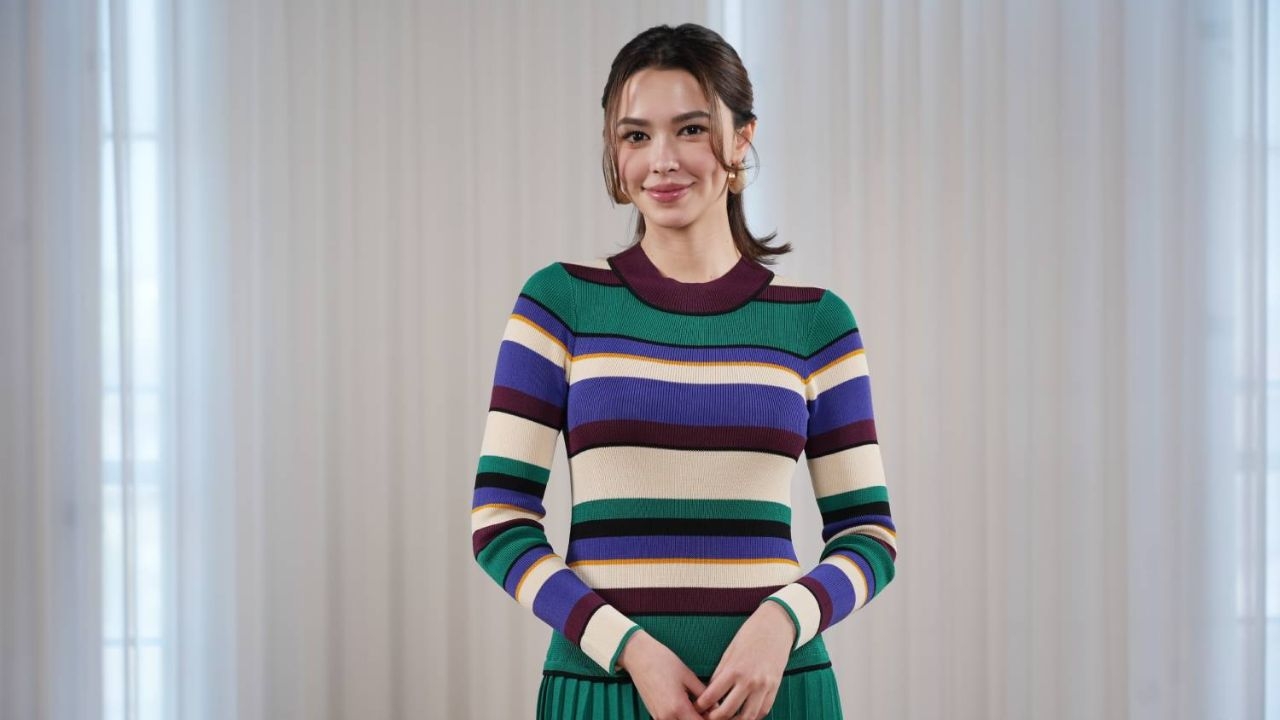
Prime Cast reveals another side of Patricia Good from her childhood asthma leading to multiple ER visits, to her entertainment career starting while still not fluent in Thai, and her role as a mother of two coping with postpartum depression after her first child, sharing her views on health care, exercise, and life priorities after starting a family.

You seem strong now, but did you have asthma as a child?
Patricia: Yes, I think it was hereditary because my mother had it too. I was originally diagnosed with a leaky heart valve, but as a child, I didn't really understand what that meant. I just knew the doctor said it would heal since it was very minor—like 0.0-something millimeters—so it would gradually fix itself. But it caused me to wheeze because my heart didn’t close properly. The doctor advised me to exercise a lot, and swimming helped the most. I didn’t understand it then, but I loved swimming so much that I became a kid who loved it. Funny thing is, I enjoyed it but wasn’t fast enough to make the swim team; I just swam for fun and relaxed.
Was it severe at that time?
Patricia: It was severe. I remember many times my mother drove me late at night to the emergency room to get oxygen because the wheezing would flare up and I couldn’t breathe. It happened even abroad, like in Scotland in the middle of a field. My parents rushed me to the ER. I have those memories, but as a child, I probably didn’t realize how dangerous or scary it was—I just got used to it. The attacks happened about once a year, usually at the end of the year when the weather changed and got cold. I had to use an inhaler, like a purple one, once a year. Over time, the symptoms gradually lessened with age, and I haven’t needed inhalers for years now. It’s amazing that this disease could heal like that.
Did you have discipline in exercise and self-care as a child?
Patricia: As a child, I didn’t really understand discipline but I just enjoyed swimming. I remember every family trip, my parents would choose hotels with pools or pool villas, and I would swim until exhausted because I loved it. I didn’t focus on being sick; I just loved doing it, so my body probably got stronger naturally.
What do you think your children have inherited from you?
Patricia: They’re still very young, one year and two and a half years old, but I feel they’ve got brightness, playfulness, and dimples. They also have their quiet moments, like wanting to read, and a bit of impatience, which I also have. But since having children, I feel calmer.
You had children quite early but still look beautiful and fit, becoming a role model for many?
Patricia: I always wanted children. My mother had me at 25, and as I grew older, I became closer to her. Having children close in age has many advantages. It was a natural step after marriage because I wanted a family. I love kids but didn’t know how to play with them.
How was it when you had your own children?
Patricia: I was very excited during pregnancy, checking every day through apps to see the baby’s size compared to fruits. I was fascinated by all the changes and symptoms, constantly researching cramps and other things. It was fun to experience the changes. But after the baby was born, I was shocked because I wasn’t prepared for what to do next. I thought raising the baby would be easy. My husband, Note, says he liked the pregnancy stage best because everyone took good care of me. I gained about 15-16 kilograms with my first pregnancy.
What did you crave during pregnancy?
Patricia: I ate a lot of carbs, especially bread, and drank chocolate milk daily. They say women carrying girls crave sweets, and that was true for me. I was surprised myself. I just ate whatever I wanted, thinking it was nourishing the baby, so I didn’t worry. I had severe morning sickness for the first three months and could barely eat, so I snacked on Saltine Crackers frequently. After three months, the dizziness went away, and by the fourth month, I felt much better.
Were you filming a drama during that time?
Patricia: Yes, it was a bit unplanned. When I accepted the role, we agreed filming would finish around early next year, so I relaxed thinking I’d give birth right after. But filming got delayed due to script and other issues, and I ended up working throughout my pregnancy. Fortunately, my face didn’t change much, but my hands, feet, and face swelled later on. During filming, my growing belly was noticeable and I had to change costumes often.

Your husband couldn’t stand seeing you like that and started making supplements for mothers?
Patricia: It wasn’t just about weight gain, but he saw my poor eating habits. I loved carbs like pizza, pasta, and bread, but Note said I wasn’t getting enough protein. He inspired me to focus on protein. For my second pregnancy, I ate protein and fiber, whole foods, and kept protein intake high. I gained only 12 kilograms but had a bigger baby than the first.
Did you exercise during pregnancy?
Patricia: I exercised continuously during the first pregnancy, squeezing a ball and doing low-impact movements without jumping. My doctor said I could continue what I was used to since I had no risk factors. I exercised until the day before my C-section, squeezing the ball to encourage natural labor, but it didn’t happen. I think I recovered quickly after the first birth, with my belly shrinking within about a month. Maybe because I was young. I barely ate or slept much because I was busy pumping milk and stressed caring for the baby, so my weight dropped but not necessarily healthily.
The day you gave birth?
Patricia: The hospital was very comfortable, with nurses teaching me how to pump and breastfeed. I was surprised and grateful to have such support. But when we got into the car to go home and the nurse put the baby in the car seat and closed the door, I suddenly cried. It was probably a huge hormonal swing and stress, worrying about managing alone without help. Note noticed my mood and quickly arranged for a nanny to assist. At first, I was confident I could manage alone, like my mother did, but that plan changed.
Did you develop postpartum depression (PPD)?
Patricia: I think I did. When I later talked with the doctor, I explained my symptoms—sudden crying, feeling down, anxious, and guilty for not being able to manage alone. I felt pressured and isolated since none of my friends had children. I kept these feelings inside and became very stressed. Eventually, I spoke with the doctor, who prescribed medication. For about two to three months, I just got through day by day. Gradually, I became more confident and my hormones normalized to pre-pregnancy levels.
Was the pressure related to breastfeeding?
Patricia: Yes, breastfeeding and pumping milk was very demanding. After feeding 15 minutes on one side and 15 on the other, the baby would fall asleep, and then I’d pump for 20 to 30 minutes, store the milk and equipment, then rest for about an hour before feeding again. The baby woke every three hours, and by the time I finished feeding and pumping, I barely had time to sleep—maybe just an hour before waking again. It was exhausting and stressful. I constantly checked if the baby was breathing, very anxious.

How did you get through that period?
Patricia: Fortunately, Note prepared well. He had friends with children who knew what help might be needed, so he was a great support. Also, grandparents and relatives came to visit and encourage us. No one pressured me and allowed me to go through the process naturally. As my hormones stabilized, I felt better, though I sometimes got emotional before my period, with symptoms similar to PMS. Before having children, I was more prone to mood swings and crying, but it lessened with age. Talking about postpartum depression would trigger tears, as would the premenstrual phase.
You had your second child 11 months after the first. How was that?
Patricia: I didn’t expect to conceive so quickly, which was good timing but very tiring. I hadn’t fully recovered or improved my nutrition after the first pregnancy, which led to more symptoms during the second, like severe hair loss and leg cramps, probably from vitamin and mineral deficiencies accumulating due to close pregnancies. After breastfeeding my first child exclusively for about eight months, I briefly stopped to recover, but pregnancy again pulled nutrients away. People around me noticed I looked worn out and wondered if it was because the second child was a boy, but I think it was due to nutrient depletion.
How was the second birth?
Patricia: It was much more relaxed. I was very happy and had no depression symptoms. Having experience helped me know what to expect, and I enjoyed watching my first child grow while welcoming the second. It felt complete and joyful.
Has having children changed how you see the world?
Patricia: I don’t think my worldview changed, but my life perspective and priorities definitely did. I focus on my family and children and care less about external opinions. When I was younger, I wanted to know everything happening around me, even if unrelated. Now, family is what matters most, and I think more about taking care of myself to be around for them longer and not be a burden when I’m older.
You’ve been exercising a lot lately?
Patricia: About three to four days a week, I exercise more but not just weight training. I’ve grown to enjoy cycling, cardio, and Pilates for stretching. I try to do a balanced routine that strengthens muscles, improves cardio, and stretches, but I don’t overdo it—just as much as I can handle.
How important is your husband’s role in family and parenting? Some women do most childcare with little male involvement.
Patricia: He is very important. We communicate to ensure we share the vision of building a family together. We agree on roles and responsibilities, but ultimately, parenting is a shared duty. The child belongs to both of us, so both must take part and support each other.

Looking back, do you prefer the version of yourself before children or now?
Patricia: I prefer the current version. Everything I’ve been through, good or bad, I value deeply because it has made me grow.
Do you feel your beauty has changed? Any insecurities about your body?
Patricia: Honestly, I just want to be strong. I don’t focus much on appearance but on health. I want muscle mass and to age well without illness or pain.
Is there anything in life you want to do but haven’t yet?
Patricia: Since I entered the entertainment industry young and had children early, I’ve done most things I dreamed of. So right now, not really. Maybe I’ll have a midlife crisis around 35 when my kids grow older. I’m happy with what I’ve done and don’t regret anything. But I do wonder if, when work demands increase and I spend less time with my children and exercising, how I’ll manage. I don’t worry too much; I believe life has its happy times and times to persevere.
Click to readEntertainment newsMore