

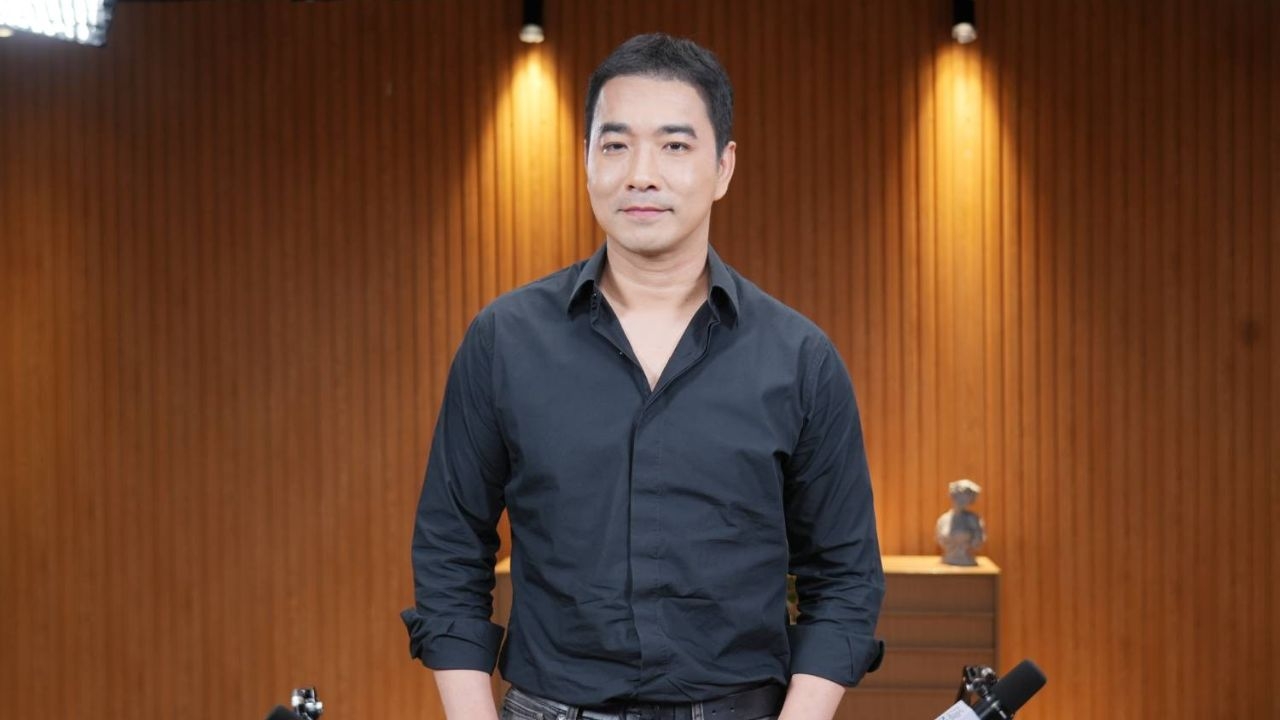
Who would have thought James Ruangsak Loychusak planned his family life so thoroughly that he listed everything before marriage. Revealed in the MY DADDY James show, he shared his struggle with infertility for over a year without success, with the hardest point being when his wife had her first miscarriage. He warned men that having big muscles doesn't mean having children easily—"You can know the face but not the sperm!" His important philosophy is being a "present father," valuing children's time as more precious than any other time. This approach has become the formula for a stable family growing together.

Looking back to when the family faced infertility, how difficult was it and how did you handle it?
James Ruangsak: We were like any other married couple. I was an athlete, playing triathlon, strong and healthy. Teacher Koi was in her fertile years and considered beautiful. We thought that with a strong man and a healthy woman, marriage would naturally lead to children. But after trying naturally for 6 months, then a year with no success, and even when pregnant it didn't continue. I married around age 39; Teacher Koi was in her early 30s. We couldn't conceive for a year, and it wasn't that we never conceived at all, but it didn't progress.
There was an emotional struggle, mostly for the woman. She felt dramatic, worthless, unable to be a mother. Seeing other women her age with normal lives made her question why she couldn't. At that time, Teacher Koi wasn't yet "Teacher Koi Baby and Mom" knowledgeable about infertility, so she blamed herself, felt depressed and deeply down. Some nights, she even fantasized about why she was like this.
At that time, did you try both natural and scientific methods?
James Ruangsak: Yes, we started with basics. The scientific process begins simply, such as consulting a doctor, counting fertile days, trying naturally first. The next step is IUI, where the doctor collects sperm and eggs, mixes them in a lab, then inserts into the woman's reproductive system. We tried this but it didn’t progress. The atmosphere in our married life became very bleak.
The worst and lowest day was when Teacher Koi had her first miscarriage. I remember answering her call as she cried, barely able to hold herself together. Scientifically, it's natural selection—nature rejects imperfect embryos, which is normal. But without knowledge then, we thought it was her fault. When she went through that, I personally wondered if she was fine and if the problem was me. The mood in our married life was full of emotion.
As a man, I had to try to support her, saying it's okay, just the two of us is enough. That was a turning point. Teacher Koi began learning about fertility and infertility, reading research, consulting doctors, attending seminars on reproductive health. She went all out to understand the issue deeply. As she learned, she understood what was happening, why infertility occurred, and what the bleeding meant. That knowledge transformed her.
Did you change your lifestyle or anything else?
James Ruangsak: A lot changed. Once we understood, we realized the problem came from ourselves. The first step is to know what the problem is—whether it's the woman’s or the man’s issue. Teacher Koi encountered many who thought that if you have money, you can just pay and guarantee a child. But no hospital or clinic can guarantee 100% success. So an important step before medical procedures is what we call the "Teacher Koi Bible"—knowing the root problem first.
Once you know the problem, men might feel ashamed about infertility. How should they open up?
James Ruangsak: Both men and women can feel this way. Traditional Thai beliefs say a woman without children is incomplete or men without "seed" are less than a man. These feelings cause many couples with infertility to avoid revealing it, such as not going for check-ups, thinking "I'm fine, healthy, all tests are good."
But routine health checks don’t screen for fertility issues. So problems remain undiscovered and unaddressed. This is a mistaken belief among men. If after 6 months to a year of regular, natural intercourse there’s no child, you likely have infertility and must accept it. Then go to a hospital for health checks—for both male and female—to identify the problem and accept it.

In my generation, people say if you're 35-40 and have no children, it's too late. How would you tell young people it's not that late or bad yet?
James Ruangsak: We must accept that today's world is different from before. Even in the 1990s, building a family was not easy; now it’s even harder. Couples plan carefully, wanting to be sure they can support a child before having one. This fear of not raising kids well, or of the harsh world, causes many to avoid having children, rationalizing it's not necessary in the modern world.
Due to expectations and the economy, by the time they feel ready, age has passed?
James Ruangsak: Exactly. But I believe something unchangeable is what I call "A call of nature." Nature is smart, embedding in human genes the desire to love and have offspring, to continue the species. This feeling may be overshadowed by societal values, but as we age, those values fade and nature’s call returns. No matter the difficulty, humans strive to have children. I’m not saying everyone should have kids, but we should change our mindset to prepare well and adapt to today’s changing world.
Did you plan for such a long gap between children for N'Medaa?
James Ruangsak: Yes, we focused on quality over quantity and speed. We want each child to receive the most time and love possible. It’s my personal nature to value sustainability and planning, avoiding superficiality. So the 6-year gap between children is the best period for me to give quality time to one child before having another.
How did you plan for yourself, your family, the upcoming child, and the existing child? Did you think a lot?
James Ruangsak: I never really wanted a family before. I loved freedom and happiness in life. Being an artist in the 1990s was joyful and free. I thought I didn’t need a family and lived happily alone until marrying at 39.
But one day, the call of nature sounded, and I felt it was time to have a family and someone in my life. It was the right moment to meet my wife, like seven stars aligning. I decided: if I chose pleasure, go all in; if family, go all in as well. I envisioned a happy family, like planning a business.

How did you plan for children, and did it go as planned?
James Ruangsak: Regarding children, if you marry and want kids, you must be a "present father." All fathers love their children, even those who work hard and have little time. But some fathers are present, always there when the child opens their eyes, giving time and attention. Children sense this. Giving money is necessary but children don’t perceive that, especially in the first three years—the most important time when time equals love. I focus greatly on this, reflecting on financial planning before marriage to ensure time for children. I am a father who makes time, reads bedtime stories, and picks up and drops off every day.
What does it mean to be a "present father" for the future child?
James Ruangsak: When a father is truly present, the child hears a small voice in their head guiding them away from bad behavior and not wanting to disappoint their parents. Children without present parents feel empty and lack invisible bonds that restrain them. So, parents' time with children creates that "little voice" helping kids exercise self-control. Time is the most precious thing because it cannot be bought back, and for me, the child's time is even more precious because it cannot be reversed.
Have you seen results from this approach?
James Ruangsak: Definitely. Medaa is a child overflowing with love. With such love, she doesn't seek affection elsewhere. So in any environment where she might be pressured to do wrong, she turns away immediately.
Sometimes with children, problems arise when the wife looks after the child and the husband also looks after the child, but the couple grows distant. Did you plan or do anything about this?
James Ruangsak: Believe it or not, this was part of our plan before marriage. We actually sat down and wrote detailed lists before registering our marriage: finances, relationships, family issues, friends, parents, and when to have children. We agreed never to lose the culture of being a couple—time with just the two of us is vital. Giving 100% attention to the child means neglecting the couple. If parents aren’t happy, how can the child be happy? So we must not forget to maintain our relationship. I say this openly: nature created intimacy and touch between couples to show mutual love and to affirm that "you are still number one to me."
Do you have advice for families struggling because the wife is busy with the child and the husband doesn’t understand?
James Ruangsak: Go back to before marriage—are you sharing the same vision and goal? Our goal is the same: happy children and happy us in old age. If the vision is shared, review your action plan to maintain love as before. When you understand this, you won’t get frustrated with each other.
Nong Medaa is about to be born. Did you tell her older sibling anything?
James Ruangsak: She has been involved in every step—from prenatal care, where Teacher Koi takes care of herself and Medaa helps by mixing protein shakes, saying she wants the baby strong, to doctor visits, ultrasounds, and embryo transfers. She’s been part of it all. We explain what we are doing and that the baby is coming. Being part of the process makes her feel included. Most importantly, don’t make the older child feel their importance is diminished when the new baby arrives. So now, I give all my attention to Medaa and include her in everything.
Are children conceived naturally different from those from scientific methods?

James Ruangsak: They may even be better. Traditionally, people thought IVF babies were not normal. But they are just eggs and sperm fertilized the same way. Doctors help the process be more certain, selecting the best eggs and fertilizing them in controlled conditions until embryos reach blastocyst stage day 5, then implanting and checking chromosomes. So the process is like nature, and the child is a normal child, raised normally.
What inspired you to create the BabyandMom.co.th page with Teacher Koi?
James Ruangsak: BabyandMom has about 700,000 followers across all channels, gathering people wanting children and those struggling with infertility seeking accurate fertility knowledge. It started from Teacher Koi’s heart as a mother who personally experienced infertility. She understands the pain—not just childlessness but the emotional wounds caused by ignorance. To move from not knowing to knowing requires learning. BabyandMom grew from learning and sharing that knowledge with mothers following our page. We created the "Teacher Koi Bible," and she is writing a book.
Some men take excellent care of themselves but still may be part of infertility failure. How should men care for themselves?
James Ruangsak: Remember my saying, "You can know the face but not the sperm." It’s true—strong and muscular men may have weak sperm. First, men must understand their bodies and have sperm tested medically for three things: count, motility, and quality. Men should see a doctor to check for any abnormalities.
What are your hopes for your child’s future or the kind of life you want for them?
James Ruangsak: I have just two hopes: that they are safe and happy. Parents are like gardeners, carefully watering and tending so the plant grows. How the plant grows is up to it. Don’t prune it into a bonsai that can’t grow naturally. I’m lucky, and Medaa is lucky to have opportunities to try everything she wants. We do our best. I always tell her to use her advantages well—to choose and do what she wants. I don’t pressure her; we support her learning to write, read, raise her hand in class, and enjoy learning and playing every day. So I have no expectations; I give her freedom to choose her path.
James, can you share a touching experience of being a father?

James Ruangsak: Many friends ask me if having children is good. I try to give thoughtful answers. One day I realized that having children revealed the meaning of "true love." Not counting love between man and woman, but the unconditional true love between parent and child. Those without children don’t understand this feeling. No matter what experiences you have, it’s not like having your own child. Raising grandchildren or adopted children isn’t the same. So I tell friends: I don’t know why having children is good, but the most impressive thing about having kids is that I found true love.
Watch the clip
Entertainment newsMore