

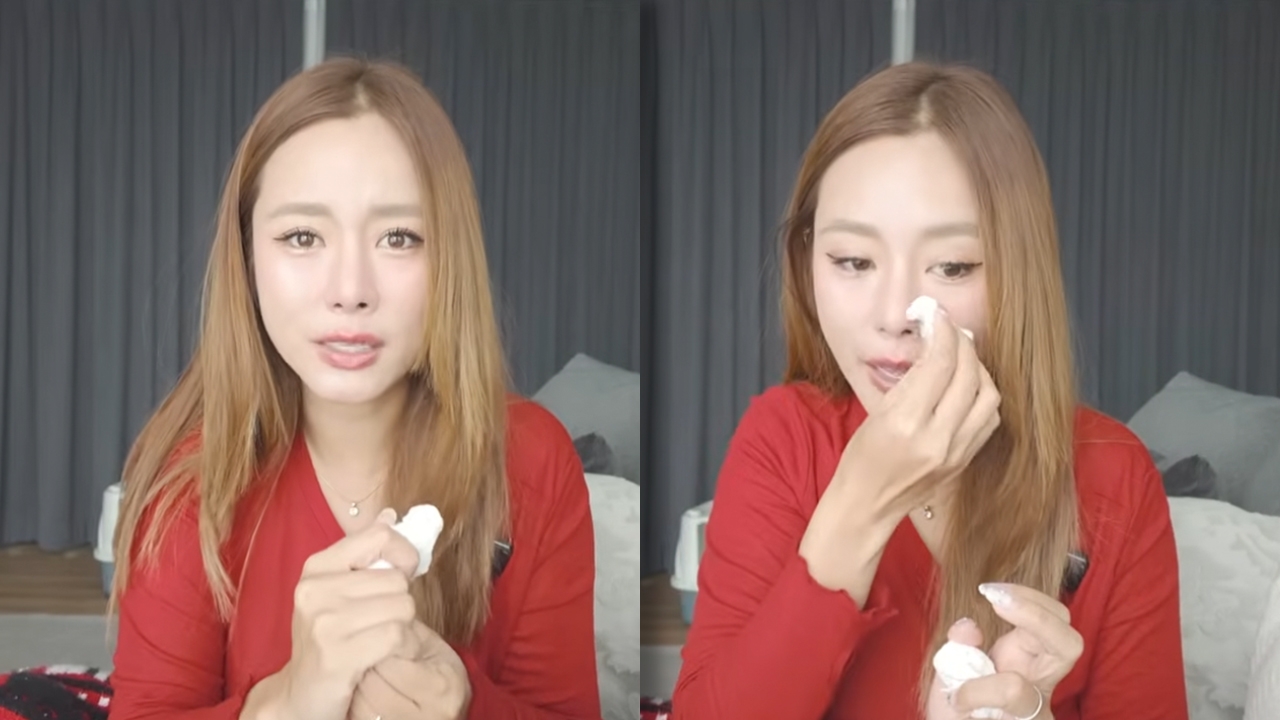
Baifern Anchasa recently shared an update about her life during the first half of the year, which was marked by a major personal crisis. Baifern Anchasa Mongkolsamai. She revealed that over the past six months, at age 33, her life felt like a rollercoaster—filled with moments of joy, heartbreak, and suspense. She was unaware she was pregnant at first but ultimately was devastated to lose the baby. She also faced a near cancer diagnosis.
Baifern recounted her experiences at 33, nearly facing cancer and almost becoming a mother. This video shares a lengthy, candid story because these two events overlapped, and she wants to be as real as possible.
Since marrying four years ago, people often asked when she would have children. For the first two to three years, she wanted to fully enjoy life’s adventures. By the end of last year, she decided she was ready to have a child. The first step was to remove the intrauterine device (IUD) she had used for 4–5 years, originally placed to reduce menstrual cramps. Her doctor also mentioned it might help small lumps detach.
She was very happy during those 4–5 years with the IUD because she hardly had any periods, and when she did, they were minimal and painless—an added benefit.
The doctor said she could likely conceive within 1–3 months after removing the IUD, so she had it taken out mid-last year. However, her period didn’t return for three months. An ultrasound showed her uterine lining was very thin—only 4 millimeters instead of the normal 8 millimeters or more. A hysteroscopy revealed extensive adhesions in the uterus, almost completely white, making embryo implantation nearly impossible.
The doctor suspected the IUD as the cause since it’s a foreign object that can shift position if left inside too long. This doesn’t happen to everyone, but she considered herself unlucky.

The treatment involved hysteroscopic removal of all uterine adhesions, followed by a gel injection into the uterus. The gel needed 2–3 months to be expelled, delaying her plans to conceive until December, although she had hoped to conceive earlier.
Once the gel cleared, she planned to try for a child. But life wasn’t that simple. After talking with a friend who had cancer since age 24, Baifern decided to have her annual health check since she’d never had one. Mammogram results were clear, but ultrasound found a lump over 1 cm with a BI-RADS 4A rating, indicating the need for a biopsy at four points to check for cancer.
Baifern described the moment of hearing the biopsy results. She underwent the biopsy on 4 January. Though told results would take two weeks, she got them on 8 January. She wasn’t worried because no family history of cancer and she had lived healthily.
The doctor said the tissue was concerning and could be an early form of cancer. Baifern wasn’t scared of cancer, thinking the small lump was treatable. Her first question was, "Will I still be able to have children?" because she was trying to conceive naturally at that time. It felt like her world collapsed as having children was her dream.
The doctor explained that cancer type and stage would determine treatment. Ideally, treatment would last six months with a recovery period of one to four years before trying to conceive again. Baifern wasn’t stressed about cancer itself but deeply worried about infertility and aging during treatment.
Since she was trying to conceive naturally and unsure if she was already pregnant, she asked the doctor what would happen if she was pregnant. The doctor said there were only two options:

1. Continue the pregnancy and postpone cancer treatment for another year, with uncertainty about cancer progression.
2. Terminate the pregnancy to start cancer treatment immediately and try conceiving again later.
Although she knew she should choose the second option, it was an incredibly difficult decision for someone wanting a child. The doctor reassured her the cancer was not aggressive or spreading. She felt sad about three things: why she hadn’t rested sooner, why she hadn’t stressed less, and that she had insufficient critical illness insurance.
She scheduled surgery to remove the lump and examine lymph nodes for cancer spread. Afterward, the doctor brought good news: no cancer cells were found in the lymph nodes. One week later, further results confirmed, “You do not have cancer.” Baifern was shocked and confused after living as if she had cancer for over a month.
It was the best news—life gave her a second chance to change her mindset, let go of stress, and promptly buy critical illness insurance.
After overcoming the cancer scare, Baifern shared her next mission: having a child.
“After the cancer crisis passed, I immediately resumed trying to conceive naturally by late February without hormone stimulation. My uterine lining was only 6 millimeters, so I thought it wouldn’t work. In March, I went diving in the Maldives, carrying heavy tanks and jumping into water daily. My period was irregular and light, so I was sure I wasn’t pregnant.”
On the last day, she felt unusually sleepy. Back in Thailand, an ultrasound revealed a gestational sac. She was shocked. Memories of diving and waves flashed through her mind, but the doctor confirmed the sac was healthy. Baifern then surprised her husband, Boom, who was moved to tears.

At 5–6 weeks, they heard the baby’s heartbeat during an ultrasound—an incredible moment. But by week 7, after returning from work in China and having a follow-up ultrasound, the doctor was silent and said, “I can’t find the heartbeat.” It was the most shocking moment of her life, like a rollercoaster. They had come to hear their baby’s heartbeat, only to learn it had stopped.
She endured four days waiting for scientific confirmation via repeat ultrasound, but she instinctively knew because typical pregnancy symptoms like fatigue and cravings had vanished. The follow-up confirmed a miscarriage in early stages. She was heartbroken, blaming herself and wondering what went wrong.
This happened in April. Now feeling better, she is ready to share her story. She plans to proceed with IVF to transfer embryos because she fears natural pregnancy and another loss. Embryo selection reduces controllable risks.
She admits to using social media less recently because seeing others’ childbirth stories triggers her. She has coped thanks to support from her husband Boom, family, and office colleagues.
Baifern wants to encourage others facing similar challenges: “One day it will be our turn. This video updates my life at 33, a year full of trials, but I believe everything will get better from here.”
Many who watched her video sent abundant messages of support to Baifern.
Click to read more.Entertainment news.. Additional information.


