

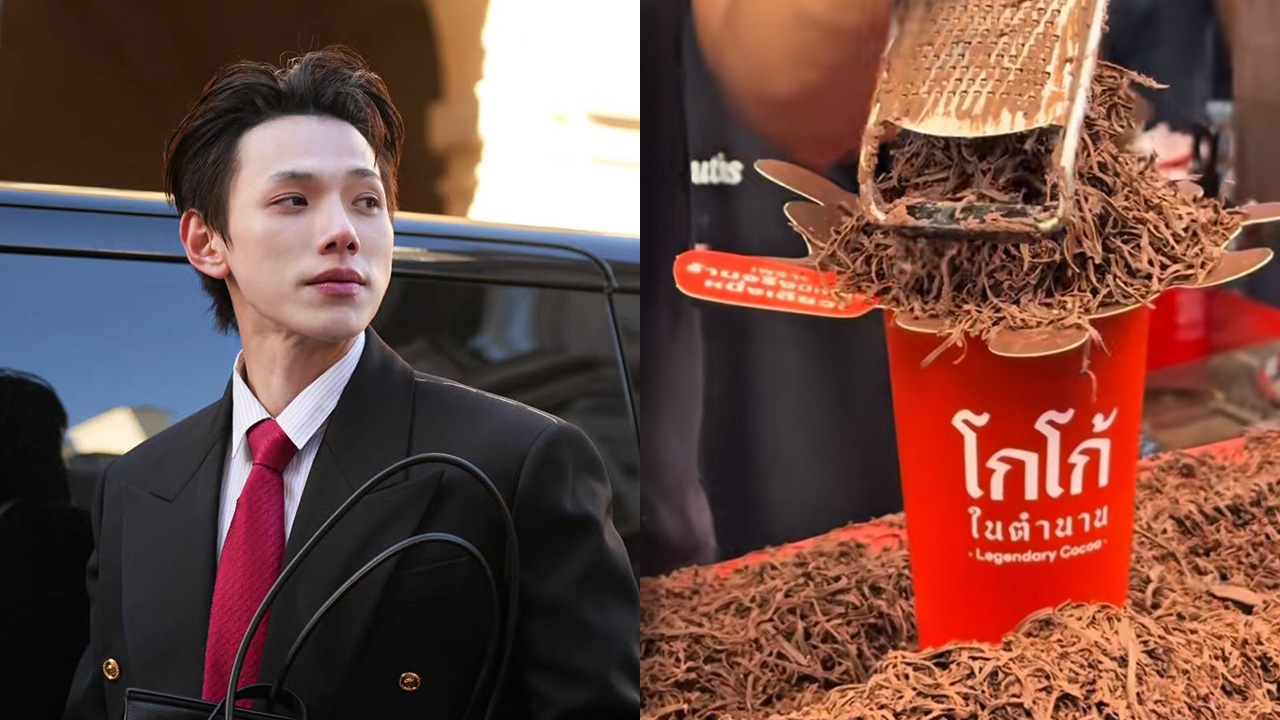
Previously, there was a controversy over a shop called "Legendary Cocoa" owned by "Tah Wu Pittaya Saechua" which he co-founded since his time as a student at Kasetsart University. The shop was copied by a rival, imitating its identity including color tones, fonts, text, and menu, causing fans and customers to confuse and buy from the wrong store during the Agricultural Fair at Prince of Songkla University (PSU), Hat Yai district, Songkhla province.
Tah Wu revealed that he does not forbid anyone from selling cocoa menus because anyone can sell food and adapt ideas, which he sees as endearing. However, in this case, the rival deliberately copied to the extent of infringing intellectual property and created misunderstandings, so he has handed the matter to lawyers for legal action.
Legendary Cocoa shop copied?
"First, I want to thank the people of Hat Yai for warmly welcoming my shop. We have sold for a long time, starting from when I was a student at Kasetsart University. Thanks to Kasetsart for the Agricultural Fair that allowed students to start selling. My partner Toy and I owned this business as students. This was the beginning, and we continued until it became Legendary Cocoa. This time was my first time going south to the Agricultural Fair at PSU."
Everyone has seen the news about the copying, as it’s clear from the colors. There’s a clear intent. There’s been social media disputes about who can sell cocoa. From our view, anyone can sell the menu, but the idea that makes people think it’s Tah Wu’s shop or a copycat is a different matter.
It's about intellectual property. I want to separate the two sides. The rival made it look like our shop, and customers were truly confused. On the day we went south, fans waited to talk to us holding the wrong shop’s products, likely because the shops look very similar in font, color, and menu.
I’ve seen many copycats but didn’t pursue legal action because we focus on our own brand. But this incident made me sad. People reviewed it, and some on social media didn’t understand. We clarified this is a different issue. Now that we’ve spoken out, I thank everyone—netizens, fans, and people of the south and Hat Yai—for their awareness and support.
At least this incident raised awareness about intellectual property, which is a delicate matter and important enough to have laws. I don’t want to use the law aggressively, but it’s about emotional value and ethics.
My shop isn’t just me. There are younger staff wherever we go. I employ local students to provide them income. I never hoard wages or get rich alone. From the Agricultural Fair until now, I haven’t taken a penny from the shop but reinvested to develop it. The main issue is the feeling—like building something that gets devalued easily by what’s called intellectual property infringement."

We were upset and teary after the first statement when some misinterpreted that only Tah Wu can sell cocoa.
"Some understood, some didn’t, but now more people get it. Comments show the issue isn’t about forbidding cocoa sales—anyone can sell—but can you please change your approach a bit?
As seen online, southern shops started making their own style of grated cocoa, which is nice and gained customers. This kind of adaptation is acceptable and turns into ideas to develop one’s own shop, not just copying superficially."
Not the first time being copied?
"Yes. Each case is different. We know the intent. Even if the color is the same, there are many ways to decorate a shop without using vinyl signs or menus like that or LED lights. But some think copying like this is okay. I want people to know creating something yourself has more value and is the right way."
Did you meet the person responsible for the shop when you were in the south?
"I didn’t meet the owner, but other sellers said they experienced the same—someone setting up next door copying their shop and selling well, even copying menu names. I’m not the first victim of this behavior by that party. So, it’s about intent. Sometimes people don’t intend harm, but in this case, it’s done professionally with intent. We can’t judge alone; we need a third party or legal process because this has been ongoing since I started the brand. The behavior is clear and long-term."
Do you intend to take legal action for this infringement?

"My legal advisors said the behavior and intent are quite clear."
Are you referring to the owner of the copycat shop?
"Yes. It’s a legal issue beyond copyright infringement, including deceptive sales, so we let legal experts handle it."
What about influencers involved?
"Everyone, not just influencers, some understand and some don’t. Every action and word will have consequences. I’ve learned from my own mistakes. Whether we learn is up to us. I won’t discuss it further because sometimes speaking more encourages them. Society has already judged what happened."
Will you sue over reviews of fake or copycat products, which is also illegal?
"I don’t know about that. It’s beyond me and up to the company. Although I’m a major shareholder, I leave such decisions to them. If they consult and decide to proceed, that’s their call. I personally stay out of it."
What about questions regarding what you do with cocoa scraps?
"The controversy started with this, which hurt because our initial fame came from it—food waste. Many asked if we melt or reuse the scraps. We think that’s impossible. What we do is minimize leftovers and sell scraps, but not to food industries. Someone buys them by the kilo, but what they do next, we don’t know.
We never reuse or recycle leftovers into new products because we sell at fairs where dust and pollution exist. We use plastic liners to protect. We never give leftover cocoa back to customers because we don’t know its exposure.
Our production process is food-grade from the factory, but reprocessing might not be food-grade and could be toxic. So leftover scraps are used for other beneficial by-products."
."
Click to readEntertainment newsMore
