

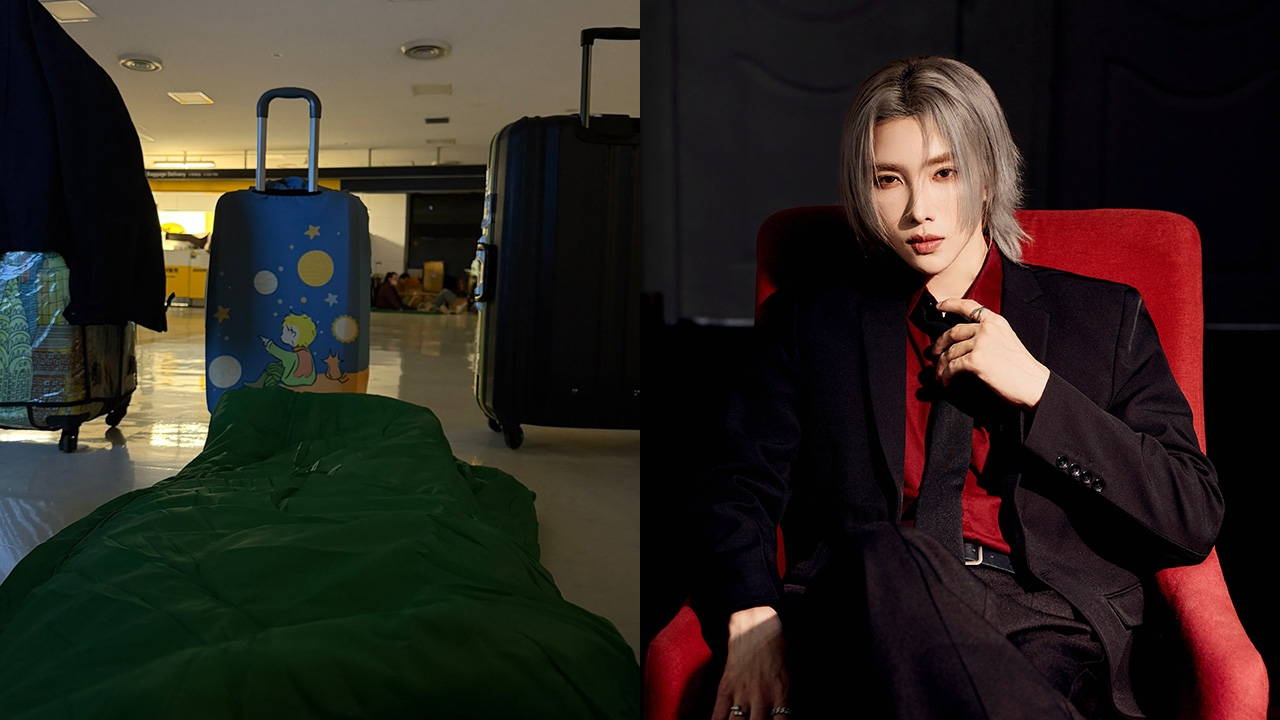
This issue is drawing significant attention among Thai tourists currently visiting Japan, after a major airline abandoned passengers at a Japanese airport, causing widespread distress. Among those affected is Noel Nattharut Tangwai the well-known lead actor of a popular BL series, who posted about his terrible experience on his personal X account. He traveled to Japan for work and tourism with his family and team.
However, he faced a sudden cancellation of the return flight by the major airline, leaving hundreds of Thai passengers stranded overnight on the cold floor of Narita Airport, including his own parents and over 100 members of the Thai youth national robotics team traveling to compete.

"The experience that I and hundreds of other passengers had with AirAsia X
This trip to Japan was for a fan sign event in Tokyo and other work, plus leisure with my family. My parents and team accompanied me. The return flight was scheduled to board at 19:45. I waited by the gate until 20:30, not thinking much, assuming a slight delay as is common.
At 21:00, an announcement stated the plane had technical issues requiring repairs by a maintenance team, with boarding updates promised at 22:00. By 22:00, passengers were told to continue waiting until 23:00. At 23:00, the airline announced flight cancellation and urged everyone to leave quickly as the airport was closing.
Everyone stood confused near the gate, unsure what to do next, where to collect luggage, or what assistance the airline would provide. I approached a counter staff member and asked, “What should we do next? Where do we collect our bags?”
The staff replied they didn’t know but asked us to leave. They explained the plane couldn’t be repaired as parts would only arrive the next morning. What puzzled me was why the airline waited until 23:00 to cancel when they knew parts wouldn’t arrive that night. If cancellation had been announced earlier, say at 20:00, passengers could have taken trains to find hotels or arrange accommodations.
The late cancellation left passengers with almost no options. I asked staff where we should go next, but they avoided giving clear answers. Many passengers remained at the gate unsure what to do until lights were turned off and an announcement ordered everyone to leave the area.

Passengers then had to re-enter Japanese immigration procedures as if newly arrived, passing passport control and waiting for luggage on the conveyor belt, which took a long time. After receiving luggage, the flight’s captain, first officer, and crew appeared nearby.
Many passengers asked what had happened and what to do next. The female crew avoided answering and left quietly. The captain was approached by many, including an adult traveling with over 100 children for a robotics competition, who asked, “What can we do? There are many young children here.”
The captain was silent for a moment, then replied, “I have work tomorrow,” and walked away. I wondered, doesn’t everyone have responsibilities and schedules requiring timely return?
About ten Japanese staff remained to manage stranded passengers but instead tried to push everyone out, shouting and pushing people away. Passengers repeatedly asked, “What will happen to our flight?” “Do we need to book new tickets?” “What should we do now?” “Can the airline arrange hotels, especially for the 100+ children?”
The response was simply to clear the area first and that snacks and sleeping bags would be provided. I asked, “Where is the sleeping area?” It was past midnight, and finding or checking into hotels in Japan at that hour is very difficult, especially without prior reservation. Many hotels do not have staff for late check-in, meaning we might have to wait until morning.
Staff said they would provide sleeping bags and snacks and told us to find places to lie down near the airport entrance, an area still open but very cold. I asked a staff member in English, “If you had kids or if we were your family, would you let us sleep on the floor in this freezing weather?”
To my shock, the staff laughed and replied, “What should I do for you?” Everyone there was confused by this response. Then a staff member loudly sang with an irritated tone, which felt like an attempt to drive passengers away. Many Thai passengers began requesting accommodation help and asking for official flight cancellation documents to claim refunds.

Staff said such matters were not their responsibility, instructing passengers to book new tickets themselves and seek refunds in Thailand. When complaints were mentioned, the reply was, “If you want to sue, that’s your business.” Tensions rose, with staff shouting at passengers and even threatening to call police to remove children and Thai passengers.
I advised other passengers, “Let’s leave for now; we have no choice. We’ll wait outside.” I felt arguing further wouldn’t improve the situation. My family and I took the sleeping bags and biscuits provided.
We were told to sleep near the airport entrance where it was very cold, and the floor was cold too. I worried about my parents falling ill from the conditions, but we had no other option but to wait until morning.
The next morning, I checked the airline’s app and saw my flight was rescheduled twice—first to 11:00, then to 15:00. I still don’t know if there will be further delays.
At check-in, long lines had formed due to passengers already scheduled to depart that morning and those affected by the previous night’s cancellation all checking in simultaneously.
We had to queue at the back after barely resting since the night before. The situation was chaotic. From overheard conversations, today’s flight might also face issues or cancellation, but I have no confirmed information. I still don’t know when we will return.
I understand technical problems can happen, and canceling flights for safety is correct. What I don’t understand is why the airline waited until 23:00 to cancel knowing parts would arrive only the next morning.
Why were passengers not given clear instructions on what to do? Why did over 100 children, elderly, and families have to sleep on the cold airport floor without proper accommodation? Why did passengers seeking their rights face shouting, eviction, and threats of police?

I’m not asking for special treatment or to be cared for more than others. I just believe everyone deserves clear explanations and proper treatment, especially when they are not at fault.
What upset me most wasn’t the technical failure but seeing children, elderly, and many families endure this ordeal without knowing what help they’d receive. I hope AirAsia X will clarify the incident and explain how they will compensate affected passengers. Everyone has jobs, families, and responsibilities and deserves respect. I doubt anyone wants their parents or children to experience this.
Noel also shared further details about the second day, saying
“Summary of day two with AirAsia X after the flight cancellation and spending the night on Narita Airport’s floor. I woke around 6 a.m. and was told to check in with the morning flight’s passengers as the airline tried to send us home together.
I immediately thought, 'How is this possible when the morning flight is already fully booked?' But we followed instructions and queued for 2–3 hours. I asked my mother to sit as I feared she’d hurt her legs standing so long, while I kept waiting.
Eventually, staff said we couldn’t board that flight and had to queue again to receive meal vouchers worth 1,500 yen (about 300 baht), barely enough for a pork bowl at the airport. The line was very long.
Everyone was tired and sore from standing overnight. I told my team, 'Don’t wait; let’s eat. I’ll pay.' Since last night, the only item provided by the airline was a box of biscuits each. After eating, around noon, we started check-in again, waiting 2–3 more hours before finally boarding was scheduled for 14:40.
We waited by the gate as usual, but at 15:00, an announcement said the plane was still under repair and told passengers to keep waiting. After hours, the airline said they’d switch planes and directed everyone to gate 70, requiring another move and more floor waiting.

An announcement then told us to queue for new boarding passes, but staff said it was uncertain if they could issue them, without clear explanation. After receiving new passes, we were moved to a far gate, dragging luggage despite lack of sleep.
At the new gate, we waited without updates until 21:00 when I asked staff directly. They said the airline was trying to get stranded passengers from the previous day on the earliest flights to avoid further issues.
I had already been at Narita over 30 hours and realized the airline was using yesterday’s stranded passengers to fill today’s flights. Meanwhile, passengers booked for today were not allowed to check in and faced similar delays.
This means the problem wasn’t solved but shifted to another group of passengers. This is unacceptable—not just about me getting home, but about all who paid for tickets and deserve proper care.
I originally booked a flatbed seat, but the replacement plane didn’t have this option. Staff assigned me a regular front-row seat without a pillow, blanket, or the services I paid for.
At that moment, I didn’t care about the seat; I just wanted to get my family and team home. We boarded around 22:00 but had to wait on the plane for about two hours without clear reasons.
The plane finally departed around 1 a.m. Exhausted, I arrived back in Thailand but felt worse hearing that passengers on the 21st flight faced similar long waits, received green survival kits, and had to sleep on the airport floor.
I learned some passengers received compensation credits of only 5,000 baht, which I consider insufficient given the hardship. I want the airline to clarify compensation details for all passengers. I understand technical issues happen, and safety must come first.
But I don’t understand why the airline lacks better contingency plans and passenger care. Why must passengers sleep on the airport floor? Why do families with children, elderly, and those with health issues queue for hours repeatedly? Why is communication unclear? Why must passengers constantly ask when they will fly? Why does solving one group’s problem seem to push it onto another?
I also learned earlier flights faced similar problems. I want the airline to address this publicly. I wonder if this incident had not involved me or the youth national team, would it have received such attention?
Or would it have been quietly ignored if involving ordinary passengers without media presence? I’m not speaking out for special rights; I’m fortunate to afford meals and have communication channels.
But I think of others without my options—those who paid for hotels, lost work, traveled with children or elderly, or lacked funds to handle this. Who will take responsibility for their losses and suffering?
I’m back in Thailand now but don’t want this to end just because I returned. I demand fairness for all affected passengers, not just my flight but others facing related ongoing issues.
I urge AirAsia X to officially explain the causes, passenger management plans, and fair compensation for all. Buying tickets doesn’t mean accepting being left to sleep on cold floors without proper care. Safety is vital but so is passenger responsibility.
Finally, I ask the airline: “If those forced to sleep on the cold airport floor overnight were your parents, children, or family, would you accept such care? Is this truly the standard of service and responsibility AirAsia X customers deserve?”
I hope the airline won’t let this fade away and will seriously take responsibility for all passengers, who deserve dignified treatment regardless of who they are."
Click to readEntertainment NewsMore
