

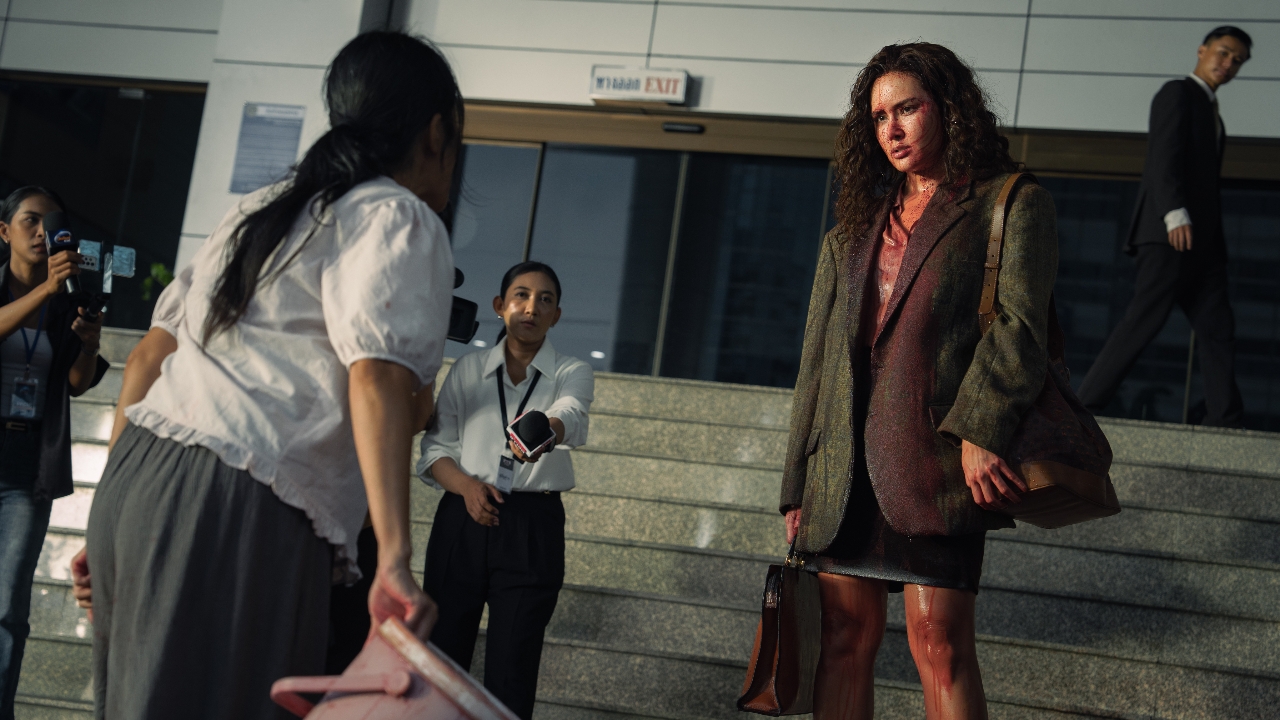
Shortly after its launch, the series from Netflix titled "Devil Lawyer" created a social media phenomenon and became a widely discussed topic. It was praised by word of mouth as the series of the year, noted for the meticulousness of its script, which the writing team dedicated 6-7 years of research and development to.
Every element and case shown in the series was thoroughly researched, selected, and discussed intensively. Each case presents stories close to everyday life with distinctly Thai elements, while simultaneously telling universal stories that global audiences can recognize and connect with.
The series opens powerfully with the issue of "personal status," a legal principle from the Civil and Commercial Code. The writing team deliberately chose one of the first lessons law students learn to introduce “Lawyer Jittree,” immediately showing viewers her skill, adaptability, and clear moral perspective before leading them to the core of the case, which involves the sale of corpses or infant remains.
The theft of infants’ bodies to make "luk krog" (amulets) or "kuman" is a topic somewhat familiar to Thai viewers, as it has appeared in past news reports, such as the export of infant remains to foreign investors who believe in superstition to use as lucky charms for business success. Beyond the legal issue of personal status, this case also reveals the influence of occult beliefs among powerful figures.

The writing team views this as reflecting a broader picture where those in power often distrust others, aligning with other morally gray characters in the series, such as Big Anan, who worships many Buddha images at home, or displays beliefs through statements like "I believe the sacred will protect me" in times of crisis.
The writers said, "We wanted to discuss belief in the intangible. Those in power have sacred beliefs they trust. Similarly, law and justice are intangible. Characters like Mek and Ang believe in justice and humanism, but both face great tests that could make them lose faith. We want viewers to question what they believe in—sacred things, humanity, law, justice, themselves, or others."


The first case where “Lawyer Mek” faces a test by opposing powerful interests involves a defendant who is a scapegoat—the security guard uncle who takes the blame for the factory owner. Mek, a lawyer committed to ideals, wants to do everything possible to clear the defendant’s name.
The writing team got the idea during research after meeting a former judge who resigned due to internal conflict when having to rule on cases they doubted. They connected this with issues of imported electronic waste potentially harming nearby communities and the influx of foreign gray capital, seen in news over recent years.
The team stated, "Every case we select must be confident that, when the series airs, the relevant laws are still likely unchanged and remain debatable. This case symbolizes the struggle against power.
We want to expand on what a judge should or could do when faced with situations like those in the series, to show the small, unjustly treated people and their suffering, and to question the intent and enforcement of laws, which should be equal for all citizens."


When a shooting occurs in front of many witnesses but without any recorded evidence, the credibility of eyewitness testimony becomes a crucial issue. The writing team highlights this by showing monks, government officials, and senior civil servants testifying as witnesses.
The team was inspired by real cases found during research, including shootings at funerals and markets resulting in deaths. Despite many eyewitnesses, the accused could not be convicted. One notable case involved weighing the credibility between an official witness and a market vendor.
During research, the writers observed court proceedings where a criminal defendant called a monk as a witness. They noted that monks are not required to swear an oath, even if recently ordained after the incident. These elements were combined with another case recently finalized at the Supreme Court level.

That case involved a funeral shooting where witnesses were cross-examined to appear uncertain about what they saw, intertwined with events such as fights at festivals or nighttime ordination ceremonies, illustrating that courtroom testimony may be more relatable than expected.
"We want this case to make viewers feel whether they could respond under cross-examination in the witness box. Although everyone is human, the status or rank affects the weight of their words," the writing team added. "This case also marks Mek’s development as he begins to embrace a darker approach, using Lawyer Jittree’s methods for the first time. When Mek learns the background of the character Mai and why the incident happened, viewers can believe that someone like Mek can fight for Mai, too."


When the character “Pui,” a woman who does not fit society’s "beauty standards," is sexually abused by a respected doctor and pressured by Lawyer Jittree during court, Pui’s case has been widely praised for its writing, the choice of issues, and the actors’ performances. Importantly, it also questions whether Jittree retains her humanity.
The writing team all shared an interest in sexual abuse cases, recounting during research a case where the perpetrator was also a doctor. The victim was abused multiple times, returning due to ineffective medication, and the doctor claimed using medical tools was necessary.
The victim had no sexual experience and did not know it was rape or abuse, taking years to dare to tell others. The team revealed, "Even as we finished writing, the story deeply affected us because anyone—beautiful, overweight, thin, or any gender—can face such situations."

They also found that very few sexual abuse victims report crimes, as the legal process is unsupportive to victims’ feelings. Victims suffer through their fight, causing many women to give up or not continue. Even those who win cases often receive inadequate legal remedies or support.”
Pui’s case also explores justice from another angle, showing how online media can shape public belief before all facts are known. The writing team said, "Today, whoever tells the story first often gains an advantage because many people believe the initial information, while justice requires time to verify facts."
"Thailand’s justice system is accusatory, meaning victims must present evidence themselves. In rape cases, the process often focuses on proving the perpetrator’s guilt rather than protecting or compensating the victim, causing victims to face the burden of fighting,
the risk of retaliation or questioning, and sometimes delayed or insufficient rights protection or psychological support. Yet online, social judgment often happens first. We want viewers to see the difference between emotional judgment and truth verified by legal process. While social media opinions shouldn’t affect verdicts, they inevitably influence public perception of the case," the writers concluded.
The series "Devil Lawyer" is directed by Kai Natthaphon Boonprakob, working alongside two creators who originated the series idea, Sam Jakrin Thepwong, co-director and co-writer, and Sun Songphon Jantrasom, the producer.
Their goal is to take viewers through every shade of the Thai justice system honestly, addressing various relatable issues that global audiences can connect with, while encouraging questions about justice processes, social-political issues, and the moral lines within. "Devil Lawyer" is now available exclusively on Netflix.
Click to readmore entertainment newshere


