

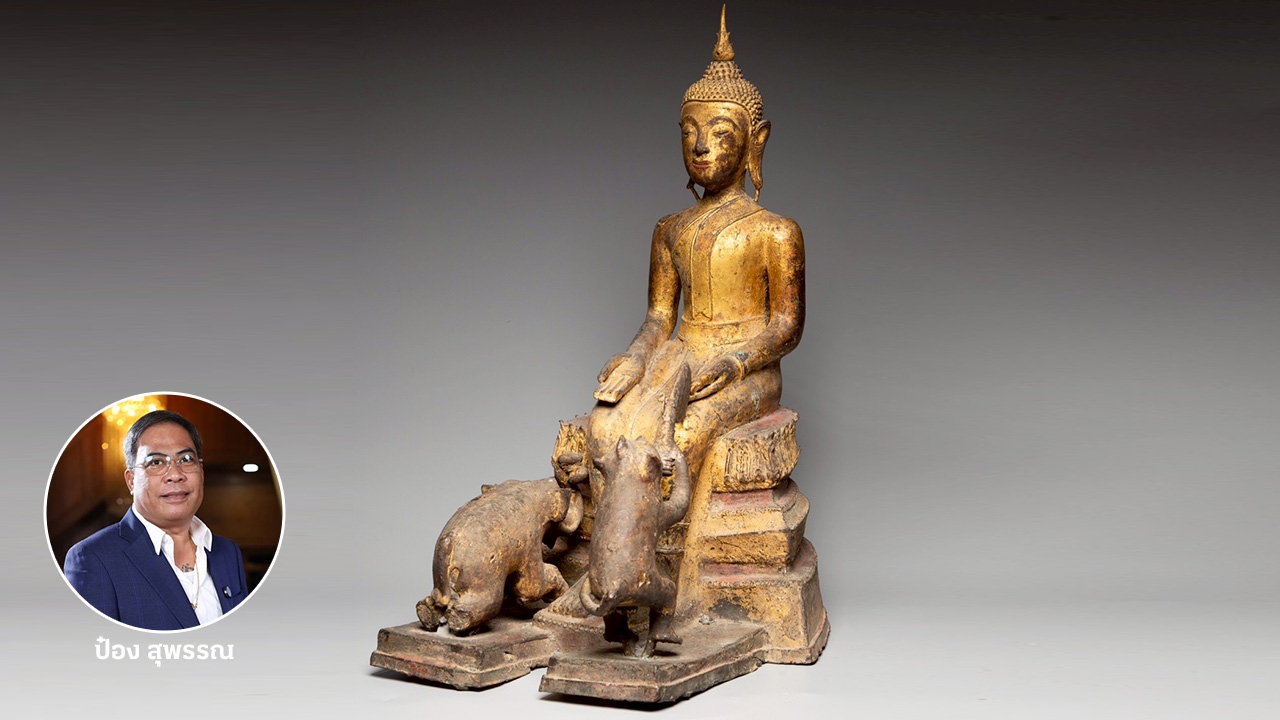
It is characterized by the Buddha sitting on a rock (sometimes with feet dangling), accompanied by the royal elephant Palilai offering a water container and a monkey presenting a honeycomb. This depiction is based on the Buddha's forest retreat during the rainy season, where animals served him (the guardian Buddha posture for Wednesday night).
It is commonly created as a royal-attired Buddha (wearing regal garments) with distinctive U Thong and late Ayutthaya artistic styles, such as the principal Buddha image at Wat Pa La Lai Yoke in Suphanburi, which is a revered statue for the town and province.


Key characteristics of the Pa La Lai Yoke Buddha posture
* Posture: Sitting on a rock, sometimes with both feet dangling (dangling feet posture).
* Components: Features a crouching elephant holding a water container with its trunk, and a monkey holding a honeycomb offering beside the Buddha.
* Ayutthaya period art style:
* Commonly crafted as royal-attired Buddha (with elaborate or simpler regalia), especially in late Ayutthaya.
* Incorporates U Thong art style influences, such as the Luang Pho To statue at Wat Pa La Lai Yoke.
* Meaning: Represents peace, loving-kindness, compassion, and coexistence with nature.
* Worship: This is the guardian Buddha for Wednesday night (from 18:00 to 06:00).
Famous Buddha statues in the Pa La Lai Yoke posture
* Luang Pho To of Wat Pa La Lai Yoke Worawihan, Suphanburi: A large statue over 23 meters tall, representing early U Thong art style.

