

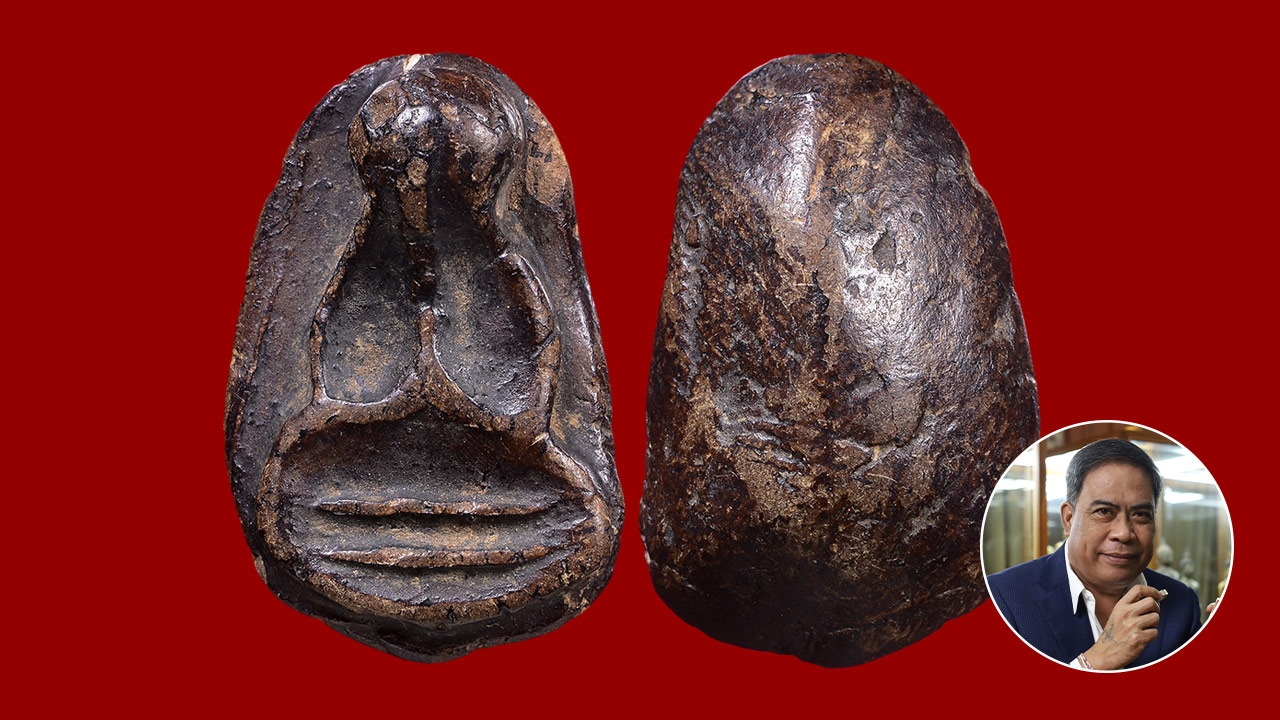
This temple was built in 1852. Later, when the first abbot named "Jeen" took charge, it prospered greatly. It is here at Wat Tha Lat Nuea that the renowned Phra Pidta amulet of Luang Pu Jeen originated during that era.
Luang Pu Jeen was three years older than Luang Pu Iam of Wat Saphan Sung and had five famous disciples, including Luang Pho Kaew of Wat Khrueawan and Luang Pu Khai of Wat Choeng Len. He began creating Phra Pidta amulets from 1877 until 1887, establishing the standard styles that remain popular today.
1. Large seed-shaped Phra Pidta amulet
2. Competition pillow style in large, medium, and small sizes
3. Lotus petal amulet with pointed head


4. Lotus petal amulet with rounded head
5. Large, medium, small, and miniature wagon support style amulets
There are many very small amulets made in various styles, though they are rare to find. Additionally, special editions exist with either convex or flat backs that are quite unique, but only a few pieces are known.
Luang Pu Jeen's Phra Pidta amulets are made in two material types: "powdered lacquer," which is dark brown with visible black lacquer fragments throughout, and "lacquer-coated," made from pollen powder mixed with palm leaf fibers in a light brown color often gilded. These amulets are considered the finest treasures of Paed Riew city, highly revered for their powerful blessings. They bring luck, fortune, and protection from harm, embodying all aspects of spiritual power. I wish you and your family prosperity, luck, and fulfillment in all your wishes.


The market price for these amulets is about 1.5 million baht; however, genuine pieces with good provenance and rich legends are rarely for sale. It is hoped that everyone will help preserve these national treasures.