

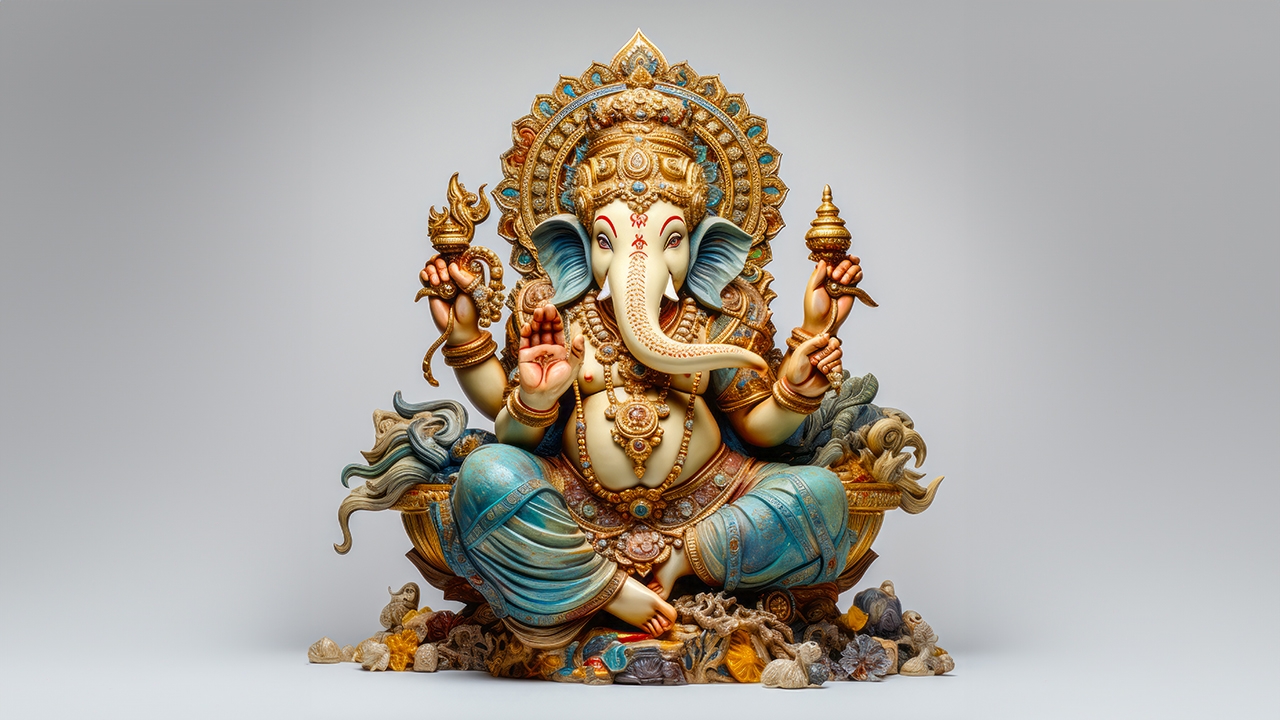
Lord Ganesha He is a highly respected deity in Hinduism, whose veneration has spread to Mahayana Buddhism and other religions throughout Asia. He is known as the god of wisdom and is the first deity to be worshiped before starting any undertaking.
God of new beginnings. Hindus believe that worshiping Lord Ganesha before starting anything—such as launching a new business, studying, or traveling—helps ensure the success of that endeavor with ease.
Remover of obstacles. "Ganesha" means the god who clears away all difficulties and hardships. If one prays for blessings within their destined merit, their wishes will be fulfilled.
God of wisdom and knowledge. He is the deity of scholars and the bestower of knowledge in arts and sciences. Notably, Silpakorn University in Thailand has adopted Lord Ganesha as its emblem.
Lord Ganesha is one of the most highly revered gods in Hinduism, distinguished by his unique appearance and significant role as the supreme lord over all obstacles.
Ganesha was not born naturally but was created from the sweat and dirt of goddess Parvati (consort of Shiva) to be her son and a gatekeeper soldier.
When Shiva returned and was blocked by this son from meeting Parvati, a fight ensued, during which Shiva angrily cut off Ganesha's head.
To console Parvati and restore life to her son, Shiva attached the head of the first creature he encountered—a elephant—to replace it.
To atone for this, Shiva declared Ganesha the leader of the gods (Ganapati) and the first deity to be worshiped before all others.
Important prohibition: Offering any kind of meat is forbidden.
Note: Worship of Lord Ganesha should be conducted with respect, cleanliness, and purity.
Before chanting, calm and focus your mind.
(Recite the homage phrase three times)
Om Shri Ganeshaya Namaha (chant 3, 5, 7, or 9 times)
Meaning: "I respectfully bow to Lord Ganesha."
Nevertheless, worshiping Lord Ganesha is a fusion of faith and effort. Any blessing requested must be accompanied by one’s own actions to make success more attainable.