

What are Luk Nimit?','tags':['Buddhism','Religious Objects'] Why are Luk Nimit gilded, and what benefits does this bring?','tags':['Religious Practice','Beliefs']
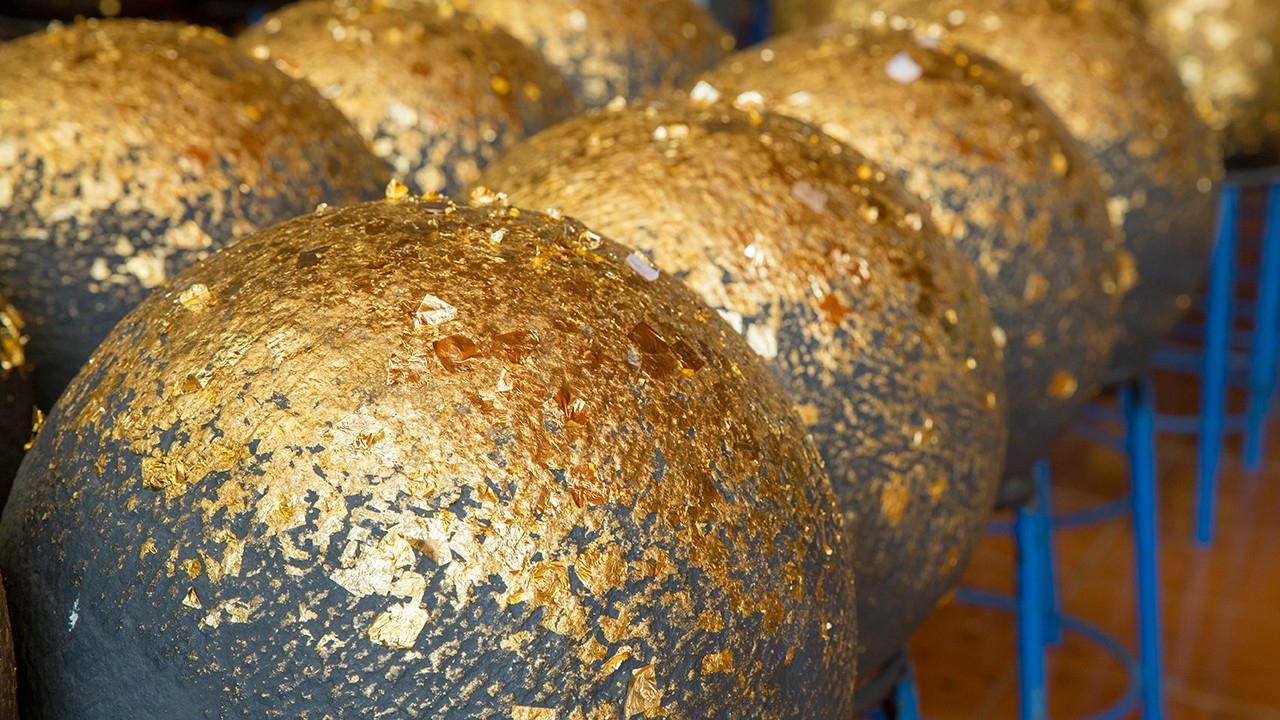
Many people have likely visited temples and seen large round stones placed in or around the ordination hall, which are often gilded with gold leaf and coins tossed onto them.'tags':['Temple Traditions','Community Activities']horoscope','tags':['']Thairath Online invites you to learn about "Luk Nimit," why they are gilded, and the spiritual merits associated with this practice.'tags':['Religious Education','Cultural Practice']
"Luk Nimit" are spherical stones used as boundary markers for the Phatthasima area (the sacred zone for monastic ceremonies). According to the Vinaya rules, an ordination hall must have definite boundaries, marked by nine Luk Nimit stones placed in various directions: eight around the hall at the cardinal and intercardinal points, and the ninth (the principal stone) buried at the center of the hall to serve as the main marker.'tags':['Buddhist Discipline','Sacred Boundaries']
Gilding the Luk Nimit with gold leaf is a symbolic and traditional act expressing reverence and honor. Gold represents something precious, so gilding shows respect for the sacred place and unity among the community. The gilding ceremony is usually a major event that gathers locals to make merit together. It symbolizes the official readiness of the ordination hall to be used for religious ceremonies.'tags':['Religious Symbolism','Community Events']
Ancient beliefs hold that participating in the merit-making of burying Luk Nimit stones','tags':['Traditional Beliefs'] "is a once-in-a-lifetime opportunity (per temple),"','tags':['Religious Merit'] and is considered a great merit with powerful spiritual benefits.'tags':['Merit Making']
Besides gilding, it is common to place sacred items into the Luk Nimit pit,'tags':['Ceremonial Practices']},{
Most Luk Nimit gilding ceremonies in Thailand are held around the Chinese New Year festival (late January to February), often lasting about nine days and nights. This period is chosen because both Thai-Chinese and general Thai people commonly make merit to start the new year, and the weather is still cool.'tags':['Cultural Traditions','Seasonal Events']
Songkran in April is a long holiday when many workers from Bangkok or other provinces return home, offering an opportunity to take their families to make major merit at local temples.'tags':['Family','Religious Observance']
Many temples hold these ceremonies after important Buddhist observances or after the end of the rainy retreat, as ordination hall construction often finishes late in the year.'tags':['Temple Events','Religious Schedule']
According to the Vinaya, burying the Luk Nimit marks the official establishment of the Phatthasima boundary for proper monastic ceremonies (such as ordination). Once the burial, chanting of removal and binding ceremonies are complete, the area becomes the permanent property of the religion, so the ceremony is not repeated in the same ordination hall.'tags':['Monastic Rules','Sacred Boundaries']},{
However, gilding and burying Luk Nimit is not mere superstition but a way to build the "house of the Sangha" to preserve Buddhism for future generations.'tags':['Religious Significance','Buddhist Preservation']}],