

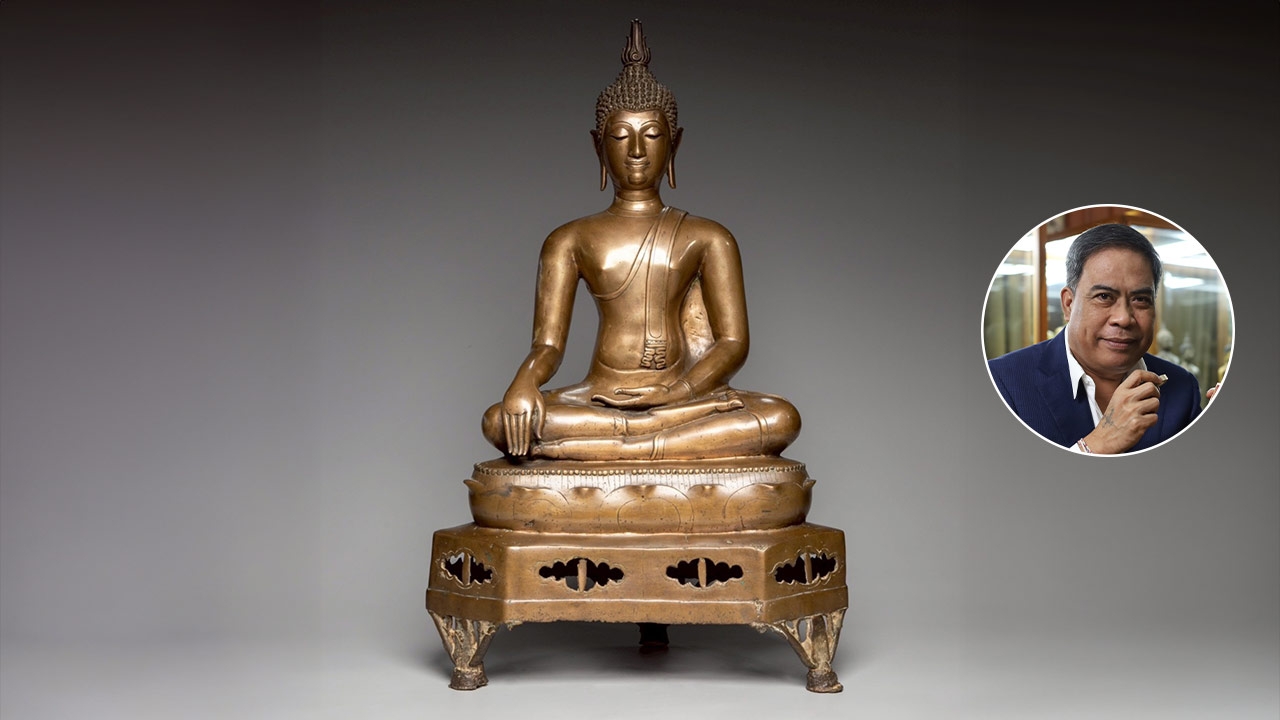
The ancient Chiang Saen kingdom was located in what is now Chiang Rai Province. It was historically a cultural center for one branch of the Thai ethnic groups in northern Thailand. From the 16th to the 23rd Buddhist centuries, the Chiang Saen artistic style emerged, blending influences from Indian and Pala art forms, which at the time were impacting the northern regions. This fusion gave rise to the enduring Chiang Saen style, first defined in early sculptures discovered in the ancient city of Chiang Saen.
Chiang Saen art is typically divided into three periods: the early period called "Singha One," the middle period "Singha Two," and the late period "Singha Three." During the late Chiang Saen era, the Chiang Saen artistic style began to wane, especially in the city of Chiang Mai (Nakhon Ping). Around the 20th Buddhist century, Chiang Saen art reluctantly incorporated elements from Sukhothai and Lanka styles. Buddha statues from this late Chiang Saen period were created by the Chiang Mai artisan lineage, blending Lanka and Sukhothai influences. Toward the very end, Chiang Saen sculptures in the Chiang Mai style revived features like the "wheel" motif, imitating the Singha One style.
However, the decline in craftsmanship led these Buddha statues to lack emotional depth and artistic quality. Especially those with inscriptions beneath the base, collectors refer to this style as "Chiang Saen Lao." These late-period Chiang Saen Buddha statues have, in the past, caused confusion among experts and collectors.
Buddha statues from the Chiang Saen era are considered precious heirlooms left by ancestors for us to venerate, bringing auspiciousness. Anyone who has one at home is considered fortunate, as these are treasures of great value.
In closing, I wish everyone enduring happiness, prosperity, and progress always.


#PongSuphanGuarantee