

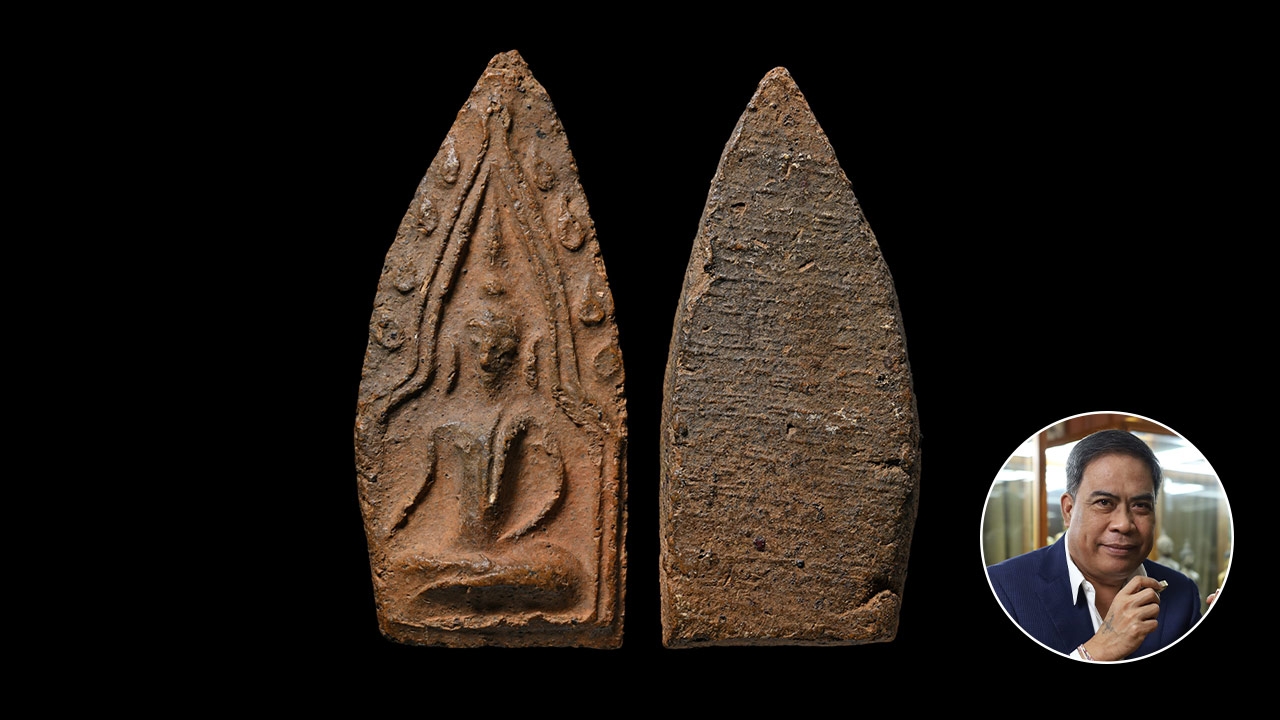
A sacred amulet from the land of the Elephant Battle, considered a priceless gem of Suphanburi Province: Phra Khun Paen Prai Diao Fishbone Style from Wat Ban Krang Chedi.
This amulet is one of the most famous in Suphanburi Province, an ancient relic several centuries old, notable for its exquisite Buddhist art and outstanding sacred powers. It ranks among the most sought-after amulets in the collecting community.
Creator
Examining the Buddhist art reveals it originates from the mid-Ayutthaya period, distinguished by its elegant and unique style. Scholars and experts have proposed two theories. First, Phra Khun Paen from Wat Ban Krang was likely created during King Naresuan the Great's reign when he marched to Suphanburi to fight the Burmese army led by the crown prince. He had amulets made at Wat Ban Krang for soldiers to carry for protection during battle. After the war, the soldiers returned all the amulets to Wat Ban Krang, where a pagoda was built to house them, following the ancient belief that "Buddha images must remain in temples."
The second theory notes that one Phra Khun Paen design from Wat Ban Krang resembles the glazed Phra Khun Paen from Wat Yai Chaimongkhon in Ayutthaya, which was definitively made under King Naresuan. However, the Wat Ban Krang amulets are less finely crafted, possibly due to wartime urgency, resulting in rougher materials and less refinement. If so, the Wat Ban Krang amulets would have been made before the glazed Phra Khun Paen at Wat Yai Chaimongkhon, along with other designs discovered together.


Discovery
Phra Khun Paen from Wat Ban Krang was uncovered from a pagoda behind the old vihara at the deteriorated Wat Ban Krang around 1904. It is said that when first unearthed, monks and villagers placed many different amulets under a large Bodhi tree near the vihara. At that time, local children played by floating these amulets in the Suphanburi River for fun, as these amulets were then not yet valued or popular. Later, after their history and potent sacred powers were researched and confirmed, they became highly sought after.
Material Composition
Most amulets belong to the Khun Paen family with various designs, numbering in the tens of thousands. They are made from the same material: terracotta mixed with herbs and various flower pollens. Both coarse and fine clay types exist, though even the fine clay is rougher than other amulet clays. Generally, the coarse clay contains abundant sand grains and air pores. Their coloration resembles typical terracotta, ranging from red, yellow (Pikul flower color), green, to black, depending on the firing temperature.
Buddhist Image Styles
Upon discovery, collectors classified the amulets into over 30 types by their distinctive Buddhist iconography, including meditation and Mara victory postures. The most popular amulets in Suphanburi include the "Pentagonal Large Chest" and the "Large Soldier" styles.
Additionally,
Phra Khun Paen
Pentagonal Small Chest,
Phra Khun Paen
Small Soldier,
Phra Khun Paen
Soft Arm,
Phra Phlai Diao
Angel Face,
Phra Phlai Diao
Hermit Face,
Vine Pattern, Glass House Shrine Style,
Principal Buddha Image Style,
Gate Shrine Style,
Starfruit Leaf Style,
Jujube Leaf Style,
Fishbone Style,
Bird of Prey Shrine Style,
For Phra Phlai Khu (paired amulets), styles include:
Hermit Face,
Garuda Chest,
Round Face,
Two Postures,
Jumbo Style,
Angel,
Auspicious Face,
Giant Face, etc.
All are known for their excellent sacred powers, beauty, and are highly popular among amulet collectors, ranked in varying degrees of desirability.
Sacred Powers
These amulets possess exalted sacred powers in kindness, popularity, great charm, protection, and invincibility.

