

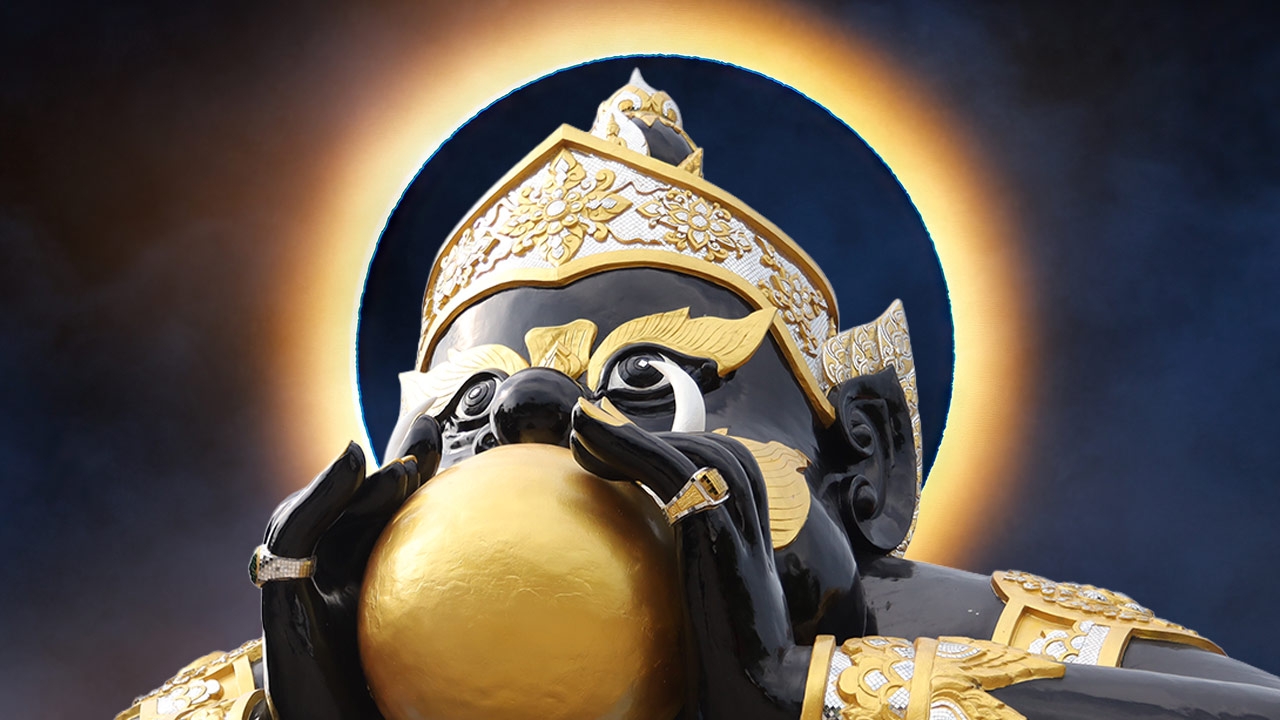
Phenomenon "Rahu swallowing the Sun" or a solar eclipse is considered an important event in astrology that draws attention from both perspectives. Although astronomical records show that on 17 February 2026 there will be no widely visible total solar eclipse, astrologically, Rahu's transit is often believed to influence the nation's destiny and individuals.
In ancient times, Rahu was regarded as an "omen" to be cautious about. Let's see what to watch out for.
Astrologers or national fortune-tellers interpret that when a solar eclipse or Rahu swallowing the Sun occurs, it usually predicts misfortune for leaders or those in power.
In astrology, Rahu represents a "shadow." When it overlaps or aligns with the Sun (which symbolizes honor, energy, and clarity), various impacts often arise.
Ancient people believed that during this period, "negative energy" is prevalent and certain precautions should be taken.
Chanting prayers to regain mindfulness and dispel obstacles.
Kusseto Mama Kusseto Tolamo Mama Tolamo Kulamo Mama Kulamo Kutimo Mama Kutimo
Kinnu Santaramano Wa Rahu Suriang Pamunjasang Vikkarupo Akamma Kinnu Bhito Wa Titthasiti
For worshiping or counteracting Rahu, it is common to use eight or twelve black items (depending on the day of the week).
Savory foods: Black chicken, century egg
Sweets: Grass jelly, black sticky rice, black cookies, chocolate
Black drinks: Black coffee, cola, Coke
Fruits: Black grapes
Additionally, there is a belief about fortune: although Rahu is feared, it is also considered a deity of great luck that can bring sudden wealth or life-changing fortune. Those who worship correctly during an eclipse are believed to transform misfortune into good luck.