

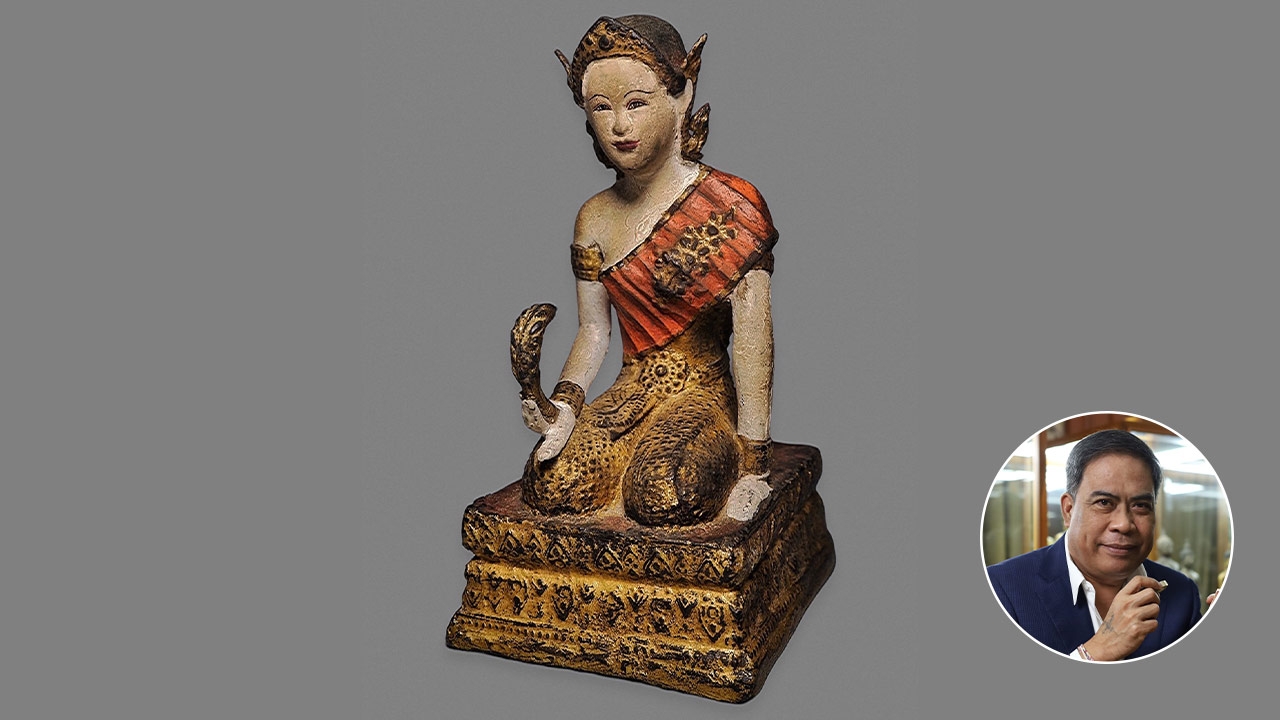
The lacquered style is an ancient revered figure about 100-200 years old, distinguished by sculptural artistry using lacquer and gold leaf or paint, with a creamy white face (lacquer) symbolizing plumpness and beauty like an ancient Thai woman. Commonly holding a rice ear and seated in a kneeling posture, it is worshipped for abundance and fertility.
Phra Mae Posop is the goddess of rice and abundance long venerated by Thai people. She is believed to grant rice full ears and protect farmers, originating from local beliefs about rice spirits and the agricultural societal foundation. Rice blessing ceremonies are held to give thanks and apologize, reflecting cultural respect for nature and the value of rice.

The legend of Mae Posop's origin.
* Origin of the name: The word "Posop" is a corruption of "Phra Paisop," derived from the Sanskrit Paisrpana (Vessavana), or Thao Vessuwan, the deity of wealth and protector of treasures.
* The legend of Mae Posop fleeing: It is said that Mae Posop (Lady Posop) was upset with a widow who used a wooden pestle to pound rice and fled to live in a cave, causing humans to have no rice to eat for a thousand years. Later, a wealthy man's child pleaded for her return, and humans then revered her as the rice goddess.
* Some texts say Mae Posop is a goddess who cares for rice and was once incarnated as a divine son in local legends.
Rituals and beliefs.
* Rice blessing ceremony: Performed before transplanting rice seedlings or after harvest to apologize for harming the rice plants during harvest and to invite Mae Posop to reside in the granary.
* Offerings: cooked rice, new sticky rice, boiled eggs, bananas, coconuts, betel leaves and areca nuts, cigarettes, and freshwater fish (according to legend).
* Beliefs about eating: This is the origin of the teaching "Do not leave rice uneaten; Mae Posop will be saddened," reflecting lessons on valuing food and avoiding waste.
Thus, Mae Posop represents wealth and abundance closely linked to Thai life for a long time.
