

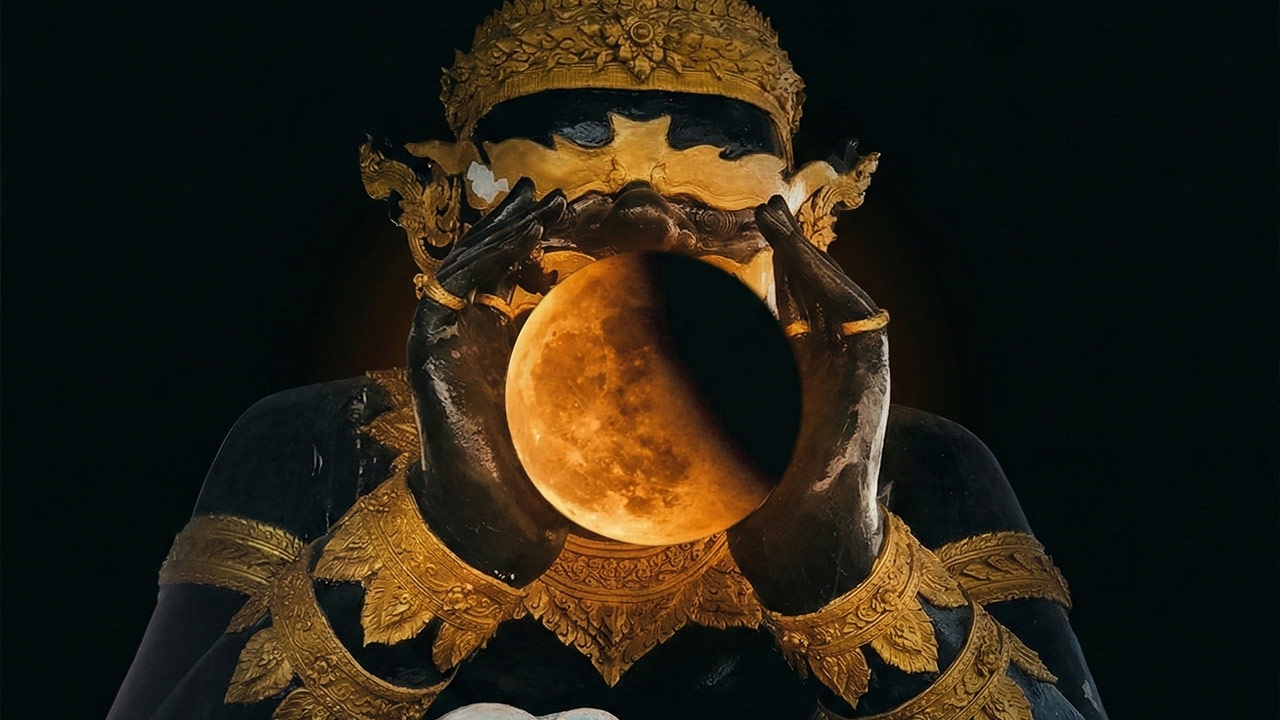
Magha Puja Day on 3 Feb 2026 coincides with a total lunar eclipse phenomenon called "Rahu Devouring the Moon," beginning around 18:23, lasting for 39 minutes during the peak eclipse phase.
It can be described as "Magha Puja Day" a day of purity and virtuous deeds, coinciding with the "lunar eclipse" or Rahu Devouring the Moon, which is believed to be a time of transformation and powerful energy.
Typically, Magha Puja falls on the full moon of the third lunar month. However, this year the moon is not just full; it is obscured by Earth's shadow, turning into a "blood moon." Astronomically, this occurs when Earth, the Sun, and the Moon perfectly align on this sacred day.
According to belief, this is a "powerful" time ideal for "turning over a new leaf" or "warding off misfortune," symbolizing the transition from darkness (Rahu's shadow) back to light (moonlight).
On Magha Puja Day 2026, the total lunar eclipse transforms negative energy into positive, encouraging mindfulness and chanting to enhance blessings and overcome obstacles.
1. Keep calm and peaceful; as it is a major Buddhist holy day, participate in candlelight processions in the evening before the full eclipse to receive pure energy.
2. Avoid conflict during the eclipse period, as energy is unstable; refrain from arguments or making major decisions.
3. Perform ritual moonlight water bathing: some traditions involve placing water in a bowl outdoors to absorb moonlight after the eclipse, then using it to cleanse and dispel negativity.
4. Chant mantras to reduce Rahu’s intense influence; recommended are Chanthabuppha, Suriyabuppha, and Rahu worship mantras.
Yattha tang mama tang thay tha tang
Mama tang watitang sekama
Kasetang katiyang mama yatika
Kusseto mama kusseto lala mama
Tolamo tolamo mama tolamo mama
Tolamotang hekuti mama hekuti
"Yattha tang mimang Rahu Chantam Pamunjasi Sangvikkarupo Akamma Peeto Va Titthasiti Kumhamme Buddha Setthena Brahmaputena Tayasi Munja Chantam Vimutthosasi Suriyo Yatati"
Translation: May the powerful Rahu free the moon, and may I be spared from all suffering, sorrow, and disease.
(If setting up an altar)
However, setting up an altar is optional, especially on this major Buddhist day. Those observing the precepts or participating in candlelight processions can do so, and for those at home, it is recommended to "chant prayers and meditate" as this constitutes making great merit at the appropriate time and place.