

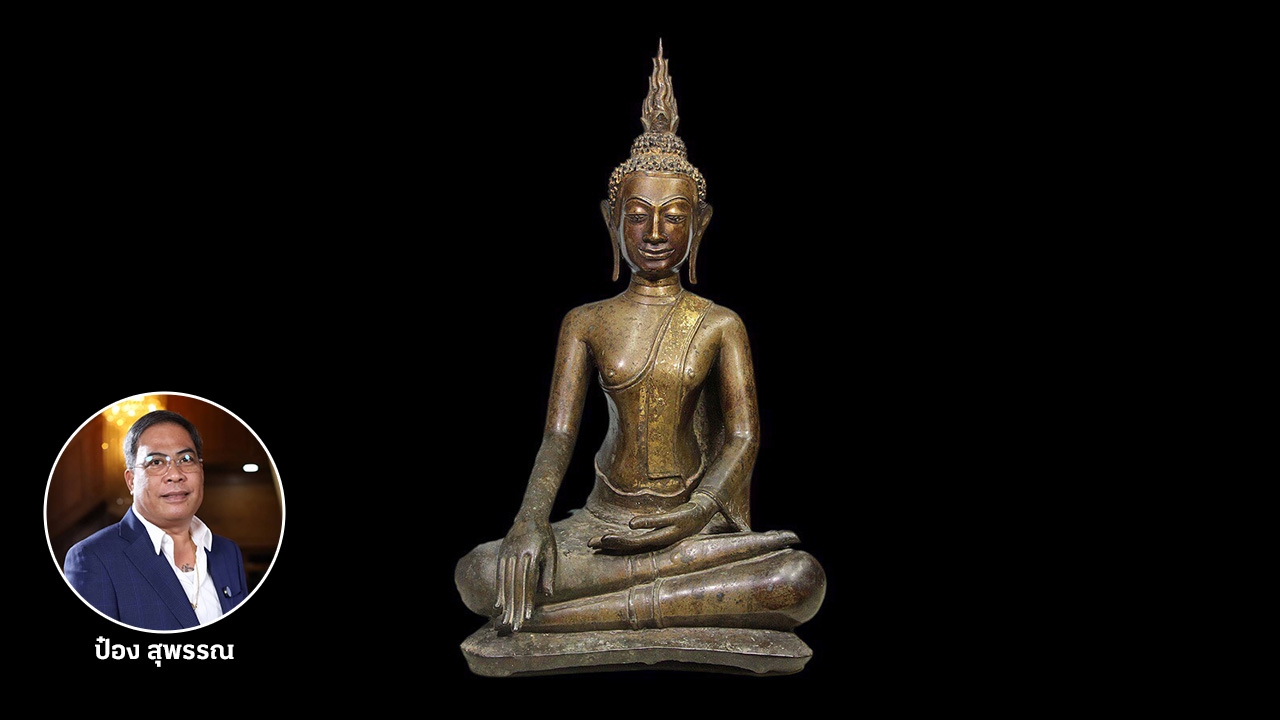
The U-Thong art style (Buddhist centuries 17-20) is a valuable artistic heritage that blends influences from Dvaravati, Khmer, and Sukhothai cultures. It is characterized by solemnity and elegance, featuring an oval face, arched eyebrows, and a straight, smooth mouth. Its distinctive craftsmanship includes Buddha statues in the Mara Vichaya posture (early and second generations of U-Thong), exquisite gold ornaments, and terracotta sculptures. These reflect the prosperity of the ancient city of U-Thong as a cultural center.


Buddha images from the U-Thong period.
U-Thong art originates from a part of the Malay Peninsula, which is the ancestral homeland of one branch of the Thai people. Some scholars place the 'U-Thong period' in Suphanburi, while others argue it was in Ayutthaya. Thus, the exact location of U-Thong art remains unsettled. Sculptures from this era date from the 17th to the 20th Buddhist centuries. Early U-Thong art was heavily influenced by Dvaravati and Lopburi styles, with U-Thong art itself as a secondary influence.
At the beginning of the Ayutthaya period, U-Thong style remained popular among contemporary art forms for a long time. The U-Thong base is often crafted in the form of a ship's hull, commonly referred to as 'a good-class U-Thong Buddha must have the characteristic of a chin like a person's jawline.' The Buddha images are further categorized into mature-faced, middle-aged, and youthful faces, respectively.
Anyone who has a U-Thong period Buddha image at home for worship is considered to possess a precious treasure and a source of auspiciousness for their family, bringing continuous happiness and prosperity.