

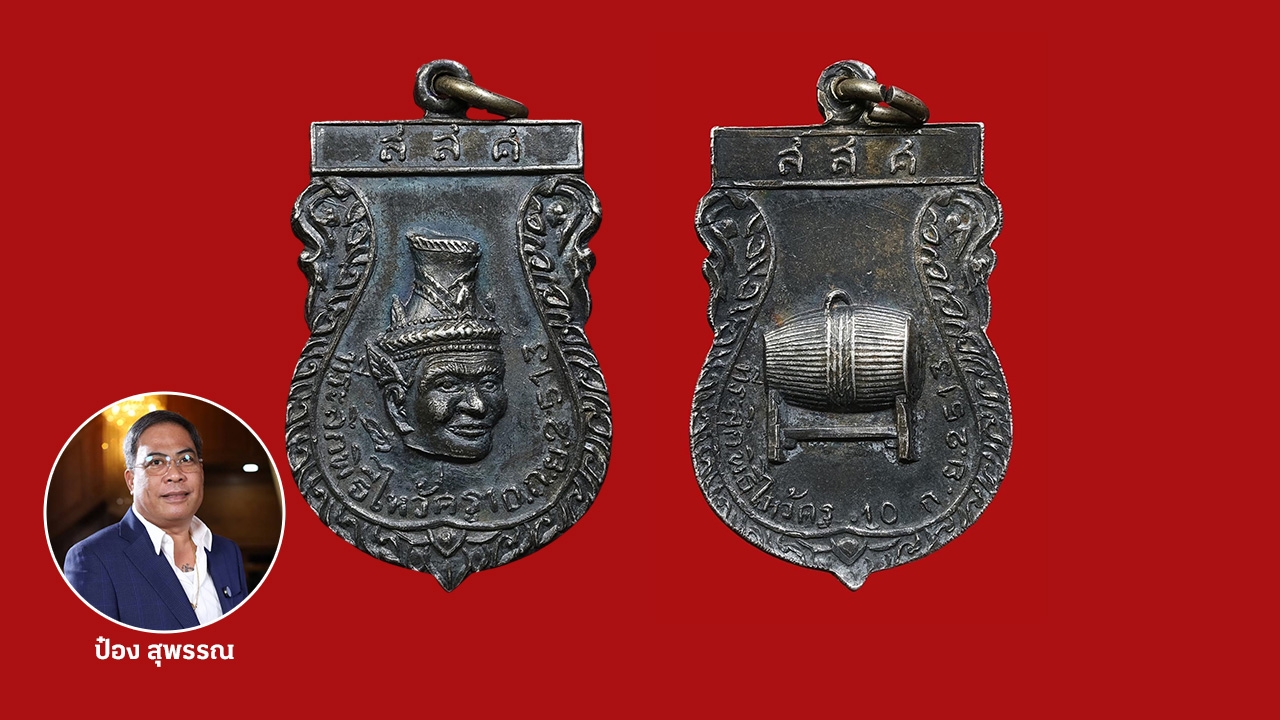
The silver Buramkhru Phor Kae medal from the year 1970 is preserved in original beautiful condition. It is one of only 99 medals produced by Wat Phra Piren in Bangkok.
The origin of the legend: Phor Kae symbolizes wisdom, art, and auspiciousness. Worshippers believe it brings blessings in work, performing arts, and protection.
Phor Kae, or the Rishi sage, is a sacred figure highly respected among various artistic communities. This reverence arises from the belief that in the past, Phor Kae or the Rishi introduced multiple art forms—including singing, dancing, and classical performing arts—to humanity. He conveyed the beauty and grace of the arts, teaching gentleness, love, compassion, and forgiveness, which bring happiness to all humanity. Consequently, artists and those involved in all art branches in Thailand honor Phor Kae or the Rishi teacher as the supreme master of performing arts. Worshipping him is believed to bring auspiciousness, career advancement, charm, and great popularity.


Among collectors and the performing arts community, the Buramkhru Phor Kae medal from Wat Phra Piren, 1970, ranks among the most sought-after. This medal was issued as a commemorative piece during the Teacher Worship Ceremony at Wat Phra Piren on 10 September 1970. At that time, it was sold for 20 baht and produced by the Artist Friends Welfare Association (S.S.S.). The production included 9 gold medals, 99 silver medals, and approximately 5,000 copper medals with gold plating. Production was limited because the die broke during minting. Many revered monks participated in the consecration ceremony, including Chao Khun Narat Ratchamanit of Wat Thepsirintrawat, Luang Pho Pae of Wat Pikulthong, Luang Pho Khun of Wat Ban Rai, Luang Pu Toh of Wat Pradoochimplee, among others.

