

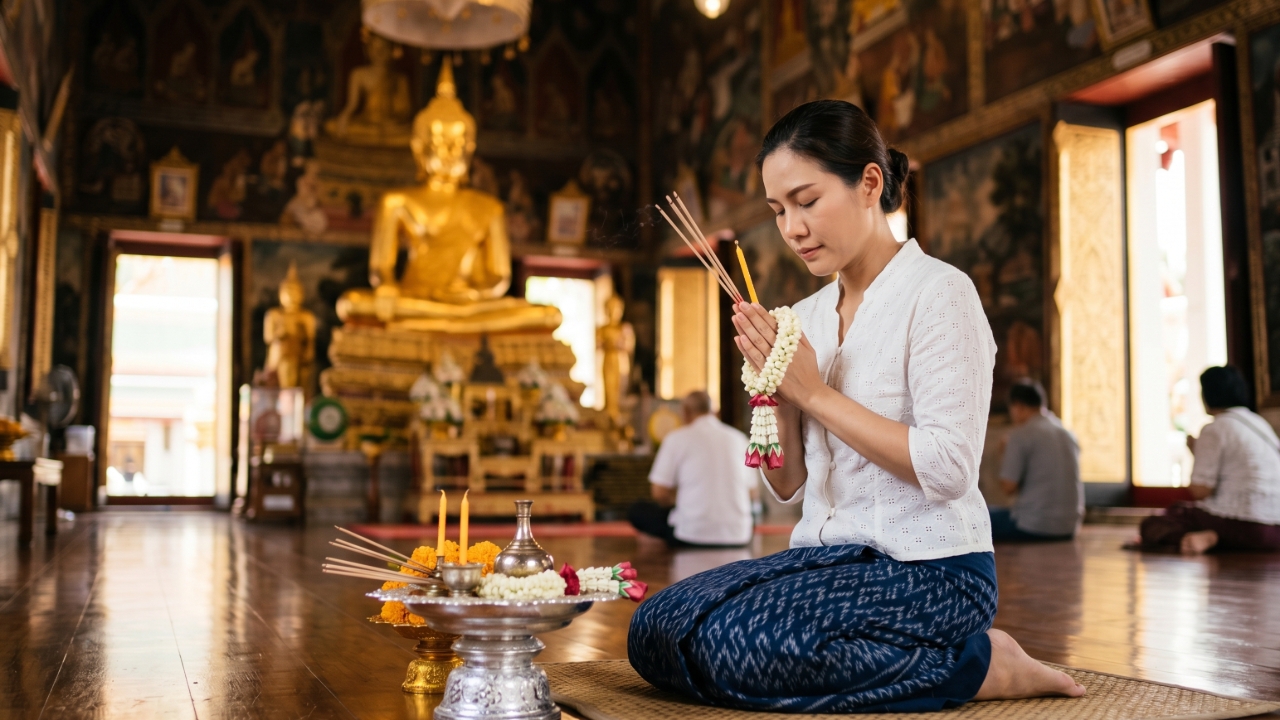
"Khom Kharm" is not just a trendy ritual but a gateway to inner peace and releasing past burdens. Let's understand its true meaning, its significance in life, and why forgiveness is considered the highest form of charity.
According to Buddhist teachings and Thai social beliefs, "Khom Kharm" means expressing regret and asking forgiveness for any wrongs committed—whether physical, verbal, or mental—towards others, sacred beings, or karmic creditors, intentionally or unintentionally, in this life or past lives.
From psychological and spiritual perspectives, "Khom Kharm" serves three main purposes.
Frequently, "Khom Kharm" ceremonies at Sutthawat Temple or others are combined with retracting oaths because we may have offended or made hasty vows or promises in the past that we no longer remember. This belief in "attached promises and vows" can cause obstacles in current life. The ceremony clears these negative energies away.
The effectiveness of "Khom Kharm" does not depend on the number of incense sticks or candles but on the "pure intention" and firm resolve to "not repeat the wrongdoing." A complete "Khom Kharm" consists of both an apology and a solemn vow to perform good deeds as compensation.