

Opening the book on the facial features of those abandoned in love Master Suwimol Panwichatikul, a well-known feng shui face reading expert, reveals which facial traits are linked to unlucky love and offers tips to adjust facial features to boost romantic success and nurture better relationships. Check it out.
Love and relationships require understanding and adaptation. In ancient Chinese belief, "feng shui facial features"—the physical traits of the face—are used to predict relationship trends. According to Master Suwimol’s feng shui text, certain facial characteristics reflect emotions, attitudes, and life rhythms that increase the risk of breakups, often called the "facial features of those abandoned in love."
Let's examine which facial traits to watch for and easy ways to improve and counteract them.
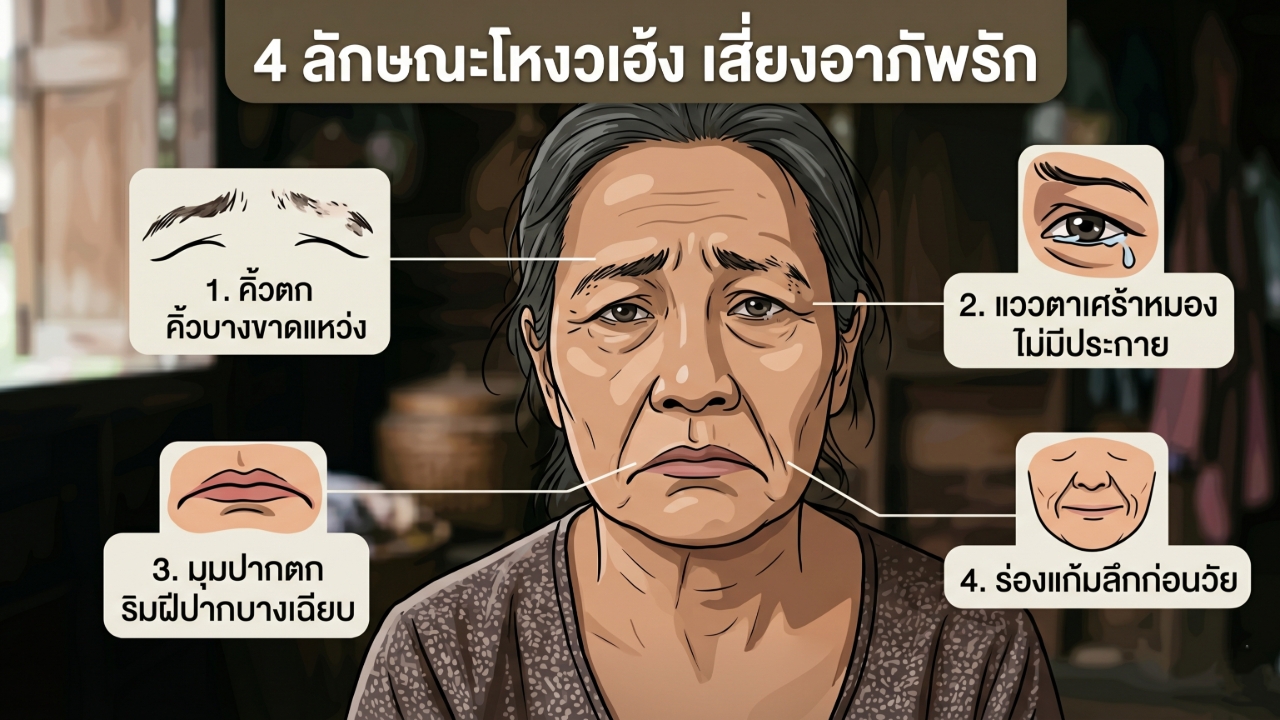
Eyebrows are like the roof of the face and represent emotions. Those with heavily drooping eyebrow tails or thin, patchy eyebrows tend to be overthinking, overly sensitive, and too accommodating, sometimes losing their individuality in relationships. This can cause their partner to feel bored or lose interest quickly.
If your eyes look sad or lack brightness, feng shui says it attracts sorrowful energy and diminishes enthusiasm for relationships. Psychologically, appearing constantly unhappy can make partners feel uncomfortable and uneasy around you.
Even when expressionless, a downturned mouth can make someone appear stern or angry. Very thin lips often indicate harsh communication styles—blunt and direct—that may hurt others’ feelings easily, leading to arguments and gradually eroding love.
In feng shui, these deep lines indicate fatigue, heavy burdens, and accumulated stress. People with these features often invest excessively in love, creating pressure on themselves and their partners, resulting in unbalanced relationships.
If you recognize these traits in yourself, don't worry. Feng shui features can be adjusted through self-care and attitude changes.
These facial feature insights from Master Suwimol’s text serve as reminders to reflect on ourselves. Ultimately, the durability of love depends more on understanding, respect, and care between two people than on outward appearance.