

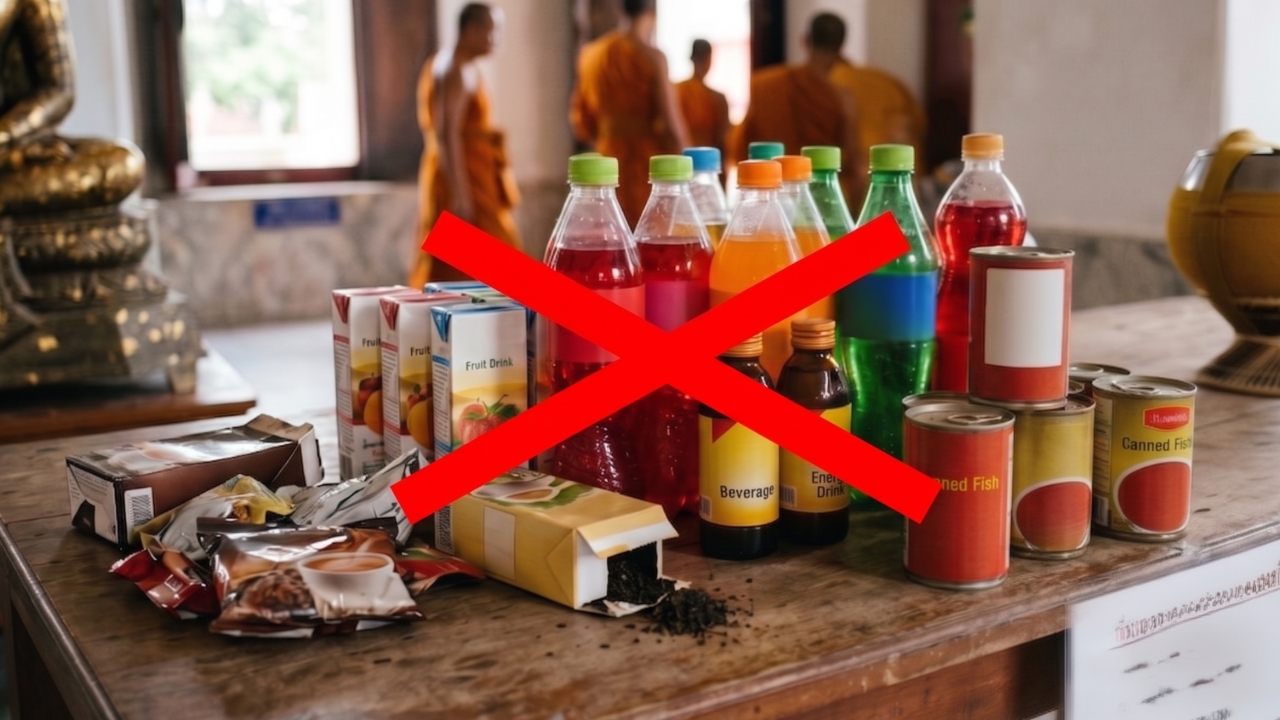
The good intentions of spiritual practitioners and Buddhists wishing to make merit and enhance their fate are commendable. However, often a lack of knowledge or convenience from buying "ready-made yellow baskets" can unintentionally harm monks' health and create unnecessary waste.
Information from the Department of Health, Ministry of Public Health, states that many Thai monks currently face NCDs (non-communicable chronic diseases) such as diabetes, hypertension, and high cholesterol. A key cause is the food and drinks offered by laypeople. To maximize merit and avoid unknowingly creating sin, let's review which items should be excluded from Sangha Dana.
To clearly understand why some items should not be offered, let's examine 5 prohibited items along with reasons why devotees must strictly avoid them.
| Order | Items forbidden to offer monks | Reason why? |
| 1 | Sweetened drinks and beverages | They contain very high sugar levels, a main cause increasing monks' risk of diabetes and obesity. |
| 2 | Dented canned food and expired items | Risk of bacterial contamination and food poisoning, often found in low-quality ready-made Sangha Dana sets left unused for long periods. |
| 3 | Rice packaged together with detergent powder | Soap or detergent often has a strong scent; chemicals can evaporate and contaminate the rice bags, making it unusable for cooking and leading to waste. |
| 4 | Skin care products containing perfume | Soaps, lotions, or shampoos with strong fragrances violate monastic rules forbidding beautification. It is better to use herbal or medicinal formulations instead. |
| 5 | Degraded instant tea or coffee | If stored too long until clumping, discoloration, or expiration, they harm monks' digestive systems and overall health. |
In today's merit-making, Buddhists are encouraged to "prepare Sangha Dana themselves" carefully selecting quality items. Most importantly, separate food from non-food items clearly to prevent scent and chemical contamination. Also, always check production and expiration dates before assembling offering baskets.
True merit-making does not depend on the size of the container or the value of the items, but on "sincere goodwill" and care for the recipients.
Choosing items beneficial and safe for monks' health brings full merit to donors, a joyful heart, and freedom from regret caused by unintentionally harming others.