

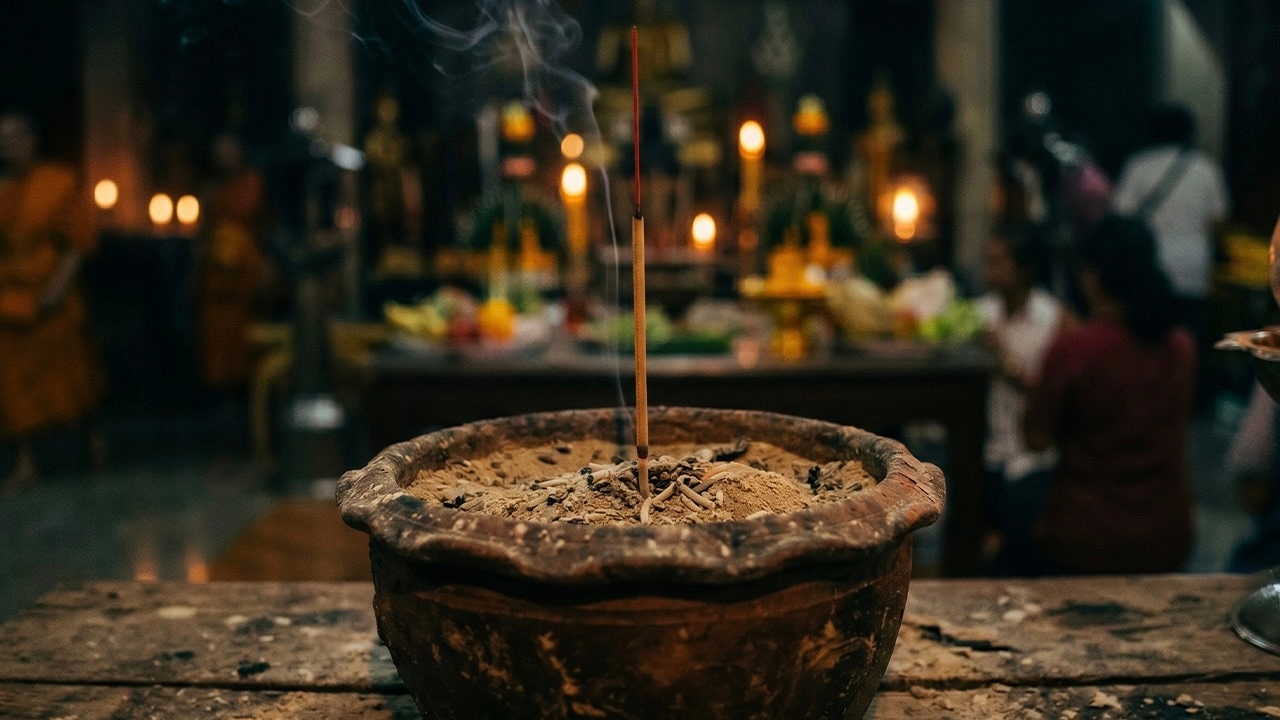
What does "inverted incense sticks" mean? It refers to the practice of inserting incense sticks upside down during worship or ritual. Solving the puzzle many wonder about: when worship is performed incorrectly, it becomes an "occult curse." We reveal three hidden meanings from ancient beliefs—cursing, unforgiveness, and oath revocation. Is it true?
Normally, "incense sticks" serve as a medium to send prayers to sacred beings. However, whenever incense sticks are placed upside down, with the lit end inserted into the soil or holder, traditional beliefs consider this a serious breach of ritual etiquette, often carrying occult implications.
Because of this, whenever images or reports of inverted incense sticks appear in society, many ask what the true purpose of this act is. Folk beliefs and ritual experts identify three main meanings that are most questioned.
This is the most searched and questioned point. Inverted incense sticks (especially at funerals or near coffins) symbolize extreme anger and represent "cutting ties," refusing to share any merit or karmic path further. It strongly declares "no forgiveness" in this life and the next. Additionally, it is believed to curse misfortune back upon those who caused harm.
From a spiritual perspective, inverted incense sticks are used in rituals to "revoke oaths" or curses one has mistakenly uttered, whether towards sacred beings or other people. It is like "reversing" spoken words to free oneself from spiritual bondage and unkept promises.
According to ancient belief, lighting one incense stick honors household or ancestral spirits. But "inserting incense sticks upside down into the soil" is believed to open a path for wandering spirits, restless ghosts, or unclaimed spirits to receive merit or to appear. Elders strictly forbid descendants from doing this, fearing it invites misfortune.
A popular question online is "Will doing this bring bad luck to oneself?" From the perspective of occult beliefs, actions filled with malice and performed by those with disturbed minds may cause negative energies to affect the doer's mind and life.
The "curse of inverted incense sticks" reflects deep-rooted beliefs in Thai society. However, this is a personal belief, and readers should exercise judgment. Understanding the hidden meanings and proper ways to light incense helps us view these rituals with awareness and comprehension. Nonetheless, from psychological and sociological perspectives, inverting incense sticks is simply "an emotional outlet" for those feeling extreme frustration or seeking solace to release guilt from swearing oaths.