

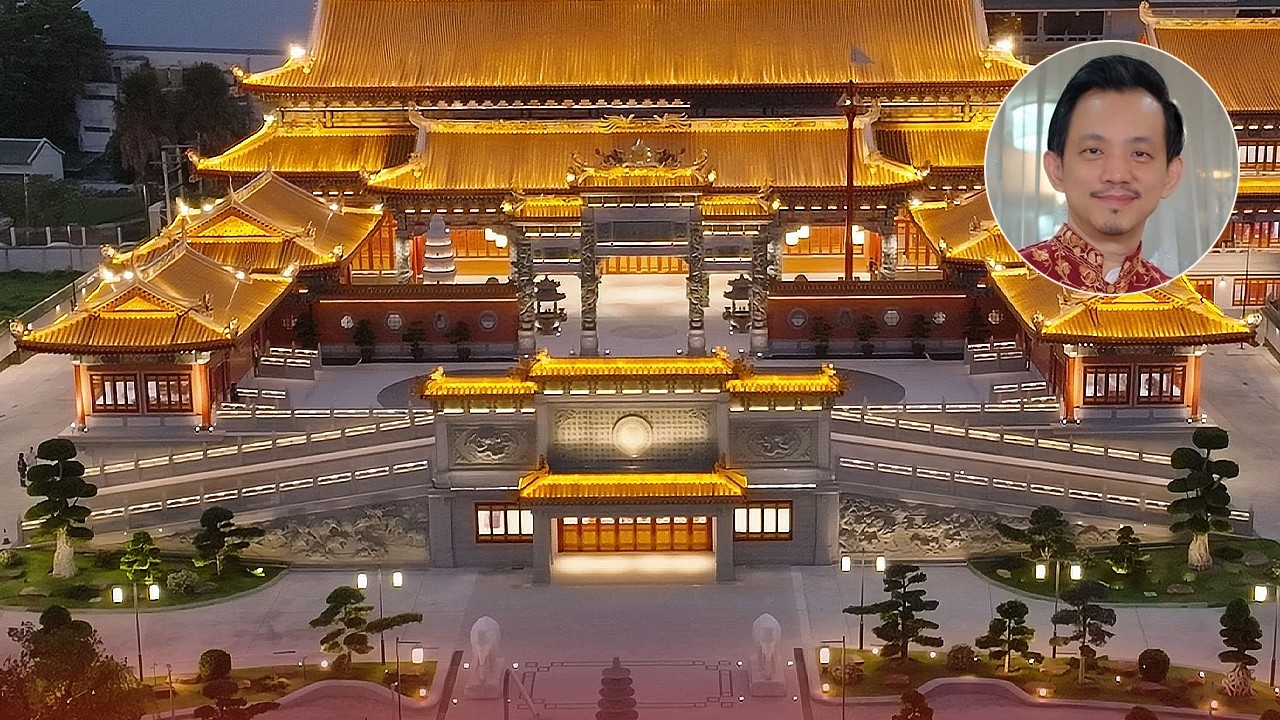
In-depth feng shui analysis of the site. Tai Hong Kong White Jade Shrine. The Tai Hong Kong White Jade Shrine in Sathorn reveals the secret of the great auspicious geography of the Four Divine Beasts according to ancient texts, analyzed by Astrologer Mas Kehasnattham, integrating world-class architecture for long-term wealth and stability.
When mentioning the "Poh Teck Tung Foundation," many are familiar with its image as a longstanding charitable organization deeply rooted in Thai society, alongside strong faith in "Luang Pu Tai Hong," a great monk filled with compassion. Currently, the foundation has established a new "Tai Hong Kong White Jade Shrine" in the Sathorn area to accommodate the growing flow of devotees coming to make merit and enhance their auspiciousness.
This architecture stands out not only for its exquisite pure white jade stone carvings of world-class beauty but also, from a feng shui perspective, the shrine is designed with perfect placement principles. Recently, Astrologer Mas Kehasnattham, an academic feng shui expert, revealed the secret of positioning the geography according to the "Four Divine Beasts" through the building's structure and balanced massing, astonishingly in line with ancient texts.

According to Astrologer Mas Kehasnattham's analysis, the surrounding structure of this new Tai Hong Kong White Jade Shrine manages the space and building masses to trap and harness the chi energy flow for maximum benefit, dividing it into four directions following the ancient Divine Beasts principle as follows:
According to ancient feng shui, a good building's rear must be solid and stable, like a mountain supporting it. At the main shrine, the Poh Teck Tung Foundation's large golden-brown office building is positioned as a solid backing at the rear. This tall and stable building functions as the "Black Tortoise," protecting energy, ensuring safety, and providing long-term stability to the site.
The front area of the shrine is designed as a large open semicircular courtyard, known in feng shui as "Ming Tang" or energy-receiving courtyard, functioning as the "Red Phoenix." This open and unobstructed location allows wind and chi energy from outside to flow in and accumulate fully, believed to bring prosperity and attract a continuous stream of devotees making merit.
Standing inside the shrine looking forward, the left side features a long, prominent golden-brown building line. Architecturally, this creates spatial enclosure; in feng shui, this is the "Green Dragon" position, acting as a windbreak that gently directs and accumulates energy around the front courtyard, enhancing prestige, progress, and widespread reputation.
Conversely, looking from inside toward the right side, the surrounding architecture is composed of lower, calmer buildings compared to the office tower side, consistent with the ancient rule that the "White Tiger must be calm and lower than the Dragon." This opening not only aids architectural airflow and natural light but also feng shui-wise preserves peace, safety, and prevents wealth from leaking away.

Astrologer Mas Kehasnattham He reflected that the Tai Hong Kong White Jade Shrine in Sathorn seamlessly blends global design with ancient Chinese beliefs. The four-direction building placements consider not only aesthetics and modern architectural functionality but also cleverly harness natural energy to support the site, making this shrine a sacred and positively energetic great auspicious site welcoming devotees worldwide.