

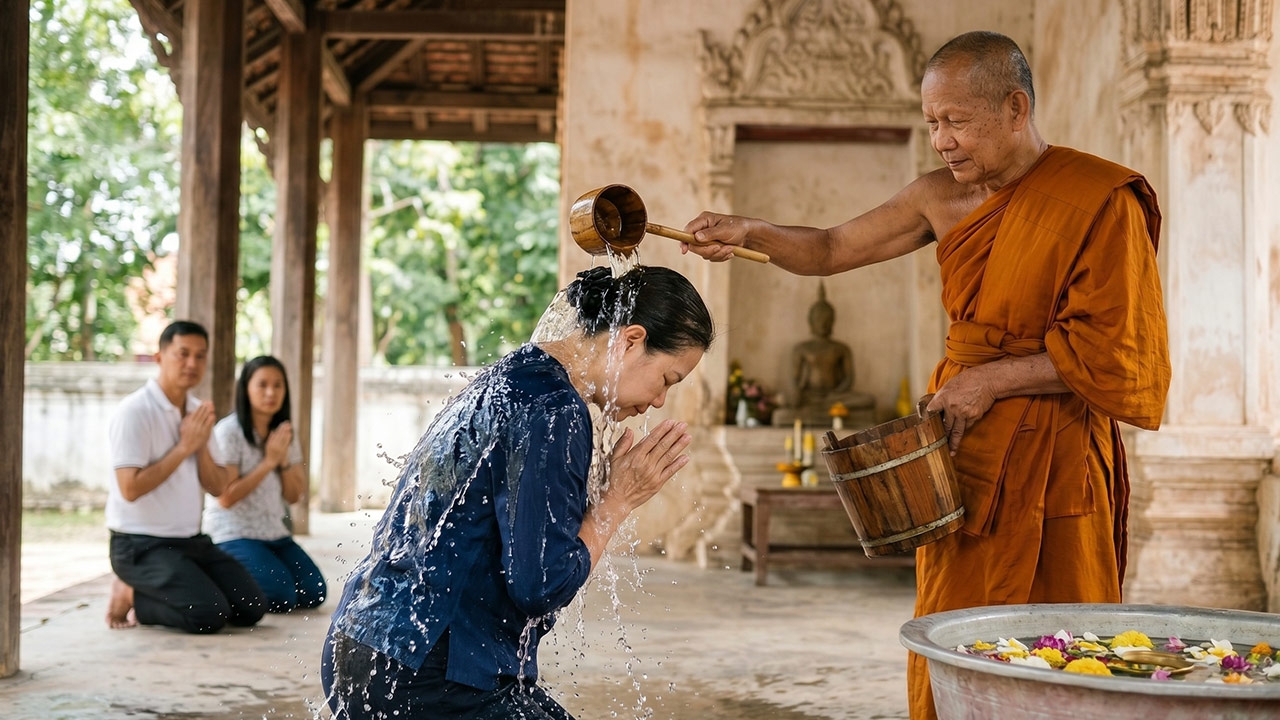
Clarifying the ritual "Holy Water Bathing" Its purpose, whether ritual cleansing is necessary every time, proper practice methods, whether you must wash off afterward, and which is more effective: at the temple or at home.
Beliefs and fortune-enhancing rituals have long been part of Thai society. One of the most popular ceremonies that spiritual devotees often turn to when feeling unlucky, facing obstacles, or recovering from misfortune is the practice of "holy water bathing." But have you ever wondered what the true purpose of holy water bathing is according to belief, whether it really improves one’s fate, if it always involves ritual cleansing, and what proper conduct is?
Thairath Online has gathered all the information you need in one place.
According to ancient Thai beliefs and culture, holy water or "holy Buddhist water" is sacred water consecrated through Buddhist chanting and prayers by revered monks. From the spiritual devotee’s viewpoint, holy water bathing mainly aims to cleanse away negative energies, malevolent spirits, or "low-level" impurities that might unknowingly cling to a person. It also helps boost morale, dispel sorrow and illness, refresh the mind, and open one to fortune and positive influences.
Historically, the use of holy water to ward off misfortune dates back to the Buddha’s time. Records show that when the city of Paisali faced famine and epidemic, the Buddha instructed Ananda to collect water and chant the Ratana Sutta to sprinkle throughout the city to dispel disaster and bring auspiciousness.
The answer is “Not necessarily always a ritual cleansing.” In Thai cultural and spiritual belief, holy water is not only used to "repel evil" but also to "attract good things." We can categorize holy water bathing according to its purpose as follows:
1. Bathing for ritual cleansing, fate adjustment, or remedying bad luck This is suitable for those facing serious obstacles, frequent illness, or in a Zodiac Conflict Year (Pee Chong). The ceremony focuses on dispelling negativity and easing karmic burdens.
2. Bathing to enhance auspiciousness and progress For individuals living normally but wishing to boost their luck, such as before starting a new business, receiving a promotion, or on special occasions like New Year or birthdays.
3. Bathing for attraction and charm This involves mixing fragrant ingredients, flowers, or bergamot with chanting of attraction mantras to gain favor from elders, affection, and smoother negotiations or business dealings.
4. Bathing to restore spirit and soothe the mind Used after accidents or fright (spirit loss) to help mentally heal and regain strength and stability.
| Comparison Factors | Ritual Cleansing Holy Water Bathing | Auspicious / Attraction Holy Water Bathing |
| Situation of the bather | Bad luck, Zodiac Conflict Year (Pee Chong), facing misfortune, frequent illness | Normal life, starting something new, business activities |
| Goal | Repel negative influences, reduce karmic burdens | Increase luck, enhance charm, gain favor from elders |
| Chants used by monks | Funeral and rebirth chants, protective suttas to dispel dangers | Auspicious suttas, attraction mantras |
According to Buddhist principles, "karma" or one’s actions determine life destiny. Holy water bathing serves as a ritual to boost morale, but the most sustainable way to improve one’s fate is through good thoughts, good deeds, and mindfulness in daily life.
Another popular question is whether one should bathe with soap again after the holy water ritual.
Traditional belief states that you should not immediately wash off with soap because the sacred water is believed to be absorbing and radiating protective auspicious energy. Washing it off right away could dilute this blessing. It is recommended to let the water dry naturally or gently pat it off with a clean cloth.
However, from a modern hygiene perspective, if the holy water contains additives such as flowers, citrus, or traditional Thai perfume and causes stickiness or irritation, you may wash yourself at home after some time has passed (for example, 2-3 hours or after the day) for comfort.
The location for holy water bathing can be chosen based on convenience, each with its own advantages and styles.
Holy water bathing at the temple is performed by monks or spiritual masters who chant consecration mantras, ritual cleansing prayers, and dedicate merit in a complete ceremony. It is considered very potent, ideal for those feeling severely unlucky or wanting maximum spiritual reassurance.
If traveling is inconvenient, you can request sacred water from the temple (such as water from the ordination hall or combined holy water from major temples) to mix with clean water at home. This method suits regular auspicious practice. Before bathing, it is advisable to set an intention, chant prayers, pay homage to the Triple Gem, and remember sacred beings to enhance blessings.
Holy water bathing, whether performed at the temple or at home, and whether for ritual cleansing or attraction, serves as a psychological tool that helps us feel comforted and confident to overcome obstacles. But do not forget that the most sacred and lasting power lies in "mindfulness and doing good" every day.