

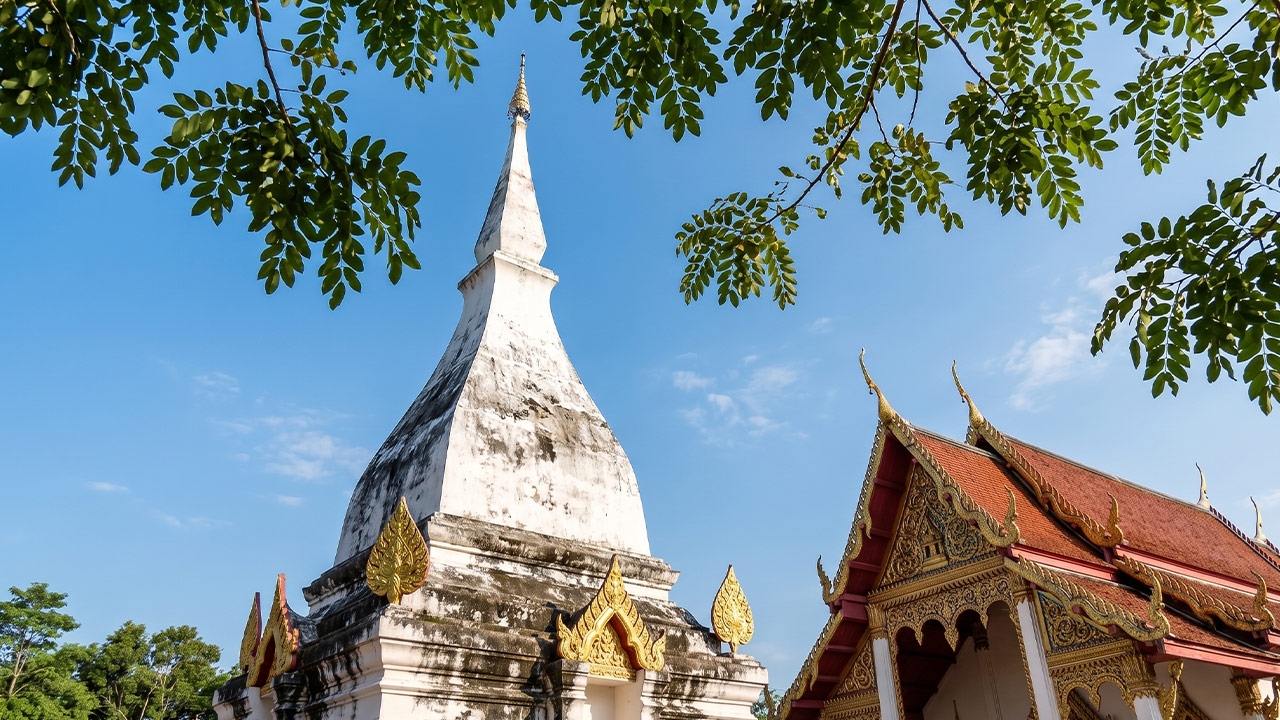
Why do so many people come to make vows at Phra That Si Song Rak in Loei Province? Unveiling the legend of its sacredness, sharing how to make vows with "Ton Phueng," and important prohibitions for effective prayers—devotees should not miss this.
Phra That Si Song Rak, located in Dan Sai District, Loei Province, is a significant religious site reflecting a grand history. The Tourism Authority of Thailand states that this stupa was built in 1560 CE during the Ayutthaya period to witness the pact of friendship between King Maha Chakkraphat of Ayutthaya and King Chaichetthathirat of Lan Xang, pledging non-aggression. Today, it is a center of faith for locals and a popular pilgrimage spot nationwide for spiritual devotees.
With its centuries-old sacredness, people from everywhere come to pray. Commonly successful and popular prayers include
The most stringent practice when visiting Phra That Si Song Rak is a strict ban on wearing red clothing, accessories, or bringing red items into the stupa area.
The historical belief behind this stems from red symbolizing "blood," "military uniforms," and "warfare," which contradicts the stupa’s original purpose promoting peace. Avoiding red expresses respect for the solemn pledge made by the two kings in the past.
Those who enjoy horoscope readings and spiritual prayers believe that after making wishes for career, finances, or success at Phra That Si Song Rak, fulfillment often comes true. Tradition dictates that "Ton Phueng" must be offered to fulfill vows.
Ton Phueng is a distinctive offering of Dan Sai people. Its main structure is made from banana stalks formed into a tower shape, decorated with "bee flowers" made by dipping molds into melted pure beeswax, then cooling them into flower shapes. The beeswax symbolizes "purity," so offering Ton Phueng represents presenting sincere faith to the sacred.
To properly perform the Ton Phueng offering according to local customs, a spiritual leader’s guidance is necessary. In Dan Sai, there is a belief leadership system led by "Chao Pho Kuan" with male assistants called "Phor Saen," who lead prayers and rituals.
Participating in ceremonies with Phor Saen Kham Boon Yo or other village elders is valuable, as they chant prayers and lead offerings correctly. The common vow fulfillment steps are as follows.
1. Prepare the Ton Phueng You can bring your own or purchase from local artisans near the temple entrance.
2. Dress code Dress modestly, strictly avoiding red; white or light-colored clothing is preferred.
3. Perform the ritual Circumambulate the stupa clockwise three times holding the Ton Phueng, then place it at the designated spot and recite the offering prayer led by Phor Saen or the ritual leader.
Visiting and making vows with Ton Phueng at Phra That Si Song Rak is more than a spiritual activity—it is an immersion in history, folk art, and the pure faith of Loei people preserved for centuries. The highest blessings occur when the devotee is determined, acts wholeheartedly, and lives honestly.