

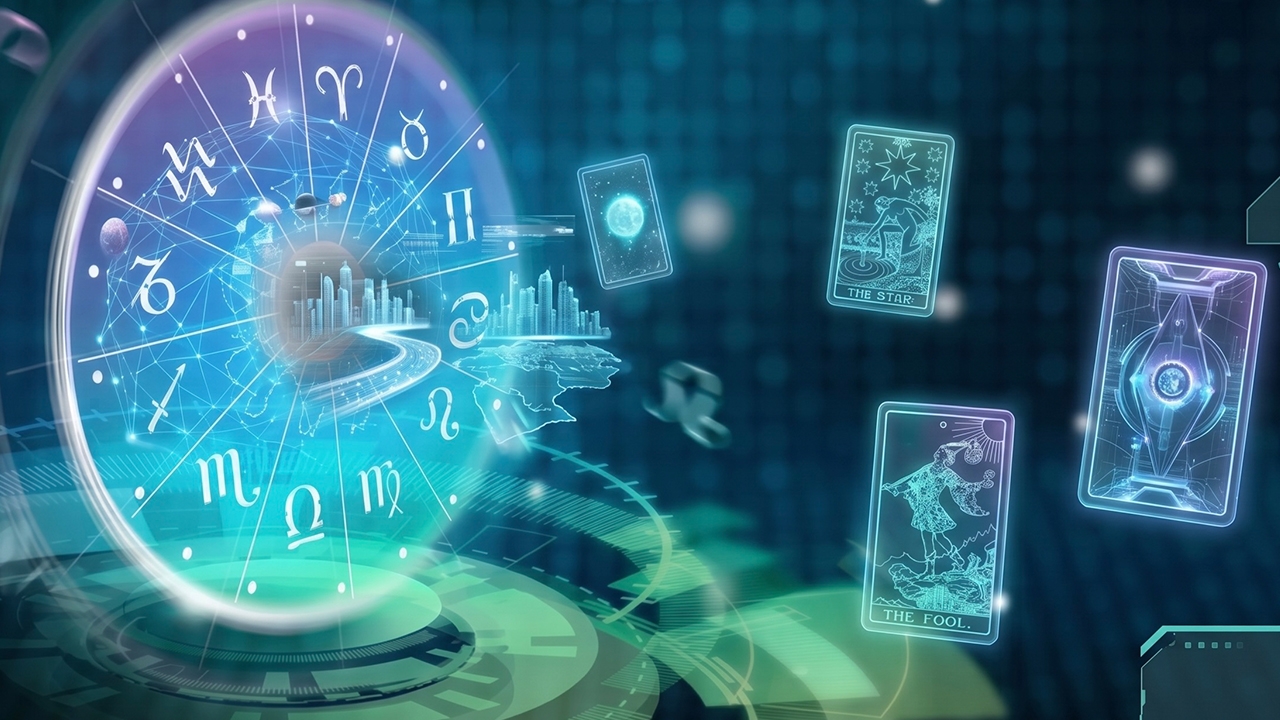
Analyzing the AI fortune-telling phenomenon where algorithms serve as spiritual healers in the 2026 spiritualism trend, revealing the deep psychology of urban dwellers at night and the cautions involved in entrusting hopes to artificial intelligence.
In an era shaped by economic and social uncertainty driving people to seek emotional anchors, the "AI fortune-telling" phenomenon has evolved from a mere online novelty into a "ready-made comfort industry" available 24/7, especially as 2026's advanced language technologies can convincingly mimic human emotions.
What does the behavior of secretly consulting tarot cards or life charts via chatbots at 2 a.m. reveal about young people's inner feelings? And what mechanism underlies the eerily accurate predictions?
Many exclaim, "Why does AI guess as if it’s inside my heart?" Scientifically and computationally, this is known as Algorithmic Cold Reading, a statistical mind-reading technique.
What is Cold Reading? It's a technique used by top fortune tellers involving broad questions or universally true statements (Barnum Effect), such as "You appear strong outwardly but feel lonely inside." When combined with millions of prophecy texts fed into AI, it can quickly calculate and select the words that most "hit the mark" with listeners.
Additionally, 2026 AI can analyze context (Contextual Awareness). If you type under stress, the tone of your message is processed so the system chooses a "comforting" response rather than a reinforcing one.
Beyond the predictions themselves, AI systems address pain points or limitations of traditional fortune-telling methods directly.
Loneliness, stress, or heartache often peak during quiet late-night hours. Having AI ready to answer fate questions at 2 a.m. offers instant comfort rarely found with real human fortune tellers.
Some questions are too embarrassing to ask a live fortune teller, such as complicated relationships, debt problems, or work failures. Chatting with AI maintains privacy best because the system "has no feelings" and "no judgment" toward users.
Catering to today's fast-paced culture, no need to wait weeks for an appointment or pay hundreds to thousands of baht. Just type a question, and get an uplifting prediction back within seconds.
To clarify, Thairath Online's editorial team summarized differences in depth as follows.
| Prediction dimension. | Human Astrologer. | AI Fortune Teller. |
| 1. Intuition and connection. | Uses instinct, life experience, and interpersonal energy. | Uses algorithms to match words. |
| 2. Emotional healing. | Genuine empathy but may carry personal bias. | Simulates empathy without bias. |
| 3. Risk. | Potential fraud and charging for rituals. | Negative questions may yield answers reinforcing fears. |
The biggest concern in the AI fortune-telling trend is Confirmation Bias, or self-favoring bias. If users repeatedly input negative, anxious questions, AI processes answers from a database matching what you typed, which may deepen depression or chronic stress as users think, "Even a world-class computer predicts my life will fail."
However, use AI only as a "mirror reflecting your thoughts" or a companion to alleviate loneliness at night, but do not entrust important life decisions to computer programs. Ultimately, the future depends not on stars or algorithms but on your own actions.