

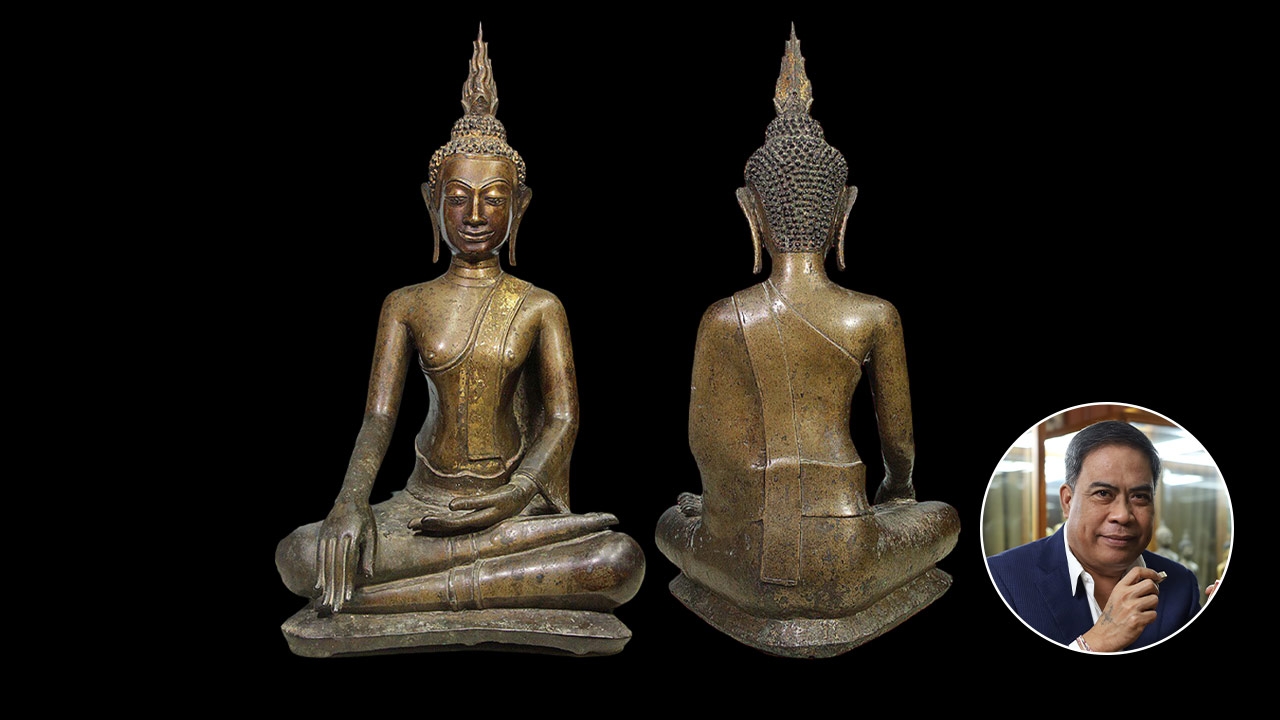
U Thong art (17th–20th Buddhist centuries) is a valuable artistic tradition blending Dvaravati, Khmer, and Sukhothai influences. It is characterized by solemnity and elegance, with oval faces, arched eyebrows, and straight lips. Notable crafts include Buddha statues in the Mara Vichai posture (first and second U Thong periods), exquisite gold ornaments, and terracotta sculptures, all reflecting the flourishing ancient city of U Thong as a civilization center.


U Thong period Buddha statues.
U Thong art, from part of the Malay Peninsula homeland of a Thai ethnic group, is sometimes said to originate in Suphanburi and by others in Ayutthaya. This remains an unsettled debate. The U Thong sculptural style began between the 17th and 20th Buddhist centuries. Its earliest and most mixed influences were Dvaravati and Lopburi styles, followed by U Thong art itself.
At the start of the Ayutthaya period, the U Thong style remained popular for a long time. Its hallmark base was often the boat-shaped form, commonly described as "a quality U Thong Buddha must have the chin ridge." Buddha faces were subsequently classified as elder face, middle face, and young face, respectively.
Those who have a U Thong period Buddha statue for worship at home possess a precious treasure and an auspicious item that brings ongoing happiness and prosperity to their family.

