

Social media buzzes over a viral clip. "Jenny Daimodtasodchoen" exhibiting signs resembling spirit possession and losing self-control; let's explore the belief "Kru Mor Nora" and the southern Teacher Respect Ceremony—what this condition is and how to respond with understanding.
Following the viral trend online, when the famous southern artist "Jenny Daimodtasodchoen" (Ratchanok Suwanket) took part in the Kru Mor Nora Teacher Respect Ceremony and displayed behavior resembling "spirit possession" to the point of losing self-control. This incident led many to question the nature of this phenomenon. Thairath Online delves into the belief surrounding "Kru Mor Nora" and explains the phenomenon from folkloric and psychological viewpoints.
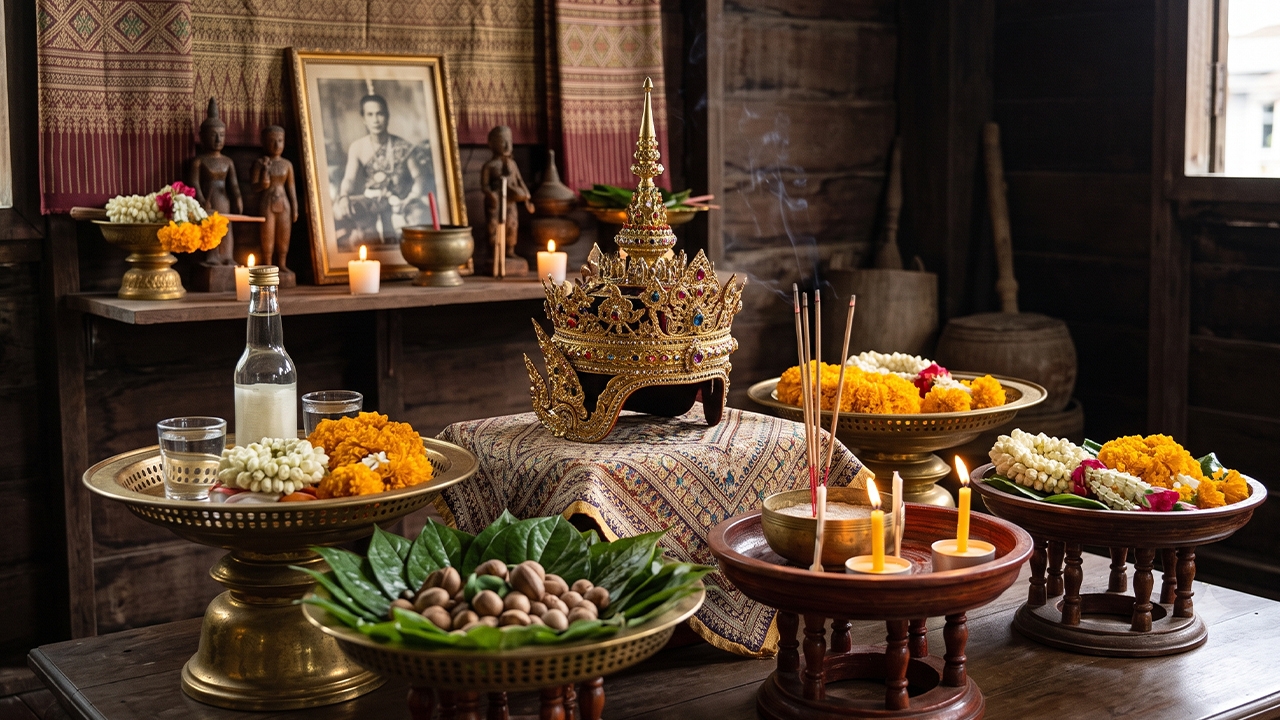
"Kru Mor Nora" or commonly called "Taiyai Nora" by locals, refers to the spirit of ancestors who originated and transmitted the Nora performing art and have since passed away. In southern society, this belief is deeply rooted among those of Nora lineage, who believe the spirit protects, grants fortune, and prosperity to descendants who show gratitude.
Descendants are expected to uphold traditions such as holding the "Teacher Respect Ceremony" or "School of Teachers Ceremony" to honor the ancestral spirits. Those who neglect or disrespect it are believed to face obstacles in life, known as "to be possessed by the teacher" or "Kru Mor illness."
During the School of Teachers ceremony, filled with the sounds of drums and enchanting dance offerings, it is common for participants to experience "spirit possession" or trance states. Those affected often show completely altered behavior such as graceful dancing, screaming, crying, or adopting the voice and mannerisms of the deceased master, while being temporarily unconscious.
This phenomenon is considered a form of communication between the sacred and humans according to local belief systems, demonstrating that ancestral spirits acknowledge the gratitude and partake in the ceremonial offerings.
From a psychological standpoint, spirit possession aligns with a trance or altered state of consciousness.
When a deeply faithful person is in an emotionally stimulating environment—such as the intense rhythms of Nora music, the scent of incense, and a sacred atmosphere—combined with subconscious emotional pressures, the brain may disconnect from normal awareness. The body then reacts automatically according to culturally ingrained patterns learned from childhood. Scientifically, this is not considered abnormal or a mental disorder.

If you witness someone in a ritual exhibiting possession symptoms or losing self-control, you should:
1. Stay calm and respect the setting. Avoid panic, mocking, or disrespect, as this is an essential part of the belief-based ritual.
2. Ensure safety. Prevent the person from bumping into objects, falling, or harming themselves. Keep the area open and well-ventilated.
3. Do not use force. Avoid pulling, restraining, or forcibly snapping them out of it, as this may cause injury.
4. Allow the ritual to proceed. Typically, when the music stops or the Nora master calls the spirit back, the possession state gradually ends, and the person regains normal awareness.
5. Provide care after recovery. Those who have undergone possession often feel weak and should rest and drink clean water to restore balance.
Jenny Daimodtasodchoen's incident has become a bridge for outsiders to better understand "Kru Mor Nora." The possession phenomenon is not merely superstition but a blend of the strong faith southern people have toward their ancestors and the workings of the human mind. Approaching this context with openness helps us respect and honor diverse beliefs in society genuinely.
Clip from FacebookRatchanok Suwanket