

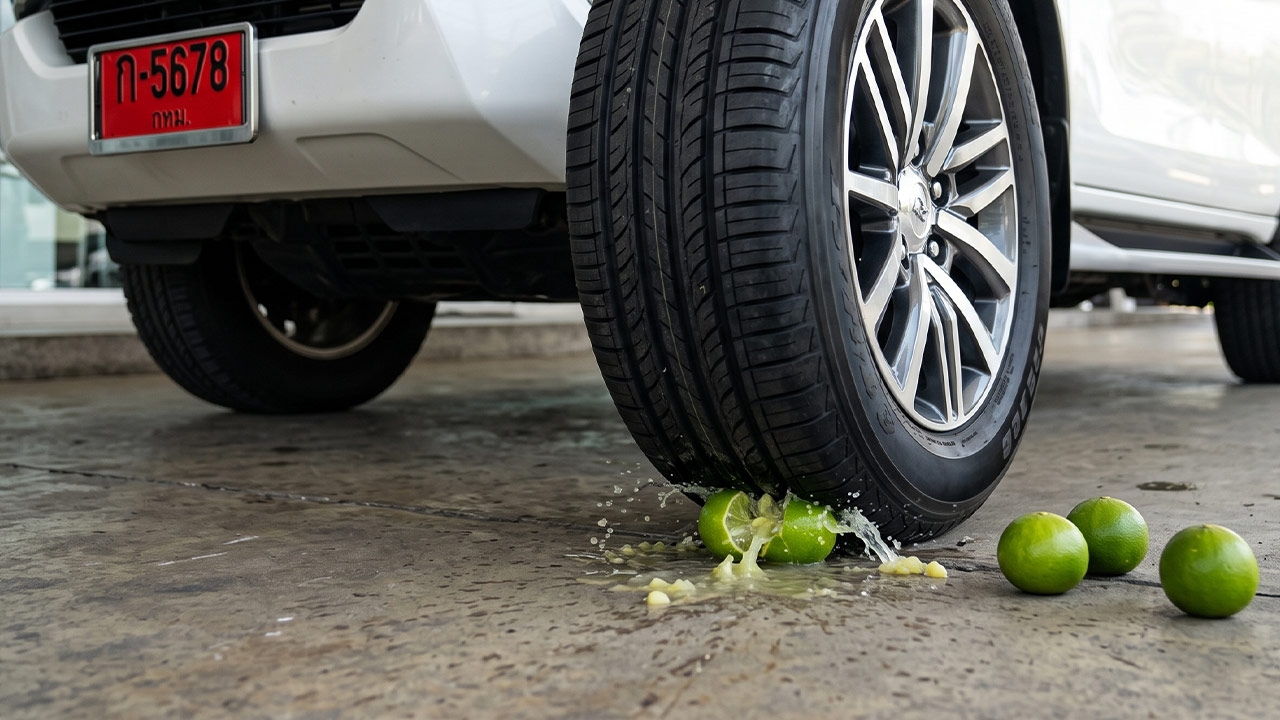
Explaining the Belief Why Must You "Step on a Lime" When Getting a New Car for the First Time? Exploring Its Origins in Brahmin-Hindu Ceremonies and Alternative Auspicious Items for Ensuring Safety and Protection Throughout Your Journey
For those about to get a brand-new red-plate car from the dealership, aside from checking the vehicle's condition and choosing an auspicious license plate number, local rituals and beliefs should not be overlooked. Many have seen or been advised by elders that on the first day driving the car out of the showroom, one should place a "fresh lime" under the car's wheel and drive over it to crush it. This small ritual raises questions among younger generations about its purpose.
Research into folklore and local beliefs shows that stepping on a lime when driving the car serves three main symbolic purposes:
If we trace this custom to its origins, it is neither new nor unique to Thailand but part of a shared cultural heritage influenced by Brahmin-Hindu ceremonies from India.
In India, there is a ritual called "Vahan Puja" (Vehicle Worship) where Hindus place lemons or limes under all four wheels of a vehicle and crush them to drive away evil spirits or the "evil eye" (Buri Nazar). They also pray to sacred deities for protection.
This cultural practice has spread and blended with Thai lifestyles, from the era of carts and boats to today’s era of brand-new cars.

For those who find it inconvenient to get a lime or worry about lime juice stains on the car’s mudguard, traditional beliefs and adapted culture offer "alternative auspicious items" that can be used for the first drive ritual.
According to Thai-Chinese beliefs, pomegranate leaves symbolize driving away misfortune and bad luck. Instead of stepping on a lime, you can dip pomegranate leaves in holy water or clean water mixed with sandalwood powder, sprinkle the four wheels, and recite blessings for safe travel. This is also considered an effective way to break bad omens and start on the right foot.
To emphasize wealth and prosperity according to astrological texts, auspicious leaves named silver, gold, and na can be placed under the car wheels before moving out of the dealership. This ritual symbolizes starting the journey on piles of wealth, enhancing financial fortune and business success.
This is another option from traditional Hindu ceremonies (if lemon is not used). A mature coconut is broken on the ground in front of the new car. The coconut is sacred, and its pure water is believed to cleanse the realm and dispel evil. It also symbolizes destroying ego and carelessness before driving.
Whether stepping on a lime, sprinkling holy water with pomegranate leaves, or any other ritual, these practices are personal beliefs that help provide peace of mind and boost drivers’ confidence.
However, the most crucial factor to ensure safe travel is driving cautiously, strictly following traffic laws, and regularly checking the vehicle’s condition.